
How London’s Indian Diaspora Is Bringing Its Festival into the Civic Mainstream
Standfirst: London’s annual Diwali on the Square will return to Trafalgar Square on 25 October, bringing music, dance, food and cultural activities to one of the UK capital’s best-known public spaces. The event offers a window into how Indian-origin communities share their traditions with the wider city — while raising a deeper question about who gets to shape the meaning of a festival abroad.
A festival steps into the public square
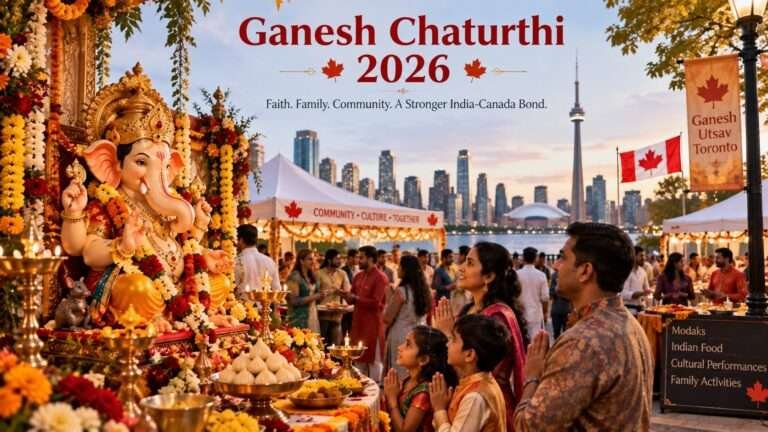
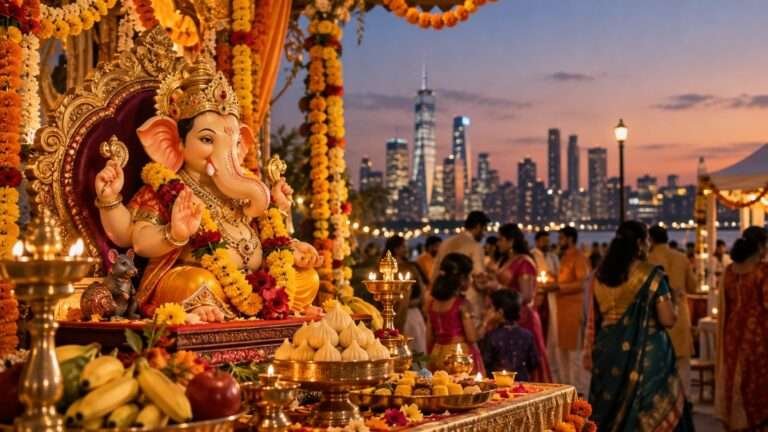
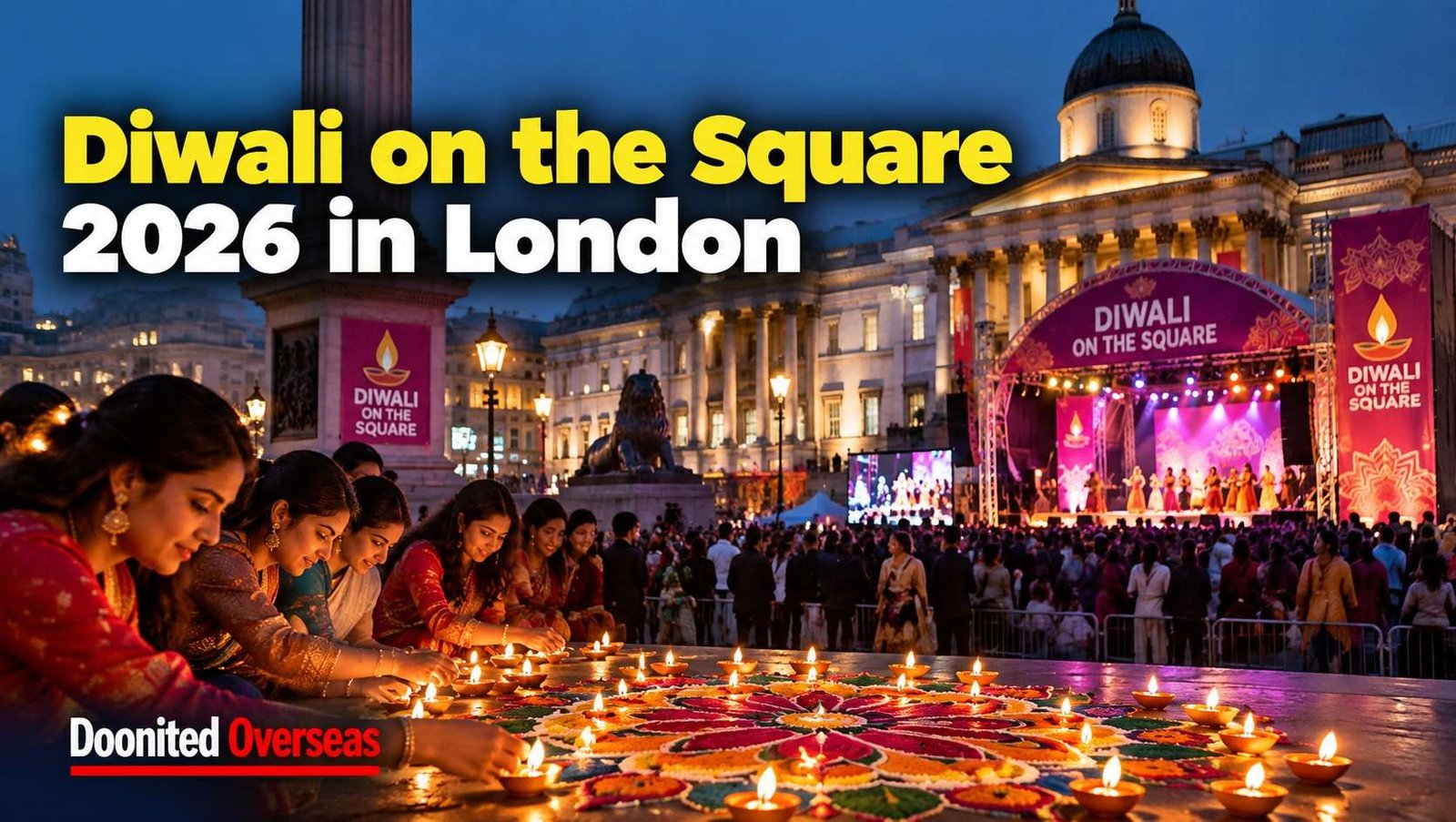
On Sunday, 25 October 2026, Trafalgar Square will host London’s annual Diwali on the Square, a free public celebration organised by the Mayor of London in partnership with the Diwali in London committee. The event is scheduled from 1 pm to 7 pm and is open to everyone, subject to capacity. Its programme is expected to include music and dance, market and food stalls, family activities, workshops and performances representing London’s Hindu, Sikh and Jain communities.
The date is worth noting: the Trafalgar Square celebration is not on Diwali itself. London’s main public event takes place on 25 October, while Diwali falls on 8 November 2026, according to Londonist’s 2026 guide. The earlier date places the civic celebration within the wider run-up to the festival.
For London’s Indian-origin residents, the occasion is more than a colourful date on the city calendar. It creates a prominent setting in which cultural traditions associated with South Asia can be shared with neighbours, visitors and people who may have little previous experience of Diwali.
That public visibility matters. Festivals celebrated at home, in temples or within community halls can be deeply meaningful, but their reach is often limited to people who already know the traditions. A gathering in a central civic space invites a wider audience to encounter them.
From community celebration to civic event
The Mayor of London’s official event page describes a programme built around participation as well as performance. The announced activities include a large opening dance sequence, music and dance on the main stage, sari and turban tying, yoga, meditation, puppet shows and dance workshops. Food stalls are also planned, with vegan and vegetarian options.
These details help explain why the event can serve as a meeting point between communities. A visitor who arrives for the performances may leave having tried a workshop, spoken to a stallholder or learned something about the festival’s different traditions. Cultural exchange is often built from these ordinary encounters, rather than from grand declarations about diversity.
The event’s institutional backing is significant, too. Diwali on the Square is presented by the Mayor of London and delivered with the Diwali in London committee. That partnership places the celebration within the city’s public cultural programme, rather than leaving it solely to individual community organisations.
Still, the distinction between a public festival and the whole of a community’s experience should not be blurred. One day in Trafalgar Square cannot represent every Indian-origin Londoner, every faith tradition or every way of celebrating Diwali. The event is a visible public expression of culture — not a complete portrait of the diaspora.
What the attendance figures actually tell us
The festival is often described as attracting tens of thousands of people. The Diwali in London committee says its 2026 event is expected to be attended by well over 30,000 visitors.
However, attendance figures need context. In a response to a London Assembly question, the Greater London Authority said stewards recorded 18,500 people entering the event in 2025, with a further 2,000 community participants, performers and volunteers involved. The authority has also explained that, because the festival is free and open-access, exact attendance is difficult to establish; an earlier estimate put annual audiences at around 25,000–30,000.
The more meaningful measure of the event’s reach may be what happens beyond the square. Do visitors return to learn more about the communities represented? Do local organisations build lasting relationships? Do schools, cultural institutions and neighbourhood groups find opportunities to collaborate? Those outcomes are harder to capture in a headline attendance number, but they matter to the festival’s longer-term civic role.
A shared celebration without losing its roots
Diwali is celebrated in different ways across religious and regional communities. The festival is especially associated with Hindu traditions, while Sikh, Jain and other communities also mark occasions around this period, with their own histories and meanings. A public event that brings these traditions into one programme can create a shared platform — but it should not imply that every community observes the festival in exactly the same way.
That distinction is important for diaspora representation. Public celebrations often need to make culture accessible to people unfamiliar with it. In doing so, they can simplify complex histories into recognisable symbols: lights, dance, food, colourful clothing and a message of hope.
There is nothing inherently wrong with making a festival welcoming and accessible. The challenge is to ensure that accessibility does not become the only story told about it. The traditions, beliefs and community work behind the public spectacle deserve space, too.
London’s event offers a practical way to strike that balance. Its workshops and cultural activities can invite participation, while the communities and organisations involved can explain the meanings behind what visitors see.
What it means for Overseas Indians
For Indians living abroad, cultural events can help maintain connections across generations. Children growing up in Britain may encounter family traditions at home, but a large public celebration gives them another setting in which to see those traditions recognised beyond their immediate circle.
For newer arrivals, such events can provide a point of connection with established community networks. For non-Indian visitors, they can offer an introduction to traditions that are part of London’s contemporary cultural life. And for local businesses, artists and food vendors, public festivals can create opportunities to reach audiences outside their usual customer base.
These benefits should not be overstated. A festival cannot by itself resolve discrimination, guarantee social inclusion or represent the full diversity of the Indian diaspora. Nor does an official civic celebration mean that every member of the city’s South Asian communities feels equally represented.
But it does create a public occasion where people can meet, participate and learn — a modest, tangible contribution to a more connected city.
The wider lesson: visibility is a beginning, not the finish line
Diwali on the Square shows how a diaspora tradition can become part of a city’s shared calendar without ceasing to belong to the communities that sustain it. Trafalgar Square’s prominence gives the event visibility; its activities give visitors ways to engage; and its partnership between City Hall and community organisers gives it an established civic platform.
The next question is what follows the celebration. Cultural understanding is built not only through one annual festival, but through everyday relationships in schools, workplaces, neighbourhoods and public institutions.
For London’s Indian-origin communities, the square is an important stage. Its lasting value will depend on whether the conversations, connections and curiosity generated there continue after the lights are switched off.


World Beyond the News
Birds Can Navigate Using Earth’s Magnetic Field
Several bird species can sense Earth’s magnetic field, helping them navigate during long-distance migration.
Fermentation Is a Global Food Tradition
People across continents have used fermentation for centuries to preserve food and create distinctive flavours.
Modern Batteries Store Energy Chemically
Rechargeable batteries repeatedly move ions between electrodes, allowing electrical energy to be stored and released.
Why Songs Become Global Hits
Streaming platforms, short-form video, playlists and international collaborations can rapidly carry music across borders.