TUESDAY, OCTOBER 20, 2026
01:47:06 AM
Doonited News
LOCAL WEATHER
Loading...
WORLD WEATHER
DELHI --°C
LONDON --°C
NEW YORK --°C
BREAKING NEWS
Pradeep Banerjee

Pradeep Banerjee

Pradeep Banerjee is the Editor of Doonited News, an independent digital news platform covering India, and Indian stories with relevance for audiences in India and overseas. He oversees editorial direction, news features and international coverage, with an emphasis on factual reporting, context and responsible journalism.

Global Saree Fashion: How India’s Six Yards Became a Global Style Statement

Global Saree Fashion: How India’s Six Yards Became a Global Style Statement

The Saree Goes Global: How India’s Six Yards Became a Fashion Statement Without Losing Its Soul For generations, the saree did something rather remarkable. It travelled everywhere without actually needing a passport. It went with Indian families to London, New York, Dubai, Toronto, Singapore and Sydney. It appeared at weddings, festivals, community gatherings and religious celebrations. Mothers taught daughters how to drape it. Grandmothers preserved old silk sarees carefully enough to make them family archives. Now the rest of the fashion world appears to have discovered what Indian women have known for centuries: a long piece of unstitched fabric can be remarkably sophisticated. The saree is increasingly visible on international red carpets, in fashion conversations and in contemporary designer collections. ELLE India recently highlighted this shift through appearances by Deepika Padukone, Alia Bhatt, Zendaya and Naomi Campbell, alongside the rise of pre-draped and experimental saree styles. But calling this simply a “fashion trend” misses the more interesting story. The saree is becoming a case study in how traditional Indian design can enter global fashion without necessarily becoming Westernised first. This isn’t the saree’s first international journey The current attention can sometimes create the impression that the saree has suddenly arrived
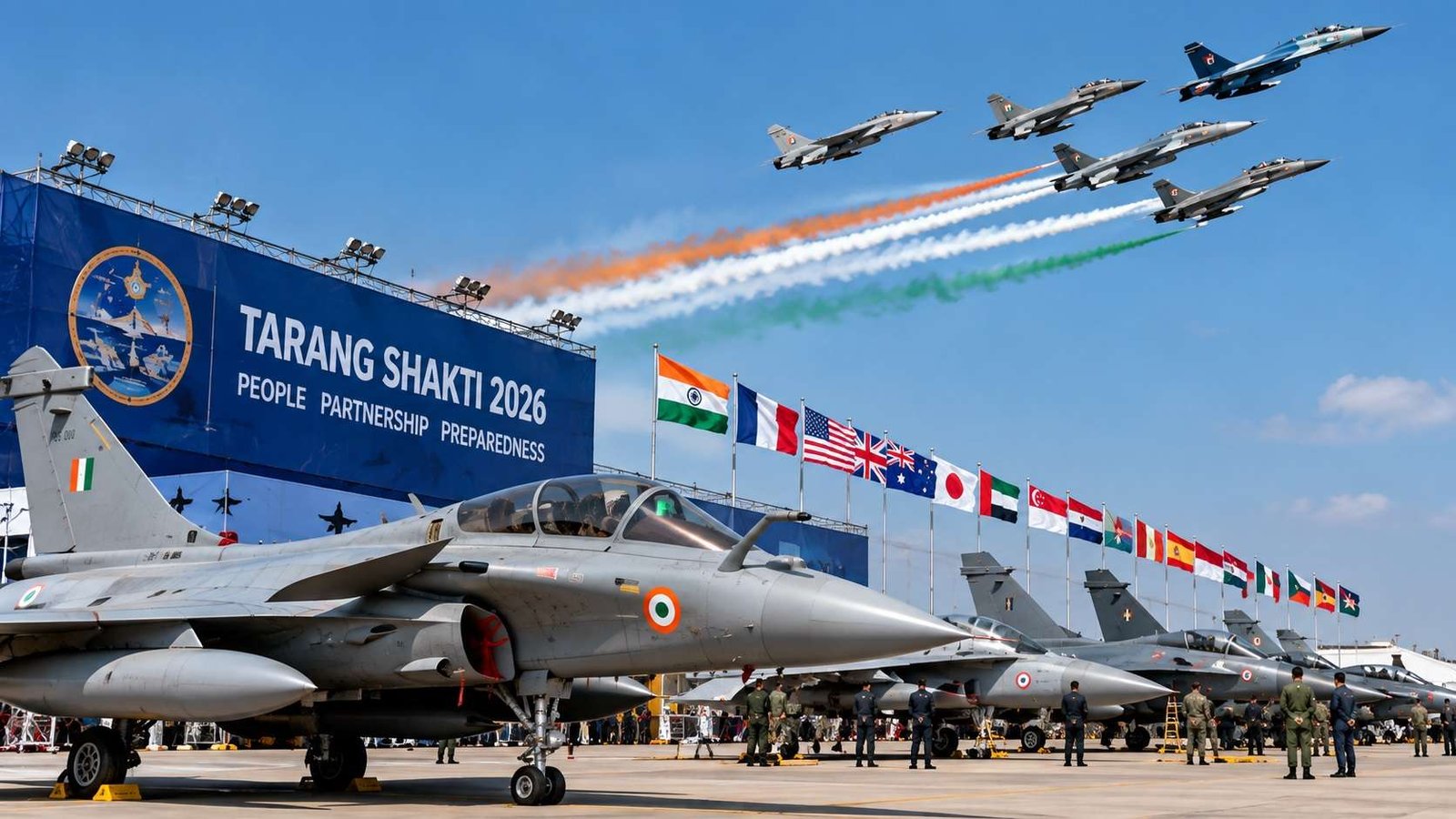
When fighter aircraft from different countries share the Indian sky

When fighter aircraft from different countries share the Indian sky

Tarang Shakti 2026: Why India’s Multinational Air Exercise Is About More Than Aircraft When fighter aircraft from different countries share the sky, the spectacle is easy to understand. The harder work happens before take-off: agreeing on procedures, coordinating communications, planning missions and ensuring that different forces can operate safely and effectively together. That is the larger purpose of Tarang Shakti 2026, the Indian Air Force’s multinational air exercise beginning on September 26 at Air Force Station Jodhpur in Rajasthan. Scheduled to continue until October 12, the second edition brings foreign air forces to India for complex air operations and joint training. The exercise also includes participation by observer nations. Akashvani’s announcement says eight foreign countries will participate with air assets, while 32 nations will attend as observers. For India, the exercise is an opportunity to practise operating alongside international partners, test coordination in a demanding environment and demonstrate the capabilities of its air force. For participating countries, it offers a chance to learn how other forces plan, communicate and execute missions. The significance lies not simply in how many aircraft arrive, but in what their crews and support teams can learn from working together. Who is participating? The official announcement

BrahMos Exports: How India’s Missile Is Going Global

BrahMos Exports: How India’s Missile Is Going Global

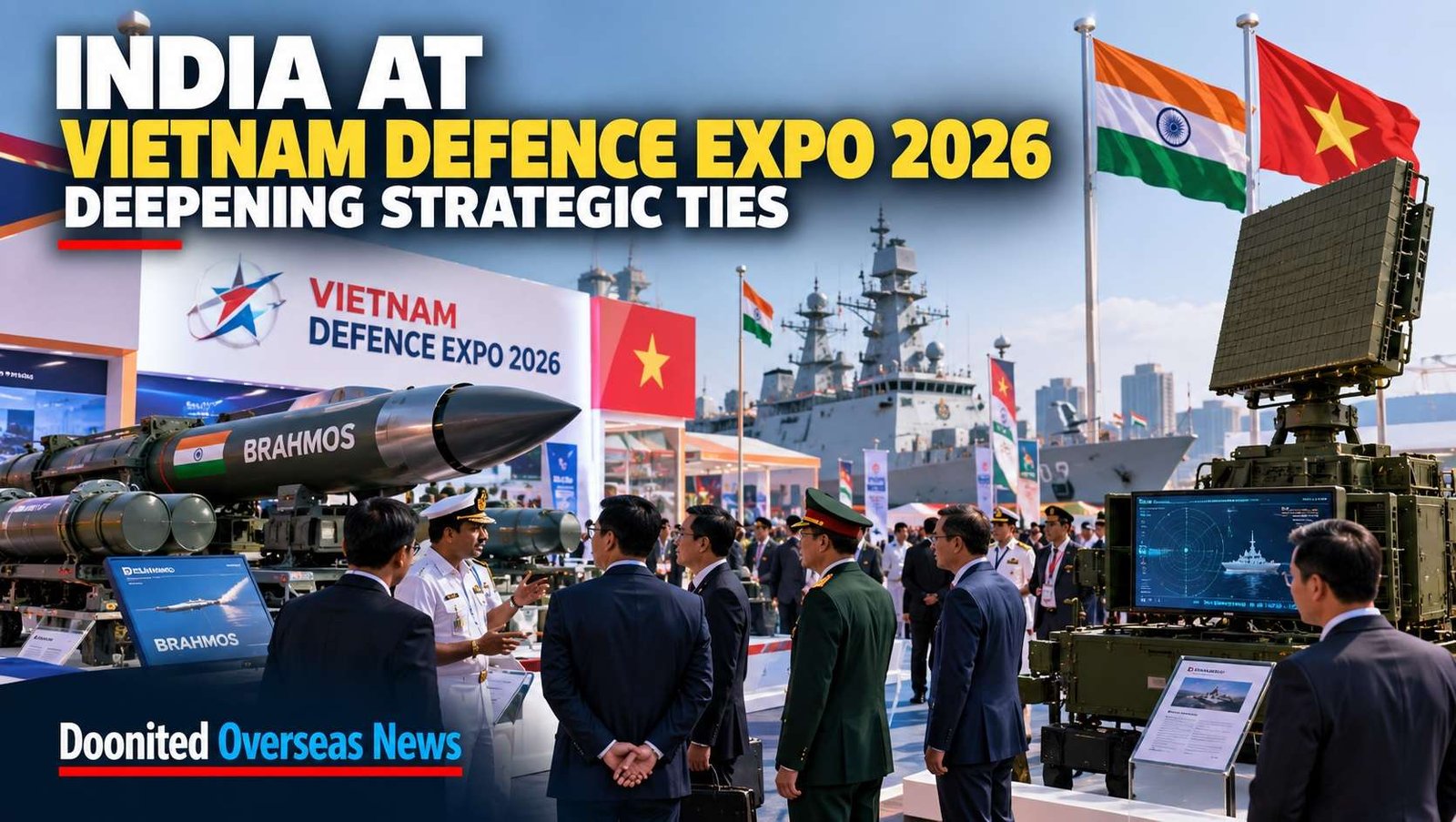
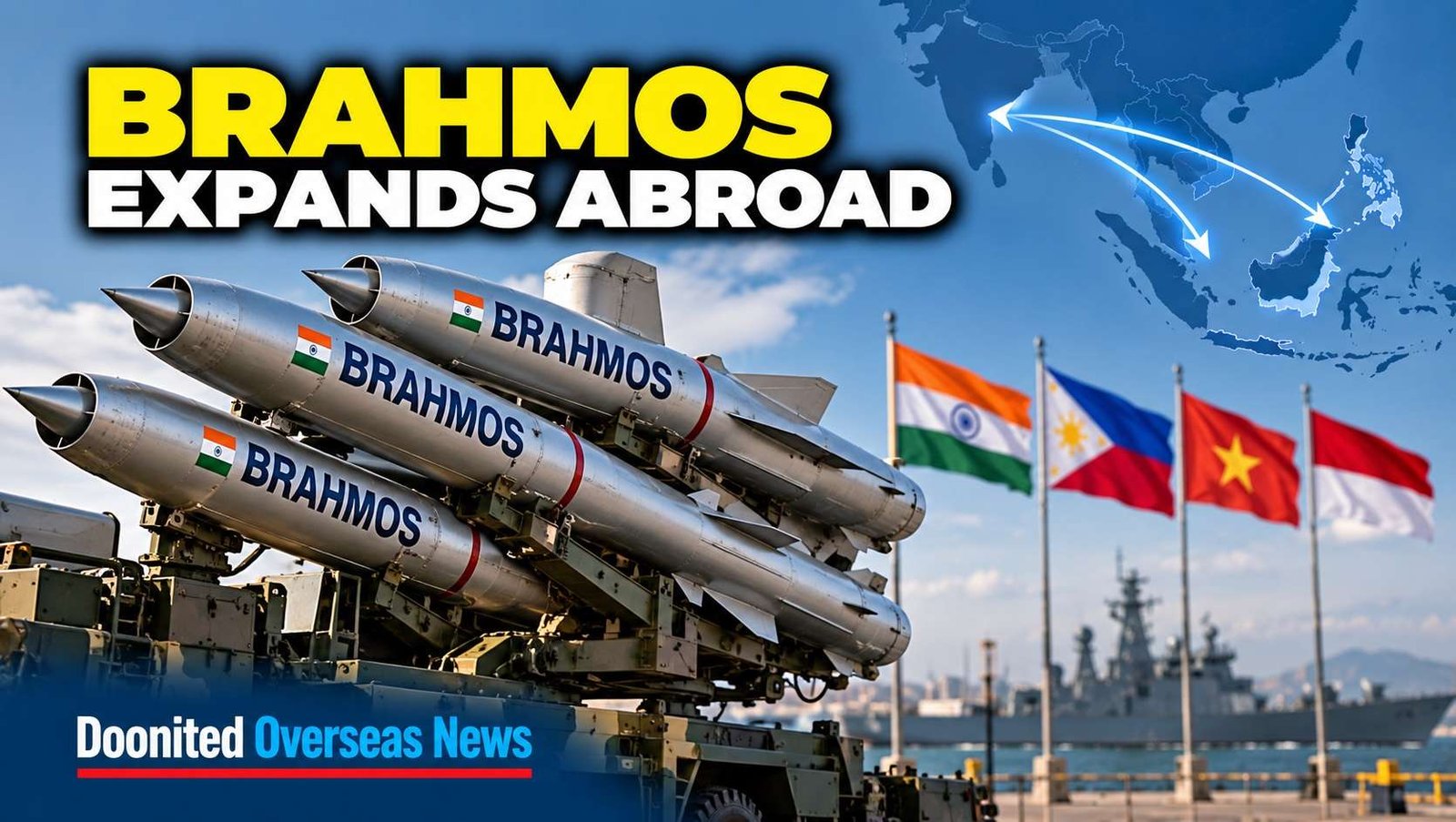
BrahMos Goes Regional: How India’s Missile Is Becoming a Defence-Export Brand in Southeast Asia The Philippines already has BrahMos. Vietnam has signed a supply deal and Indonesia has agreed to acquire two batteries. The bigger story is India’s attempt to turn a joint Indo-Russian missile programme into a globally recognised Indian defence-export brand. For most of India’s modern economic history, the country’s global export identity has been associated with software engineers, pharmaceuticals, automobiles, textiles and professional services. Missiles were a different category. That is beginning to change. India’s BrahMos supersonic cruise missile is emerging as one of the clearest examples of the country’s attempt to export sophisticated military technology rather than simply manufacture defence equipment for its own armed forces. The Philippines was the breakthrough customer. Vietnam has now signed a deal. Indonesia has agreed to acquire two BrahMos batteries. And India’s Defence Secretary Rajesh Kumar Singh said in October that BrahMos exports are expected to cross $600 million, with the system becoming a benchmark for India’s emerging defence-export story. (rediff.com) The significance goes well beyond the value of the contracts. India is attempting to demonstrate that a weapon originally developed for Indian requirements can become an international product. The

Indian Defence Exports: The Technologies Going Global

Indian Defence Exports: The Technologies Going Global

The Indigenous Technologies Finding Markets Beyond India From BrahMos and Akash to Pinaka and the Dhruv helicopter, India’s defence-export story is moving beyond headline missile deals. As the country targets ₹50,000 crore in annual exports by 2029, upcoming exhibitions in Chile and Vietnam will test whether Indian systems can become long-term global defence businesses. India’s defence-export story is entering a new phase. The headline number is already difficult to ignore: ₹38,424 crore in defence exports during FY2025–26, a 62.66% increase from the previous year. Indian defence products now reach more than 80 countries, while the government has set a target of ₹50,000 crore in annual defence exports by 2029. But the more interesting question is not how much India exports. It is what the world is buying—and whether those products can develop into lasting international defence relationships. That question will become particularly relevant in December, when two major Latin American and Southeast Asian defence exhibitions take place: ExpoNaval 2026 in Santiago, Chile, from December 1–3, followed by Vietnam International Defence Expo 2026 in Hanoi from December 10–13. ExpoNaval says its 2026 event will bring together companies, governments and industry experts around naval technology, shipbuilding, maritime security and unmanned systems. For

DRDO HAPS Trial: India’s Push into the Stratosphere

DRDO HAPS Trial: India’s Push into the Stratosphere

From TAPAS to the Stratosphere: India’s Next Frontier in Long-Endurance Flight DRDO’s experimental high-altitude airship reached 21 kilometres during an October 2026 trial, marking progress towards persistent surveillance and communications from the stratosphere. The achievement complements—but does not resolve—the challenges exposed by the TAPAS-BH-201 drone programme. Together, the projects show why India’s next aerospace breakthroughs […]

BharatGen: How India Is Building AI for Its Languages and the World

BharatGen: How India Is Building AI for Its Languages and the World

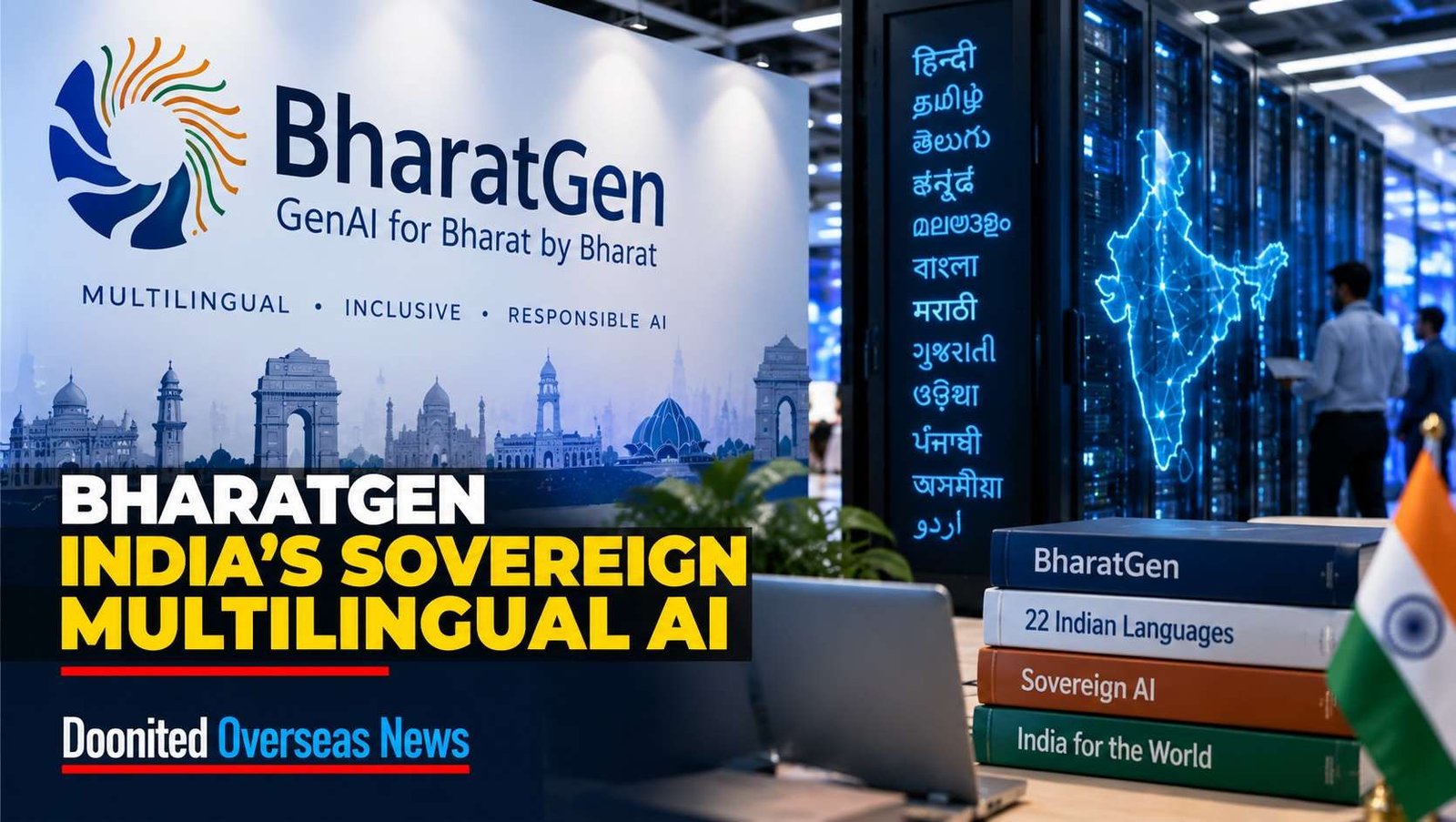
BharatGen: How India Is Building AI That Speaks to Its Diaspora India’s BharatGen is moving beyond the idea of a single home-grown chatbot. With multilingual foundation models, speech, document intelligence and India-specific datasets, the government-supported initiative is attempting to build an AI layer that understands the country’s languages and social context — with potential implications far beyond India’s borders. Artificial intelligence is becoming global. The data, however, is not equally global. Many of the world’s most powerful AI systems were developed primarily around languages, datasets and cultural contexts in which English dominates. That does not make them incapable of serving Indian users, but it can leave important gaps when the task involves India’s many languages, scripts, administrative documents, cultural references and local knowledge systems. That is the problem BharatGen is attempting to address. Led by IIT Bombay through the National Mission on Interdisciplinary Cyber-Physical Systems (NM-ICPS), with support from India’s Department of Science and Technology and the IndiaAI Mission, BharatGen has developed a family of sovereign, multilingual and multimodal AI models. The initiative was launched in June 2025 and is now part of India’s wider push to develop domestic foundational AI capabilities. For Indians living overseas, however, BharatGen is more

Pawan Kumar Chandana: The Indian Entrepreneur Taking Private Space Global

Pawan Kumar Chandana: The Indian Entrepreneur Taking Private Space Global

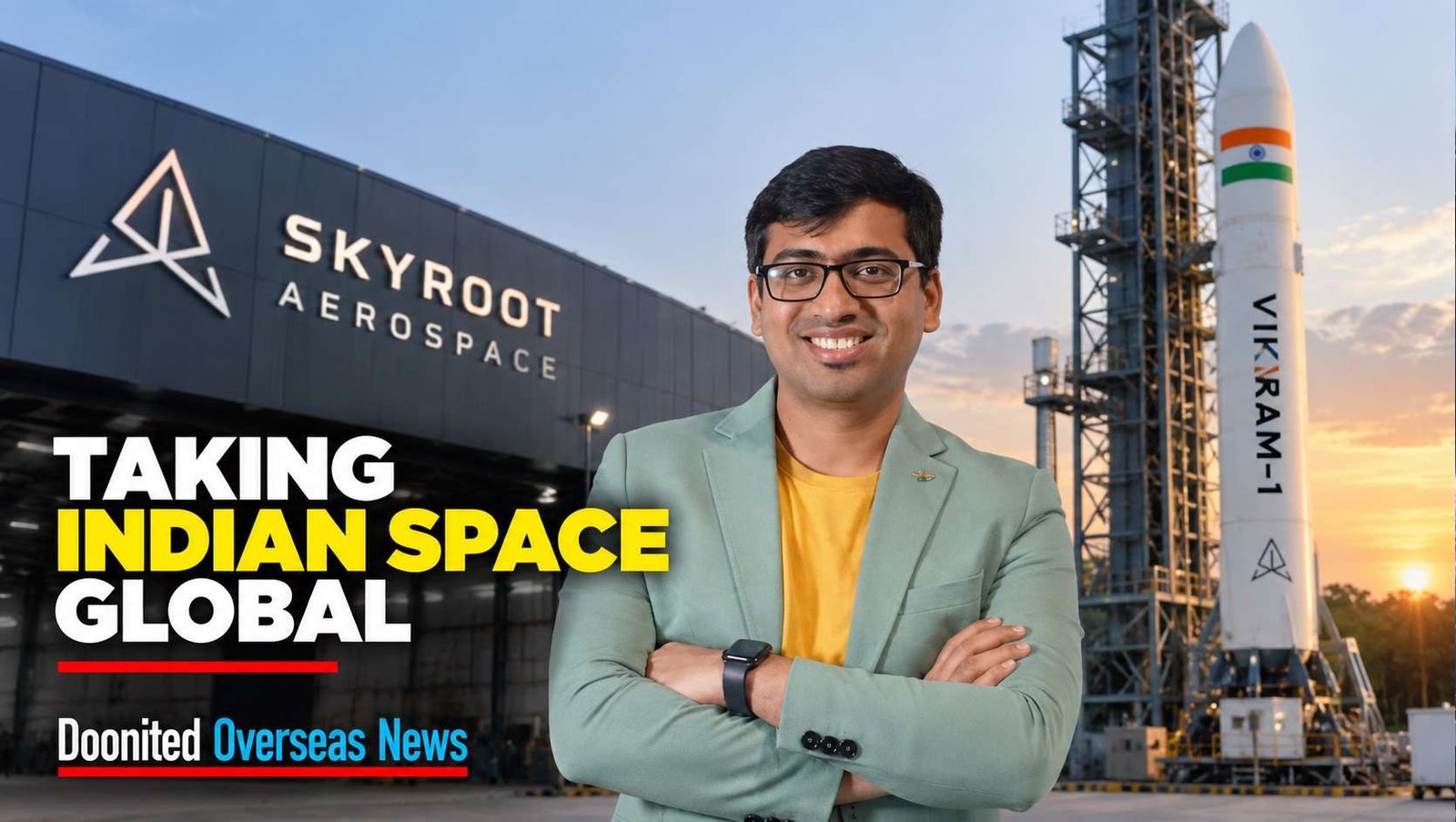
Pawan Kumar Chandana: The Indian Space Entrepreneur Taking Private Rockets Global After spending years inside ISRO, Pawan Kumar Chandana helped build Skyroot Aerospace into a private launch company capable of reaching orbit. Vikram-1’s July 2026 success has now turned that ambition into a commercial proposition — and TIME’s recognition of Chandana puts a new face on India’s rapidly expanding space economy. For decades, India’s space story was overwhelmingly associated with one institution: ISRO. That story is changing. On July 18, 2026, a rocket developed by Hyderabad-based Skyroot Aerospace lifted off from Sriharikota and successfully reached Low Earth Orbit. It was not simply another Indian launch. It was the first time a private Indian company successfully conducted an orbital launch from Indian soil. Behind that achievement is Pawan Kumar Chandana, Skyroot’s co-founder and CEO, a former ISRO scientist who moved from designing space systems inside India’s national space programme to building a private company capable of selling launch services to customers around the world. His inclusion in TIME100 Next 2026, a list recognising emerging leaders shaping the future, gives the achievement a wider international context. TIME describes TIME100 Next as a platform for people shaping the future and defining the next

Jodhpur RIFF 2026: Rajasthan’s Folk Music Meets the World

Jodhpur RIFF 2026: Rajasthan’s Folk Music Meets the World

Jodhpur RIFF 2026: When Rajasthan’s Folk Traditions Meet the World Under a Desert Moon From dawn music at Jaswant Thada to late-night performances within the historic Mehrangarh Fort complex, Jodhpur RIFF returns from October 22 to 26 with Rajasthani folk traditions, Indian classical music and international collaborations. As the festival marks its 20th year, its […]

Karishma Swali: How Indian Craft Is Finding a New Language

Karishma Swali: How Indian Craft Is Finding a New Language

Karishma Swali: How Indian Craft Is Finding a New Language Through Contemporary Art Karishma Swali’s work sits at an increasingly important intersection in Indian culture: traditional embroidery, contemporary art, fashion and the economic agency of women artisans. Through the Chanakya School of Craft and her own artistic practice, she is part of a movement asking […]

Satish Gujral: The Indian Artist Who Refused One Medium

Satish Gujral: The Indian Artist Who Refused One Medium

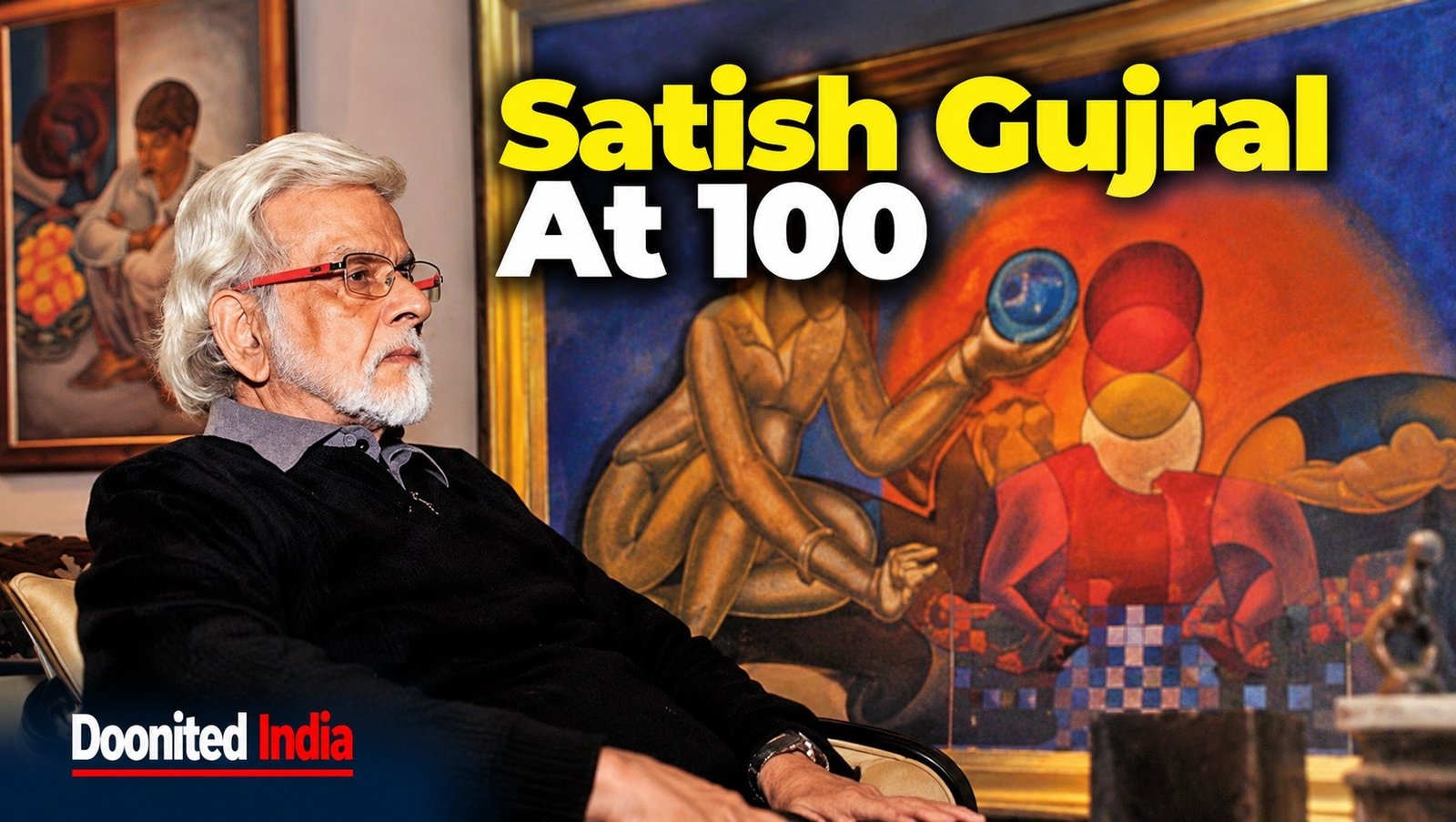
As India marks the centenary of Satish Gujral’s birth, exhibitions and conversations in Mumbai are bringing renewed attention to an artist who treated painting, sculpture, murals, architecture and design not as separate careers, but as different languages of the same creative mind. Some artists spend a lifetime perfecting one language. Satish Gujral spent his life […]