

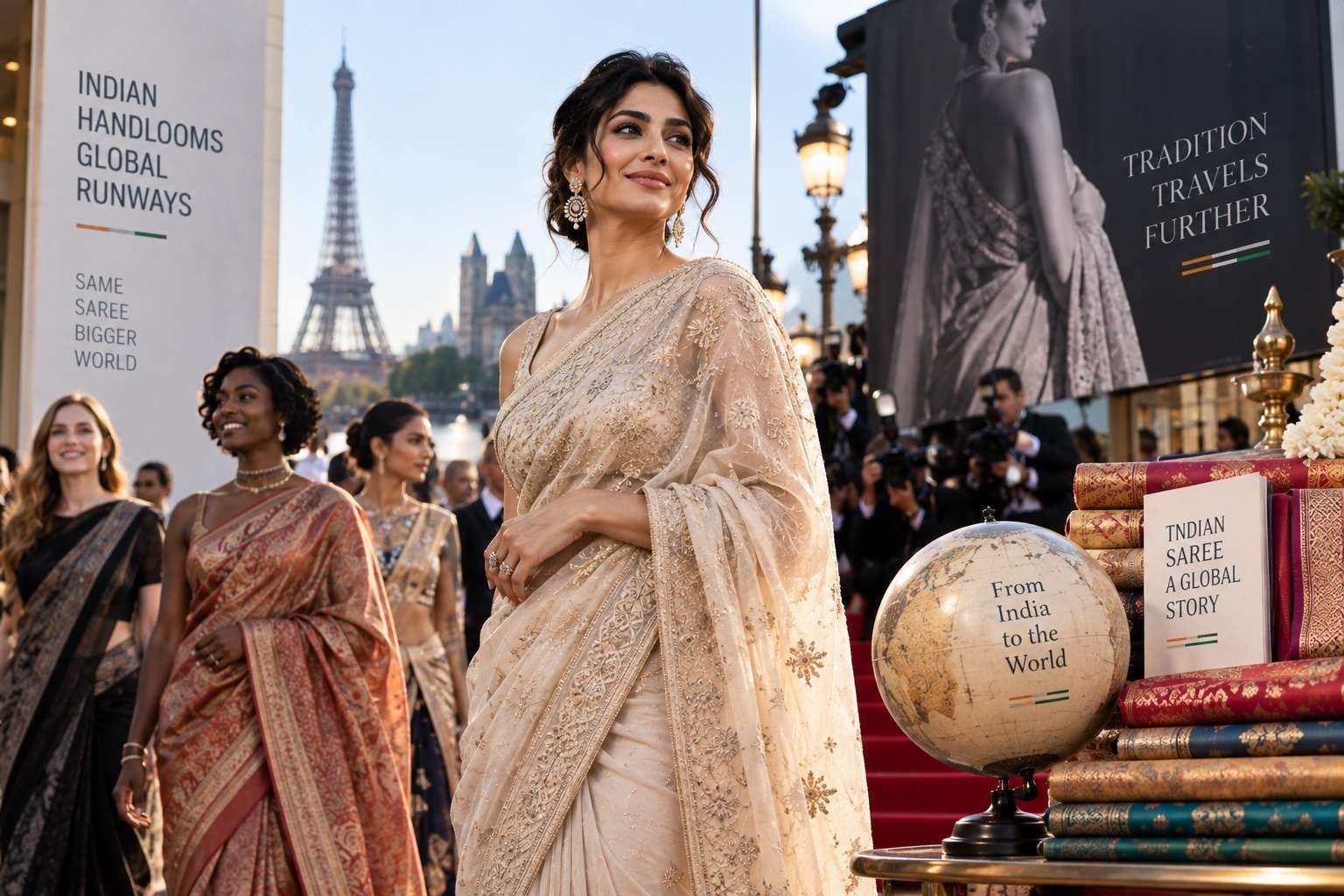
The Saree Goes Global: How India’s Six Yards Became a Fashion Statement Without Losing Its Soul For generations, the saree did something rather remarkable. It travelled everywhere without actually needing a passport. It went with Indian families to London, New York, Dubai, Toronto, Singapore and Sydney. It appeared at weddings, festivals, community gatherings and religious celebrations. Mothers taught daughters how to drape it. Grandmothers preserved old silk sarees carefully enough to make them family archives. Now the rest of the fashion world appears to have discovered what Indian women have known for centuries: a long piece of unstitched fabric can be remarkably sophisticated. The saree is increasingly visible on international red carpets, in fashion conversations and in contemporary designer collections. ELLE India recently highlighted this shift through appearances by Deepika Padukone, Alia Bhatt, Zendaya and Naomi Campbell, alongside the rise of pre-draped and experimental saree styles. But calling this simply a “fashion trend” misses the more interesting story. The saree is becoming a case study in how traditional Indian design can enter global fashion without necessarily becoming Westernised first. This isn’t the saree’s first international journey The current attention can sometimes create the impression that the saree has suddenly arrived

World Beyond the News
Why Elephants Stay Close to Their Herd
Elephants live in highly social family groups and use calls, touch and body movements to maintain strong bonds.
Most of the Deep Ocean Remains Difficult to Explore
Extreme pressure, darkness and distance make deep-ocean exploration one of Earth’s greatest scientific challenges.
Spacecraft Can Travel Without Traditional Roads
Spacecraft use carefully calculated trajectories and gravity assists to travel enormous distances through space.
Why Movie Trailers Are Released in Stages
Major films often use teaser trailers, full trailers and final promotional spots to build awareness over time.