
IMF–World Bank Meetings in Bangkok: Why the Global Economic Agenda Matters to Overseas Indians
The IMF and World Bank Group will hold their 2026 Annual Meetings in Bangkok from 12 to 18 October, with jobs, investment, artificial intelligence and global development on the agenda. For Indians living and working abroad, the discussions are not a personal policy announcement — but the economic conditions they help shape can influence employment, borrowing costs, business opportunities and the value of money sent home.
Bangkok becomes the centre of global economic debate
When finance ministers, central bank governors, development officials, business leaders and civil society representatives gather in Bangkok this October, the conversation will range well beyond the conference halls.
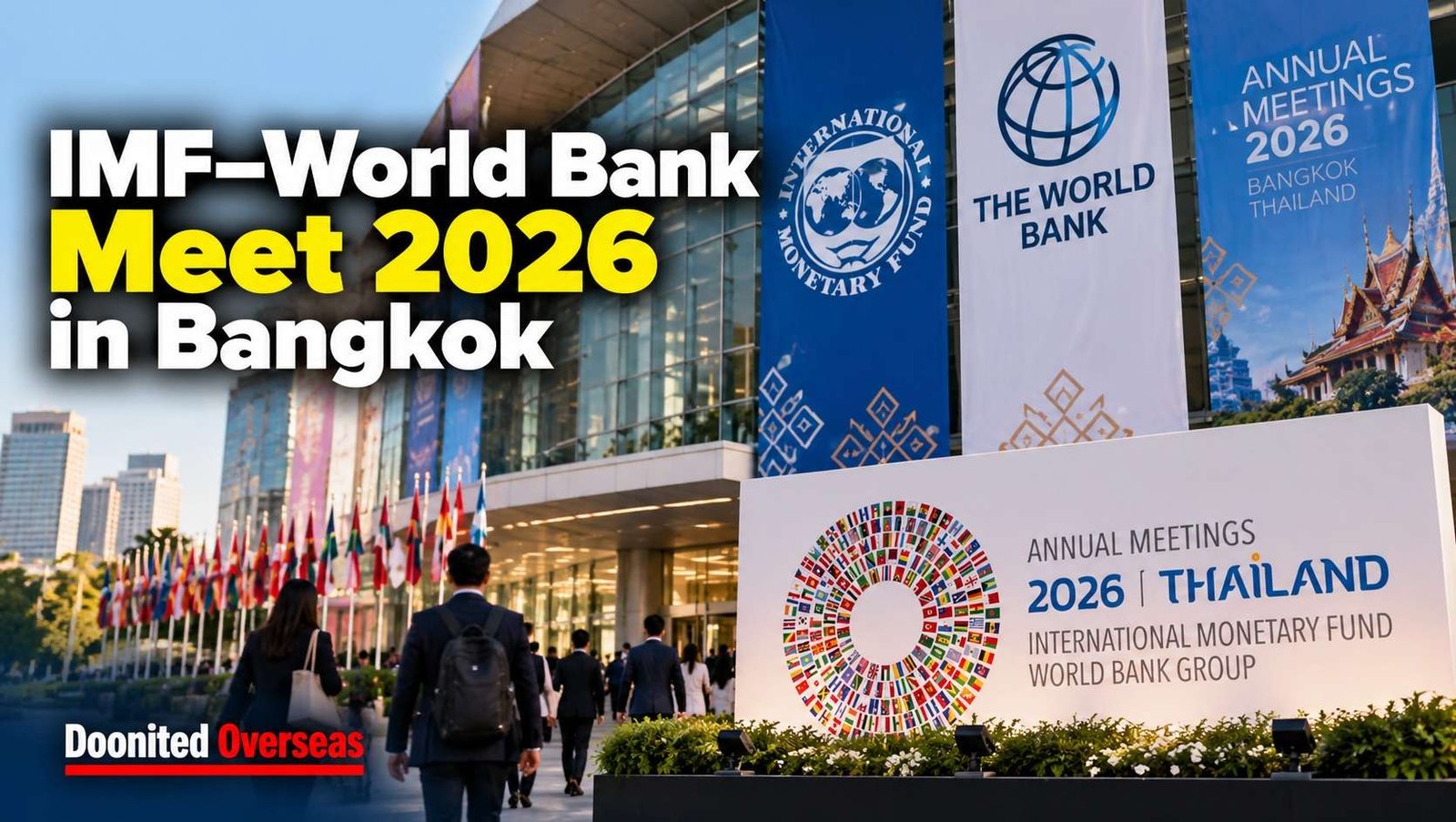
The 2026 Annual Meetings of the International Monetary Fund (IMF) and the World Bank Group are scheduled for 12–18 October in Thailand. The two institutions say the meetings will bring together policymakers and other stakeholders to discuss the global economy and development challenges. Bangkok last hosted the meetings in 1991.
For DOONITED Overseas readers, the important question is not simply what the institutions announce. It is how the economic conditions discussed in Bangkok may affect Indians who earn their living overseas, run businesses across borders, support relatives in India or plan to move between countries for work and study.
The connection is real, but indirect. The meetings do not set the salary of an Indian professional in London, determine the rent paid by a student in Australia or decide the exchange rate at which a family receives a remittance. Yet global growth, inflation, financial conditions and employment trends can influence the environment in which those decisions are made.
Jobs and AI: a global debate with Indian implications
One of the World Bank Group’s featured sessions is titled Small AI, Big Jobs, scheduled for 12 October. Another event, on 14 October, will focus on mobilising private capital for jobs. These are agenda items, not announcements of new employment programmes for Indians specifically.
Indian professionals are employed across technology, finance, healthcare, engineering, education and other sectors in which economic conditions and technological change can affect hiring. If businesses expand investment, they may create opportunities; if they cut costs or reorganise work, some roles may face pressure. AI adds another variable: it can automate certain tasks, increase demand for specialised skills and change how work is organised.
The outcome will differ by occupation, country and employer. It would be premature to conclude that the meetings will produce a particular employment trend. Their value is as a forum for discussing the conditions that governments and businesses believe can support job creation — and the policies needed to manage technological disruption.
For overseas Indians, the practical lesson is to follow developments in their own labour markets rather than treat global AI discussions as a forecast for every profession. Workers considering a move abroad should continue to assess local hiring conditions, professional licensing requirements, visa rules and the demand for their particular skills.
Inflation, interest rates and the money sent home
Global economic conditions can also affect the finances of Indian households with family members overseas.
Inflation in a host country influences the cost of housing, transport, food and other essentials. Interest-rate changes can affect mortgages, savings returns and business borrowing. Exchange-rate movements influence how much Indian rupees a remittance delivers, although the result depends on the currencies involved, transfer fees and the rate offered by the provider.
These are transmission channels, not guaranteed outcomes of the Bangkok meetings. The IMF and World Bank do not jointly set interest rates for individual countries, and the Annual Meetings themselves do not determine currency exchange rates. National central banks, governments, financial markets and wider economic developments all play distinct roles.
For a family receiving regular support from abroad, even a modest change in the exchange rate or the sender’s living costs can affect the household budget. For an Indian entrepreneur operating in more than one country, financing conditions and currency volatility can influence the cost of investment and the value of revenue earned overseas.
The useful question for readers is therefore not whether Bangkok will make remittances rise or fall. It is whether the economic outlook discussed there changes the risks they should monitor — particularly inflation, employment, borrowing costs and currency movements in the countries where they live.
Investment and development: why the wider economy matters
The World Bank Group’s programme includes a session on mobilising private capital for jobs, alongside discussions on development and investment.
For the Indian diaspora, the international dimension is especially relevant. Overseas Indians may work for multinational companies, establish businesses in their country of residence, invest across borders or maintain financial and family ties with India. Their opportunities can be affected by both the host country’s economic outlook and the conditions in India.
However, the Annual Meetings should not be confused with a dedicated diaspora policy forum. Their central mandate concerns international monetary cooperation, financial stability and development. Any effect on overseas Indians will largely arise through the broader economic environment, rather than through a specific promise to the diaspora.
Can readers follow the meetings without travelling to Bangkok?
Yes. The meetings will be held in person, but the IMF and World Bank Group plan to livestream public sessions through their digital platforms. The World Bank says its public events can be watched online without registration, while the IMF maintains a schedule of livestream events. Access and availability may vary by session.
12 October — AI and jobs: Watch for discussion of how AI may affect employment and the skills workers need.
14 October — Private capital and jobs: Follow the debate on how investment can support employment, infrastructure and growth.
16 October — Annual Meetings plenary: Hear the institutions’ leadership and meeting participants address the wider global economic agenda.
These are useful entry points, but the public programme may be updated. Readers should check the official schedules for final timings, speakers and streaming links.
The takeaway for overseas Indians
The Bangkok meetings will not resolve every concern facing Indians abroad. Visa eligibility, taxation, employment rights, consular assistance and local cost-of-living pressures depend on the laws and circumstances of individual countries. Those issues require country-specific information, not general conclusions drawn from a global economic conference.
Still, the meetings offer a useful moment to look at the forces shaping the diaspora’s economic lives. Global growth affects business confidence; investment can influence job creation; inflation and interest rates affect household budgets; and technological change can reshape professional opportunities.
The most useful approach is to connect the international headlines to personal circumstances. An employee should watch the labour market and skills demand in their sector. A business owner should monitor financing conditions and currency exposure. A family sending or receiving money should compare transfer costs and exchange rates rather than assume that a global policy meeting will determine the outcome.
Bangkok’s significance, then, lies less in any single announcement than in the wider debate it convenes. For Overseas Indians, understanding that debate can help put local economic changes into context — without mistaking a global discussion for a personal guarantee.


World Beyond the News
Birds Can Navigate Using Earth’s Magnetic Field
Several bird species can sense Earth’s magnetic field, helping them navigate during long-distance migration.
Fermentation Is a Global Food Tradition
People across continents have used fermentation for centuries to preserve food and create distinctive flavours.
Modern Batteries Store Energy Chemically
Rechargeable batteries repeatedly move ions between electrodes, allowing electrical energy to be stored and released.
Why Songs Become Global Hits
Streaming platforms, short-form video, playlists and international collaborations can rapidly carry music across borders.