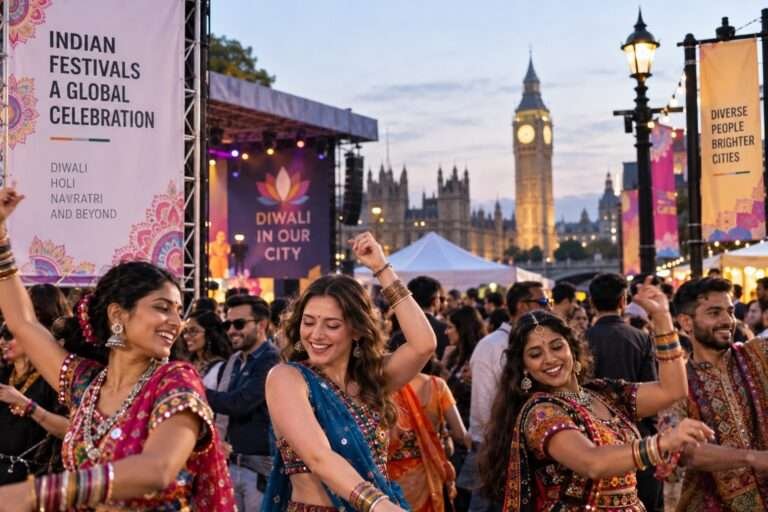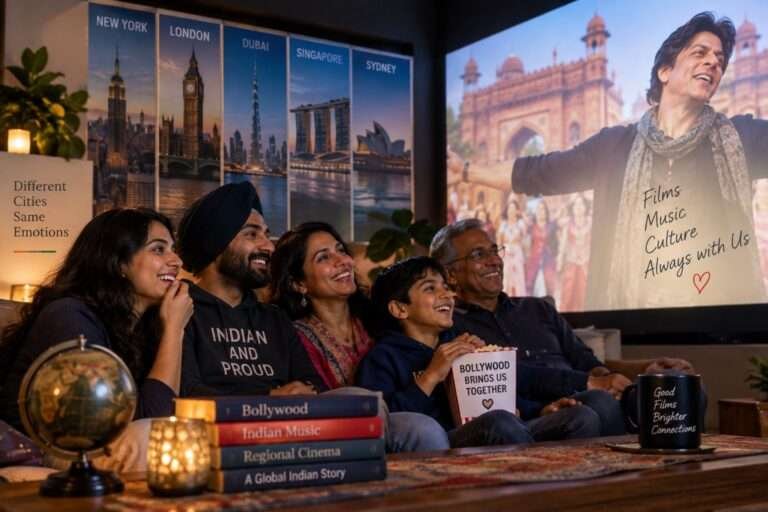

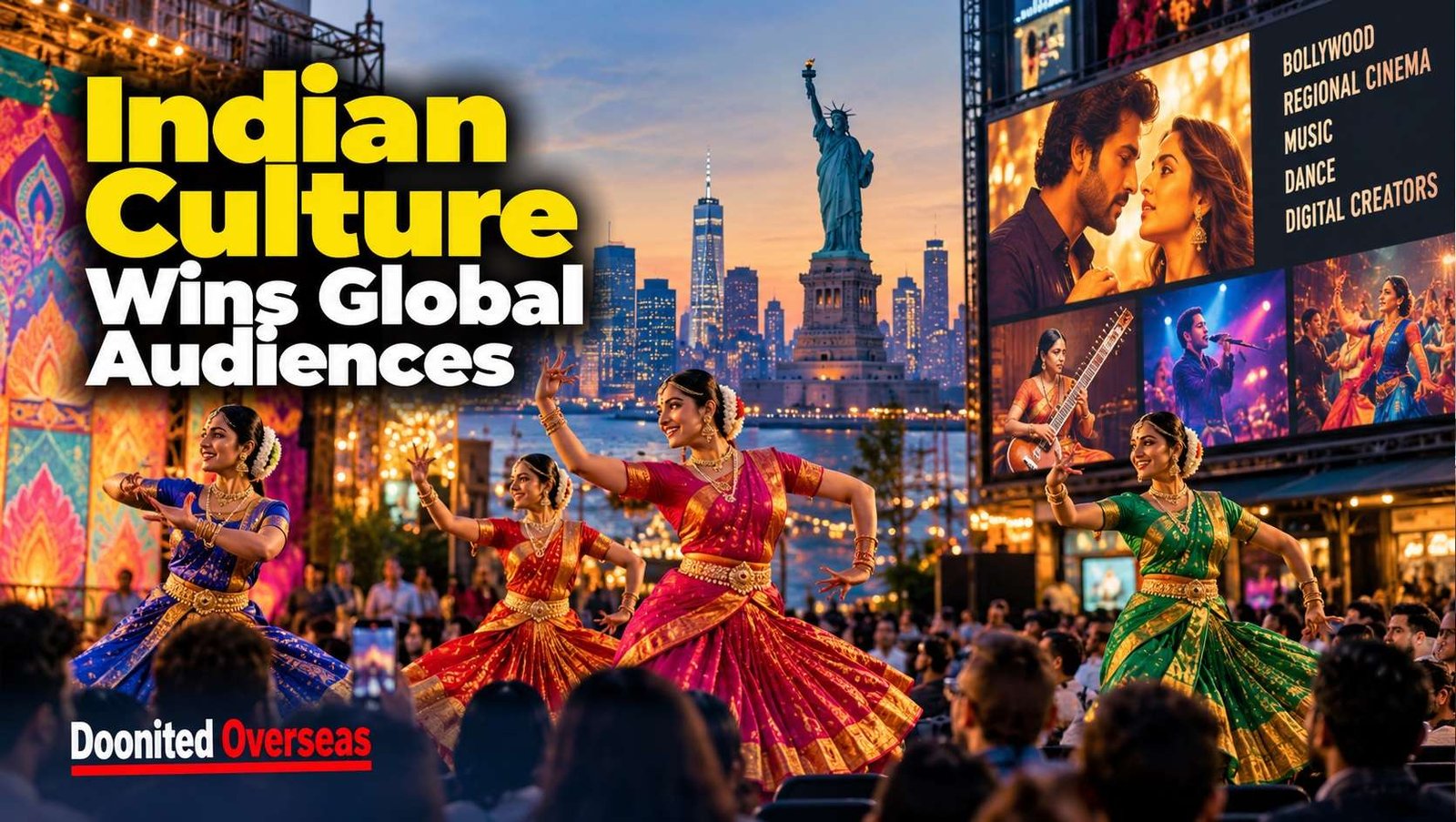
Bollywood remains a powerful cultural ambassador, but it no longer tells the whole story of India’s cultural presence abroad. From Punjabi arena concerts and Indian classical music at major arts venues to regional cinema and digital creators, the routes to international audiences are multiplying. The commercial challenge is turning online attention into lasting demand—without confusing viral numbers with a sustainable audience.
The Bollywood gateway is widening
For decades, international audiences often encountered Indian popular culture through Hindi-language cinema, its music, dance and star system. Bollywood helped create a recognisable cultural vocabulary: elaborate song sequences, family dramas, romance and spectacle. But it was never the only route. Indian communities abroad sustained classical music, dance, regional-language cinema and devotional traditions long before social platforms made them easy to discover.
What has changed is the number of routes between an artist and an overseas audience.
Streaming services allow listeners to find Punjabi, Tamil, Telugu, Malayalam, Bengali and independent music without waiting for a local broadcaster or a specialist shop. Short-form video can introduce a dance style, a hook or a regional sound to people who may not understand the language. Touring artists can then convert that awareness into ticket sales in cities far beyond the traditional diaspora circuit.
This is not simply a story of Bollywood being replaced. It is a story of cultural discovery becoming less dependent on a single industry, language or distribution channel.
The distinction matters for overseas Indians. A second-generation listener may discover a regional song through a social feed, attend a concert with friends, and then explore the film or musical tradition behind it. A non-Indian listener may arrive through a festival, a collaboration or a streaming recommendation. The audience can overlap, but it should not be assumed to be identical.
The diaspora venue: a cultural bridge, not just a stage
Diaspora institutions remain important because they provide something a global platform cannot: context, trust and a community willing to sustain an art form over time.
Classical music and dance often depend on patient audience development. A concert may require listeners to understand a raga’s unfolding structure, the relationship between melody and rhythm, or the vocabulary of a dance tradition. Community organisations, cultural schools, temples, universities and specialist presenters can help audiences build that familiarity.
Yet the ecosystem is not confined to community halls.
London’s Darbar Festival 2026, scheduled from 24 October to 1 November, brings Indian classical music to the Barbican Centre. Its programme includes established lineages and newer artists, performances, talks and participatory events. The festival also presents opportunities for audiences to learn how Hindustani and Carnatic traditions work, rather than simply encounter them as an exotic sound. The programme includes a midnight meeting of Hindustani violin and Carnatic veena, and a music-appreciation course exploring raga and tala.
That combination—performance, education and cultural encounter—is significant. It can help a festival reach beyond people who already know the repertoire, while giving the art form a setting in which its complexity is taken seriously.
Mainstream venues do not automatically guarantee a broad or diverse audience. Nor does a prestigious address prove commercial success. But a recurring programme can create continuity: artists return, audiences learn, critics engage and institutions develop the knowledge needed to present the work well.
From community tours to global live entertainment
The commercial model for popular Indian music has also become more sophisticated. Artists, specialist South Asian promoters, venue operators, ticketing companies, sponsors and international partners may all play a role in a tour. A successful run depends on more than an artist’s fame: it requires routing, production, local marketing, ticket pricing, immigration and work permissions, insurance, security and reliable venue operations.
Punjabi star Diljit Dosanjh illustrates the growing scale of Indian-language popular music as a live proposition. His touring success has helped demonstrate that an artist need not move entirely into English-language pop to attract large audiences internationally. The appeal can be rooted in language, performance, fashion, humour and a sense of shared identity.
But a large diaspora audience is not the same thing as universal mainstream penetration. A concert can sell strongly in cities with substantial South Asian populations while remaining a niche event elsewhere. That is not a weakness: a commercially viable cultural market does not need every audience to be the same.
The more useful question is whether artists can build repeat audiences across different markets, rather than rely on a small number of headline events. A tour that sells tickets, pays its suppliers and brings audiences back next year is a different proposition from one that generates a spectacular online moment but struggles to fill a venue.
Regional cinema and creators: discovery is not the same as demand
Regional cinema and digital creators face a similar opportunity. Subtitles, streaming distribution and social media make it easier for audiences abroad to encounter stories beyond Hindi cinema. A creator can build a following around food, comedy, music, dance, fashion or everyday life, sometimes reaching viewers who have little prior connection to India.
However, online visibility is an imperfect measure of cultural or commercial reach.
A video may accumulate millions of views because it is brief, repeatedly recommended or widely shared. Those views do not necessarily reveal how many people watched to the end, remember the creator, would pay for a ticket, subscribe to a service or buy a product. Nor do they show whether an audience is concentrated in one country or spread across markets with very different purchasing power.
For artists and promoters, the practical measures are more grounded:
Paid demand: ticket sales, paid subscriptions and repeat purchases—not just free views.
Audience geography: where listeners and buyers actually live, not simply where content is played.
Conversion: whether online engagement leads to ticket bookings, merchandise sales or sustained listening.
Repeat behaviour: whether audiences return for another release, performance or event.
Economics: revenue after venue costs, production, travel, marketing, commissions and other expenses.
These indicators do not diminish the value of free discovery. A viral clip can introduce an artist to a new audience. The point is to understand what happens next.
The business behind cultural exports
India’s domestic entertainment economy provides context, though it should not be mistaken for a measure of overseas earnings. The FICCI–EY report on India’s media and entertainment sector found that the overall industry reached ₹2.5 trillion in 2024. Digital media became the largest segment, while organised live events grew 15% and crossed ₹100 billion in revenue. Music, however, faced pressures: the report recorded a 2% revenue decline in 2024, despite growth in paid music subscriptions.
These figures describe India’s industry, not the global market for Indian cultural exports. They nevertheless highlight an important tension: more digital access and more live events do not guarantee that every part of the music business will become more profitable.
Overseas growth also involves costs and risks that social metrics can conceal. International touring requires upfront capital. Ticket prices must balance production costs with what local audiences can afford. Currency movements, venue terms, travel expenses and regulatory requirements can alter the economics of a tour. Smaller artists may struggle to finance a first international visit even when their online following looks impressive.
For cultural organisations, the challenge is to build pathways between discovery and participation: affordable entry-level events, educational programmes, collaborations with local artists and repeat performances. For promoters, it is to use audience data carefully and avoid treating every follower as a likely ticket buyer.
What this means for the Indian diaspora
Overseas Indians are not merely consumers of exported culture. They can be audience-builders, organisers, teachers, donors, critics and collaborators. Local music schools and cultural associations can introduce younger generations to traditions they may not encounter at home. Promoters can connect artists with venues and audiences. Diaspora creators can explain cultural references to people encountering them for the first time.
There is also a responsibility to represent the culture honestly. Indian culture is not one genre, language, religion or aesthetic. A global programme that features only the most commercially recognisable acts may sell tickets, but it can leave much of India’s artistic diversity unseen. Conversely, a programme that assumes cultural importance alone will guarantee audience demand may struggle to survive.
The durable model combines artistic integrity with audience understanding. It makes room for both the familiar and the unfamiliar, measures success beyond a viral moment, and treats local communities as partners rather than a ready-made market.
The next measure of global reach
India’s cultural presence overseas is becoming more varied, but the shift should not be reduced to a contest between Bollywood and everything else. Film remains influential; classical arts continue to build audiences; regional-language works travel through new channels; and digital creators can turn local expression into international conversation.
The real test is whether this attention becomes sustainable: artists paid fairly, events that can return, audiences that come back, and cultural institutions that help new listeners understand what they are hearing.
A million views can open the door. A committed audience keeps it open.


World Beyond the News
Birds Can Navigate Using Earth’s Magnetic Field
Several bird species can sense Earth’s magnetic field, helping them navigate during long-distance migration.
Fermentation Is a Global Food Tradition
People across continents have used fermentation for centuries to preserve food and create distinctive flavours.
Modern Batteries Store Energy Chemically
Rechargeable batteries repeatedly move ions between electrodes, allowing electrical energy to be stored and released.
Why Songs Become Global Hits
Streaming platforms, short-form video, playlists and international collaborations can rapidly carry music across borders.