
The Contributions, Sacrifices and Untold Costs of Migration
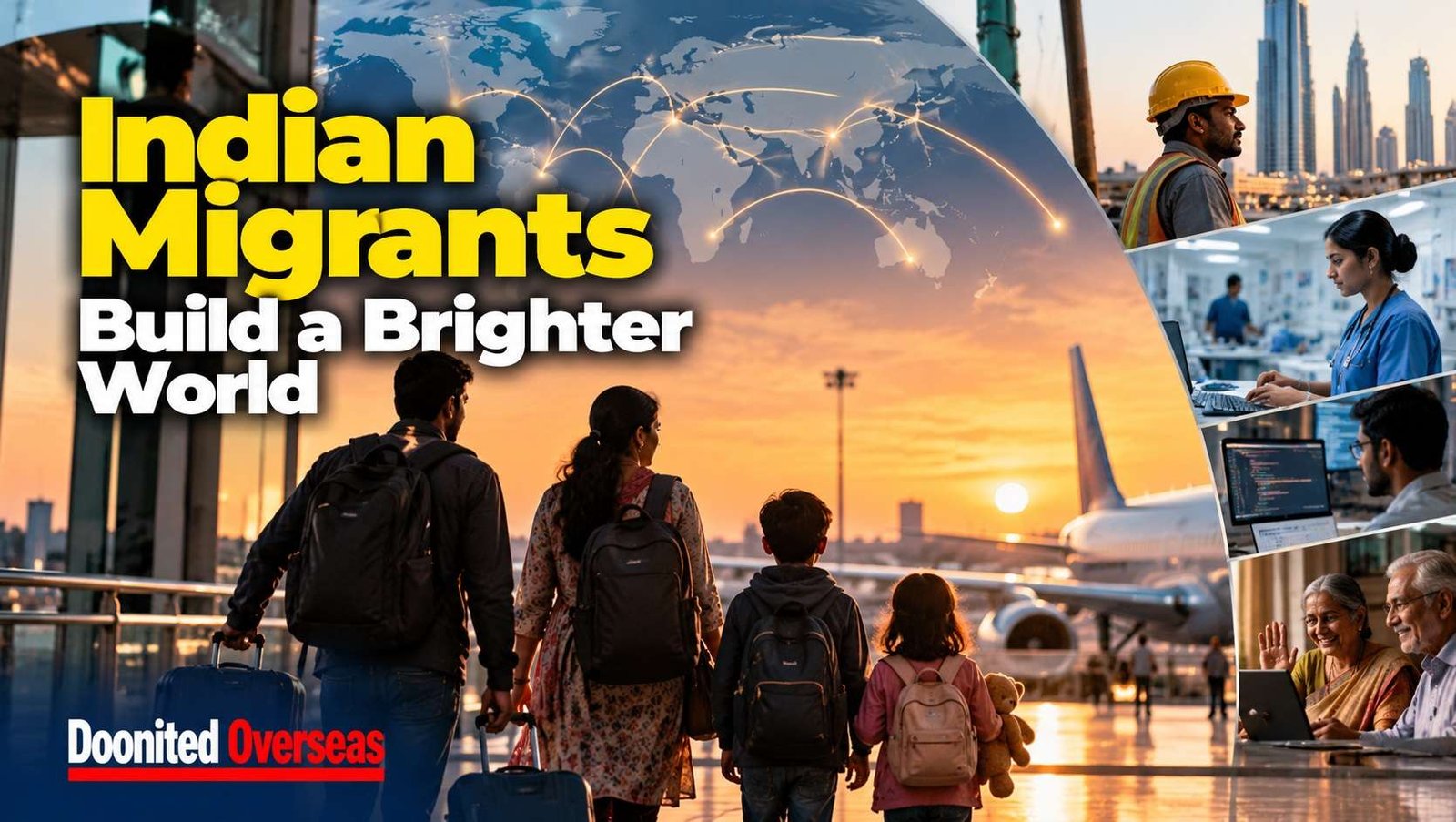
Indian migrants help staff hospitals, build cities, power businesses and connect cultures across borders. Their work supports families and economies, but the rewards of migration are not shared evenly. From recruitment debt in the Gulf to the strain of raising children across continents and the uncertainty of long immigration queues, the human cost can remain hidden behind the success story. International Migrants Day is a chance to look at both sides of that equation.
A global contribution built one journey at a time
On 18 December, International Migrants Day recognises migrants’ contributions and calls attention to their rights and well-being. The United Nations established the observance in 2000, reflecting the growing importance of migration and the need for international cooperation to protect people who move across borders.
For Indian families, migration can be a route to better wages, education, security and opportunity. For destination countries, migrant workers contribute skills, labour, entrepreneurship and cultural knowledge. But “migration” is not one experience. A construction worker recruited for a Gulf project, a nurse joining the UK health service, a software engineer in California and a child born into a diaspora household encounter very different opportunities and risks.
The central question is not whether migration is good or bad. It is whether the benefits are achieved without placing an unfair share of the cost on the people who move—and the families who depend on them.
The Gulf worker: earning abroad, carrying debt and distance
For many Indian workers in the Gulf, migration begins with a practical calculation: a job abroad may pay more than the opportunities available at home, making it possible to repay debts, support parents, educate children or build a house.
The scale of the financial connection is substantial. The World Bank estimated that India received about US$129 billion in remittances in 2024, the largest amount among low- and middle-income countries. These transfers support household spending and connect overseas employment with communities across India.
A 2024 report by Verité, based on more than 300 interviews with Indian workers employed across Gulf Cooperation Council countries, documented recruitment costs and debt-related vulnerabilities. It described how informal agents, hidden fees and complex labour-supply chains can leave workers indebted before they begin earning. The report calls for more transparent recruitment and stronger protections, including adoption of the employer-pays principle.
The International Labour Organization has also examined recruitment and labour-market challenges in migration from India to Gulf countries, including the need for clearer information about wages, skills and recruitment practices.
The policy lesson is clear: protecting migrants must begin before departure. Transparent contracts, regulated recruitment, accessible complaint systems and enforcement against abusive practices matter as much as the salary advertised.
The nurse: essential work, complicated choices
Indian-trained nurses and other healthcare professionals have become part of the workforce in several destination countries. Their contribution is measurable in the people they care for, the shifts they cover and the expertise they bring to health systems.
In the United Kingdom, the Nursing and Midwifery Council reported in December 2024 that 67,576 registered nursing and midwifery professionals had been educated in India. They formed a substantial part of the internationally educated workforce on the UK register. The same report showed that international recruitment was slowing overall, underscoring that workforce patterns change over time.
Moving countries can mean adapting to new clinical protocols, professional expectations, accents and workplace cultures. Qualifications and experience gained in India may not translate immediately into the role or career progression a migrant expected. Some workers also face the challenge of rebuilding professional and social networks from scratch.
For parents, overseas employment can involve difficult family arrangements. A mother or father may leave young children with a spouse or grandparents while establishing a career abroad. Such arrangements can help a household meet long-term goals, but they may also bring guilt, loneliness and pressure on the relatives providing daily care.
The answer is not to portray migration as abandonment, or to assume that every family suffers in the same way. It is to recognise that family care is work—and that the people who remain at home may need support too.
The technology professional: opportunity with conditional security
For Indian technology professionals, migration may offer access to advanced research, global companies, entrepreneurship and higher earnings. Their work can connect teams across continents and contribute to innovation in destination countries.
Yet professional success does not necessarily mean secure immigration status.
In the United States, employment-based permanent residence is subject to visa limits and per-country rules. The State Department’s visa bulletins show that India-born applicants in several employment-based categories have faced substantial backlogs. The dates change from month to month, so applicants must consult the current bulletin rather than rely on a general description of waiting times.
This uncertainty can also affect spouses and children, whose education, employment and long-term plans may depend on the principal applicant’s circumstances.
It is important not to imply that every visa holder is unable to change jobs or travel. Rights and restrictions vary by visa category and individual situation. But where legal status is tied to a narrow set of conditions, even a highly paid professional can experience a sense of insecurity.
The next generation: belonging is not automatic
Migration’s effects continue long after the first journey. Children born or raised abroad may become bridges between cultures, contributing to business, public service, science, literature, sport and the arts. They can maintain links with India while shaping the societies in which they grow up.
That cultural contribution should not obscure the challenges of belonging. Some second- or third-generation people navigate different expectations at home and outside it. Language, religion, family obligations and ideas about career or relationships can become points of negotiation between generations.
Experiences of discrimination also vary, and should not be assumed simply because someone is of Indian origin. But where people encounter barriers or stereotypes, cultural achievement alone cannot guarantee equal treatment.
Nor should descendants be expected to justify their family’s migration through exceptional performance. The success of one generation is not a debt that the next must repay through constant overachievement.
A healthy diaspora identity allows people to belong in more than one place without having to prove that they deserve either.
Making migration work for the people who move
The benefits of migration are real, but they are not automatic or evenly distributed. The United Nations notes that migrants can fill labour gaps, contribute to innovation and entrepreneurship, support ageing societies and provide vital income to families back home. It also stresses that unsafe and poorly managed migration can expose people to exploitation, abuse and serious harm.
For prospective migrants, practical safeguards include verifying recruiters and employers, reading the contract in a language they understand, checking the legal requirements for the destination country and keeping copies of important documents. Workers should understand where to seek help if wages are withheld, a contract changes or they face unsafe conditions. In urgent situations, local authorities, labour departments, consular services or qualified legal advisers may be able to assist, depending on the circumstances.
Families can also plan for the emotional and practical realities of separation. Agreeing on communication routines, caregiving responsibilities and emergency arrangements can reduce uncertainty. Such planning cannot eliminate distance, but it can make the burden less isolating.
The measure of migration is more than money
On International Migrants Day, it is tempting to celebrate migration through remittance totals, professional achievements and stories of extraordinary success. Those achievements deserve recognition. But a fuller account also asks who paid the recruitment fees, who cared for the children, who waited for a visa, and who spent years away from home.
Migration should not be judged solely by what it delivers to economies or by what a family receives in a bank account. Its success should also be measured by whether workers are treated fairly, families can remain connected, qualifications are respected, rights are protected and people can participate in their adopted societies with dignity.
For Indian migrants, the journey may begin with the hope of securing a better future for the family. The responsibility of governments and employers is to ensure that this hope does not depend on accepting avoidable exploitation or indefinite insecurity.
The contribution is global. The person bearing the cost is human. Both deserve to be seen.


World Beyond the News
Why Elephants Stay Close to Their Herd
Elephants live in highly social family groups and use calls, touch and body movements to maintain strong bonds.
Most of the Deep Ocean Remains Difficult to Explore
Extreme pressure, darkness and distance make deep-ocean exploration one of Earth’s greatest scientific challenges.
Spacecraft Can Travel Without Traditional Roads
Spacecraft use carefully calculated trajectories and gravity assists to travel enormous distances through space.
Why Movie Trailers Are Released in Stages
Major films often use teaser trailers, full trailers and final promotional spots to build awareness over time.