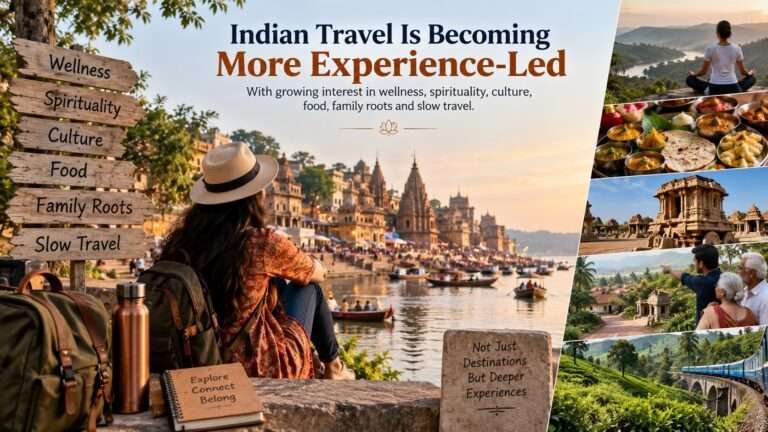

Beyond the Golden Triangle: For millions of international visitors, India begins with a familiar itinerary
Delhi’s monuments, Agra’s Taj Mahal and Jaipur’s palaces. Add Varanasi, Kerala or Goa, depending on the traveller’s interests, and the journey often follows a well-established tourism map.
But India is considerably larger than its most recognizable postcards.
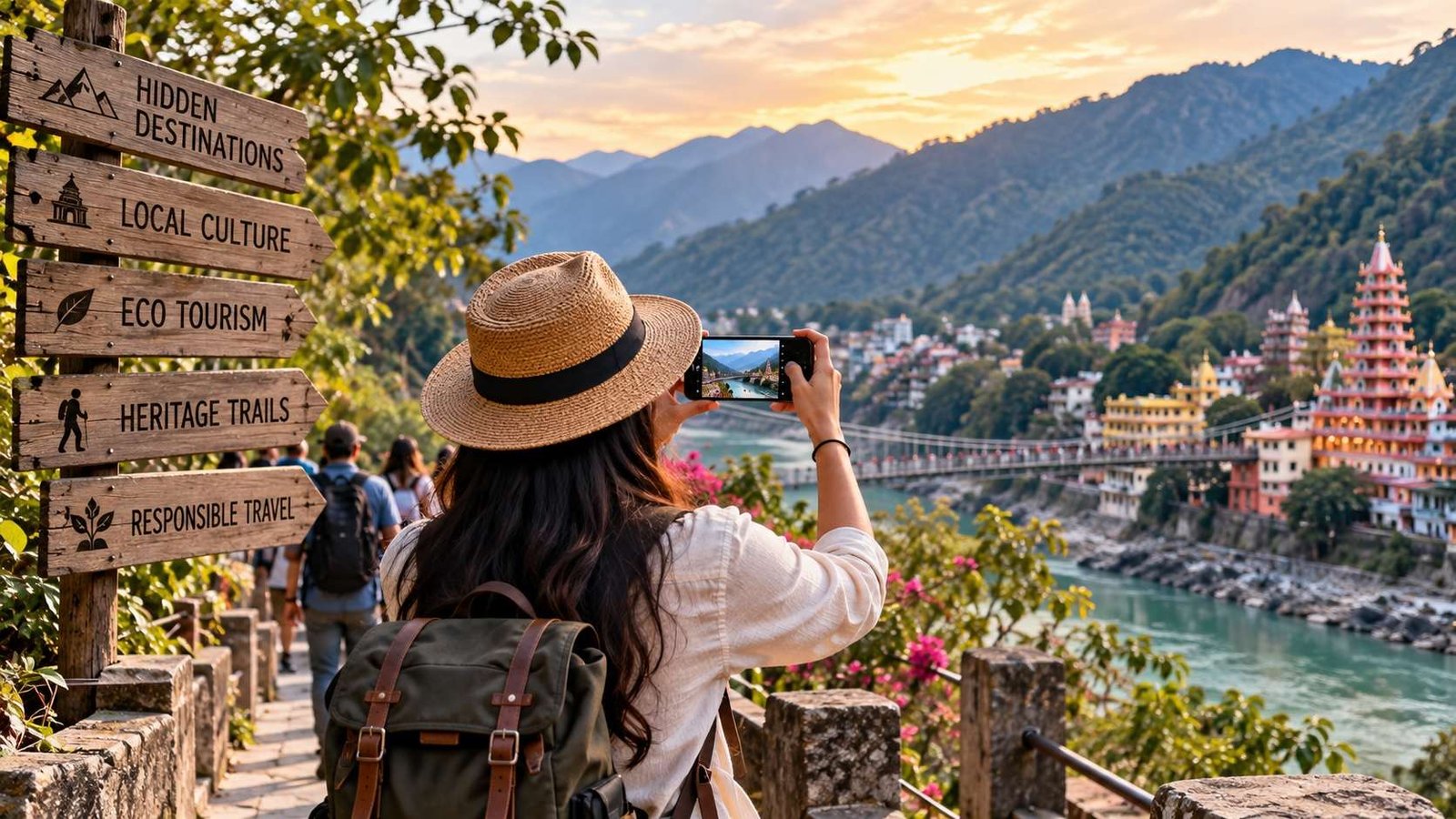
There are Himalayan villages, living craft traditions, forest landscapes, lesser-known Buddhist sites, coastal communities, regional food cultures and historic towns that rarely make it onto an overseas visitor’s first shortlist.
The challenge has never been a shortage of places to discover. It has been helping travelers find them, understand them and plan a practical journey.
That is where technology enters the story.
As World Tourism Day arrives on September 27, 2026, India is expanding its digital tourism agenda, using artificial intelligence, online discovery and destination-led promotion to connect travelers with a wider range of experiences. The opportunity is substantial. But the real test is whether digital visibility can translate into better journeys—and meaningful economic benefits for the places being discovered.
India’s tourism story is larger than its famous landmarks
India’s tourism market has enormous scale. The Ministry of Tourism recorded approximately 2.95 billion domestic tourist visits in 2024, while foreign tourist arrivals were about 9.95 million. These are different measures: domestic visits count trips by residents within India, while foreign tourist arrivals count international visitors entering the country. They should not be confused with unique individuals or with each other.
The figures demonstrate the importance of tourism to India’s economy, but they do not tell us how evenly visitors are distributed.
Some destinations have established international recognition, extensive accommodation and transport networks, and a large ecosystem of tour operators. Others may have remarkable heritage or landscapes but limited visibility, inconsistent visitor information or few ways to book a reliable experience.
A traveller might be interested in a traditional weaving centre, a quiet Himalayan trail or a historic town beyond the main tourist circuit. Yet discovering the place is only the first step.
Can the visitor reach it? Is the site open? Are local guides available? Is there reliable accommodation? Are permits required? Can the traveller find accurate information in a language they understand?
A beautiful destination is not automatically an accessible destination.
India’s digital tourism push is already under way
In February 2026, the Ministry of Tourism launched a revamped Incredible India Digital Platform. According to the government, it offers virtual experiences covering cultural heritage, nature, adventure, food, wellness, crafts and rural tourism.
The platform also includes an AI-powered tool intended to personalize visitor experiences, with features such as real-time weather information, city exploration and access to travel services. It has partnerships with online travel agencies and other stakeholders to support bookings for flights, hotels, cabs, buses and tickets for Archaeological Survey of India monuments.
In June, the Ministry signed a memorandum of understanding with Google India to strengthen digital promotion of Indian destinations. The stated areas of cooperation include digital technologies, artificial intelligence, data-driven insights, visitor engagement and capacity building.
These initiatives point towards a shift in how India presents itself to the world.
Tourism promotion is no longer limited to a brochure, a campaign film or a photograph of the Taj Mahal at sunset. Digital platforms can help travellers explore destinations, compare experiences and move from inspiration to planning.
But a digital platform is a gateway, not the destination itself.
How AI could change the way visitors discover India
Imagine a visitor from Germany planning a two-week trip to India.
Instead of searching only for “best places in India”, the traveller could specify an interest in architecture, regional food, walking tours and quieter destinations. A well-designed digital system could then suggest a route combining a major city with smaller heritage towns, local experiences and practical transport connections.
A family interested in wildlife could receive information about seasons, park rules, accommodation and travel time. A visitor interested in crafts could discover workshops, museums and community-run experiences rather than simply buying a souvenir at an airport.
This is the promise of AI-assisted travel planning: making discovery more personal and reducing the effort required to turn curiosity into a workable itinerary.
It could also help visitors navigate India’s diversity. The country has multiple languages, varied transport systems, different climates and regional customs. Clear, accurate, multilingual information can make travel less intimidating.
Yet AI recommendations are only as useful as the information behind them.
An outdated opening time, an incorrect route, an unavailable hotel or a misleading description can turn a promising digital itinerary into a frustrating real-world experience. Human verification, updated destination data and clear accountability remain essential.
The algorithm can suggest the journey. It cannot repair a broken road.
The real opportunity lies beyond the usual circuit
India’s less-promoted destinations do not all need to become mass-tourism centres. Some would benefit from a modest increase in responsible visitors; others may need carefully managed access to protect fragile ecosystems or living cultural traditions.
Consider the possibilities.
Craft and cultural tourism: Visitors could discover artisan clusters, textile traditions, regional architecture and local museums. If experiences are developed in partnership with practitioners, tourism can create income while helping sustain skills and knowledge.
Nature and adventure: Digital information can help travellers understand seasons, permits, safety requirements and responsible behaviour before reaching a destination. This is particularly important in mountain and forest regions.
Food tourism: Regional cuisines can become a reason to visit a place, not merely something encountered after arrival. Local food trails, markets and cooking experiences can connect visitors with producers and culinary traditions.
Rural and community-led tourism: Homestays, guided walks and cultural experiences can help direct some tourism spending to local businesses. But community participation must be genuine, with residents involved in decisions and sharing in the economic benefits.
These are not guaranteed outcomes of digital promotion. They require local partnerships, quality standards, transport, training and services that meet visitors’ needs.
The visibility problem—and the readiness problem
A destination can be almost invisible online. But the opposite problem is also possible: it can become popular faster than its infrastructure can cope.
If a digital campaign sends large numbers of visitors to a small settlement, the result may be traffic congestion, pressure on water and waste systems, rising prices or disruption to local life.
For ecologically sensitive destinations, visitor numbers may need to be limited. Heritage sites may require conservation rules. Communities should be able to decide which forms of tourism fit their priorities.
This is why destination-led development matters.
The goal should not be to make every place “viral”. It should be to connect the right visitors with places that are prepared to welcome them, at a pace that local infrastructure and communities can sustain.
A digital campaign can create demand in weeks. Building sewage systems, trained guide networks and reliable public transport takes much longer.
Tourism planning has to work on both clocks.
Can digital discovery improve India’s international tourism appeal?
It can help, but it is only one part of the equation.
International visitors also need dependable transport connections, straightforward booking, accurate information, safety, cleanliness, accessible services and confidence that what they book is what they will receive.
The Ministry’s own tourism statistics show why it is important to look beyond headline growth. India recorded 9.95 million foreign tourist arrivals in 2024, while the Ministry’s 2025 dashboard reports 9.15 million foreign tourist arrivals. The government separately reported approximately 20.09 million international tourist arrivals in 2025, a broader measure that includes non-resident Indian arrivals. These categories differ, so the numbers should not be compared as if they were identical.
The larger point is that digital promotion must be judged by more than clicks, impressions or app downloads.
Useful measures would include whether visitors discover new destinations, complete bookings, stay longer, spend with local businesses and report better experiences. For destinations with environmental or cultural sensitivities, the measurement should also include visitor pressure and community outcomes.
The question is not simply whether more people see India online.
It is whether the right people can make informed, responsible journeys—and whether the places they visit benefit.
The human layer must remain visible
There is a temptation to imagine AI as the central character in tourism’s future. But travel is fundamentally a human experience.
A local guide explaining the history of a monument, a craftsperson demonstrating a technique, a homestay host sharing a family recipe or a forest guide interpreting the landscape offers something that an itinerary generator cannot reproduce.
Technology should make these encounters easier to find, book and understand. It should not flatten them into interchangeable entries on a screen.
Nor should every community have to package its culture for an algorithm. Some traditions are private, sacred or simply not intended to become tourist attractions. Respecting those boundaries is part of responsible tourism.
The best digital tools will help travellers approach places with greater knowledge—not the assumption that everything they discover online is theirs to consume.
DOONITED View: India needs a discovery economy, not just a tourism campaign
India’s digital tourism agenda could help broaden the country’s international image beyond a handful of famous destinations.
The opportunity is to build a discovery economy in which smaller destinations, local enterprises and regional experiences become easier to find—and where tourism spending has a better chance of reaching the people who sustain those experiences.
But technology cannot substitute for destination readiness.
A digital listing cannot guarantee clean public facilities. An AI itinerary cannot create a trained local guide. A booking integration cannot replace reliable transport. And a beautiful virtual tour cannot compensate for poor conservation.
The real achievement would be to connect digital discovery with the practical foundations of a good journey: accurate information, accessible transport, trustworthy services, local participation and environmental care.
India does not need to make every hidden destination famous.
It needs to make worthwhile destinations discoverable, visitable and sustainable.
That is a more demanding ambition—and a more valuable one.
Learning Point
For travellers, digital tools can reveal places beyond familiar itineraries, but recommendations should be checked against current local information and responsible-travel guidance.
For destinations, online visibility works best when it is matched by infrastructure, community participation and conservation.
And for India, the next stage of tourism growth may depend not only on how many people arrive, but on how widely the benefits of their journeys are shared.
The future of Indian tourism may be one click away. Making that click worthwhile will take people, planning and places ready to welcome the world.


World Beyond the News
Octopuses Can Change Their Appearance
Octopuses can rapidly alter their skin colour and texture to communicate, camouflage themselves and respond to danger.
Some Cities Exist Across Two Continents
A small number of cities are geographically associated with two continents, creating unusual cultural and geographic identities.
Earth’s Climate Is Measured in Many Ways
Scientists track temperature, atmospheric gases, sea level, ice cover and other indicators rather than relying on a single climate number.
Streaming Changed How Audiences Discover Shows
Recommendation systems and global streaming releases allow audiences to discover programmes far beyond their original markets.