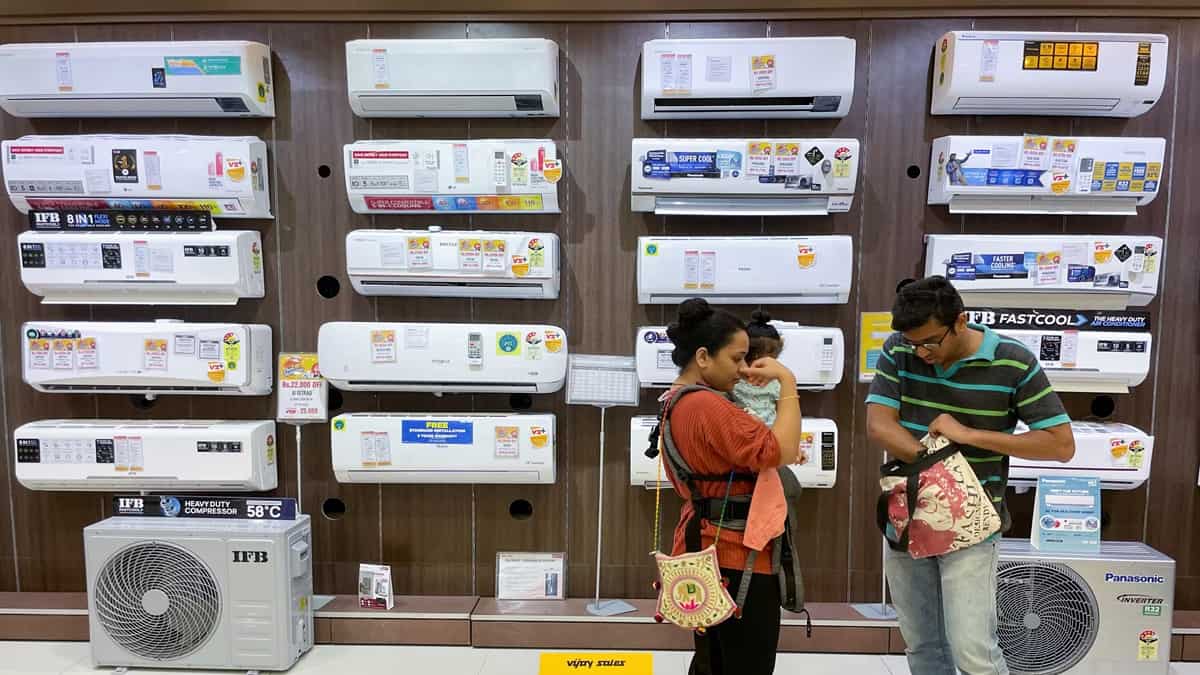
Consumers planning to buy a new air conditioner may want to move faster than they had planned. Prices of room air conditioners are expected to rise sharply over the coming months, with manufacturers preparing for industry-wide hikes of around 7–8 per cent on new models. The increase is being driven by the rollout of stricter energy-efficiency norms and the continued pressure of higher raw material costs. With summer demand never far away, the looming price reset has already triggered early buying across markets, as shoppers and dealers rush to secure older models before costs climb further.
According to a recent report by Equirus, the Indian air conditioner industry is on the cusp of a major transition. From January 2026, revised star-rating norms will come into force, forcing manufacturers to rework designs, upgrade components and invest more in compliance. These changes are expected to push up production costs across categories, from entry-level models to premium offerings. Much of this additional cost, industry executives say, will eventually be passed on to buyers, reshaping pricing just ahead of the peak cooling season.
Why air conditioner prices are rising?
At the heart of the expected price increase is the new star-rating regime for room air conditioners. The revised norms raise the bar on energy efficiency, meaning many models currently sold as high-rated products will no longer qualify under the same labels unless they are redesigned. All of this comes at a cost.
Adding to the pressure is the fact that key raw materials such as copper, aluminium and steel remain expensive. Even as some commodity prices have cooled from recent peaks, they are still well above pre-pandemic levels. The Equirus report notes that the combination of regulatory changes and persistent input cost inflation is likely to result in uniform price hikes of 7–8 per cent on new air conditioner models. A second round of increases during April or May, when summer demand typically peaks, is also a strong possibility.
Early buying picks up ahead of new norms
Signs of a market response are already visible. Dealers across major cities report strong pre-buying activity, particularly towards the end of the year, as consumers try to lock in current prices. Older star-rated models, which may either be repriced or phased out once the new rules take effect, are seeing a noticeable jump in demand.
Retailers, too, are acting ahead of time. Many have stepped up stocking of existing models, anticipating a rush in the months leading up to the transition. This front-loading of demand allows manufacturers to clear older inventory while giving consumers a chance to avoid higher prices.
For buyers, the logic is simple. Even if newer models promise better efficiency, the immediate saving from a lower purchase price is hard to ignore, especially when electricity tariffs remain uneven across states.
Two turbulent years for the AC industry
The price reset comes after a period of sharp swings for the room air conditioner industry. Calendar year 2024 was a standout, with the sector clocking close to 40 per cent growth. That momentum, however, did not carry through into 2025. Unpredictable weather disrupted demand patterns, while changes linked to GST compliance caused temporary disruptions in the supply chain.
Industry estimates suggest volume growth of around 20–22 per cent next year, supported by a lower base, replacement demand and expectations of a more normal summer. Once the new star-rating norms are fully absorbed, pricing discipline is likely to improve. Higher-efficiency models typically command better realisations, and discounting tends to moderate once regulatory uncertainty settles. The Equirus report points out that this could help margins normalise through 2026, offering relief to manufacturers after two challenging years.
What this means for consumers?
For consumers, the message is fairly straightforward. Air conditioners bought later may cost more. Air conditioners are increasingly viewed as a basic household requirement rather than a luxury, especially in urban and semi-urban India. Rising incomes, longer summers and changing lifestyles continue to support steady growth. What is changing is the structure of the market. Higher efficiency standards are pushing the industry towards better technology and improved quality, even if that means higher entry prices. For consumers, the coming months may offer a final window to buy at current rates before the next pricing chapter begins.
Doonited Affiliated: Syndicate News Hunt
This report has been published as part of an auto-generated syndicated wire feed. Except for the headline, the content has not been modified or edited by Doonited