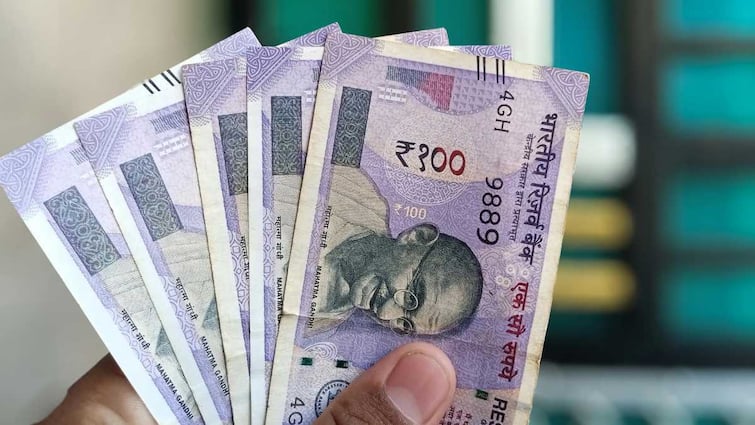
The Indian rupee continues its steep decline, breaching the 90-per-dollar mark on Wednesday morning and extending a multi-day downward run. So far this year, the currency has lost more than 5 per cent.
Below are the four key forces dragging the rupee lower.
Slow Capital Inflows And Limited RBI Support
A sharp slowdown in capital inflows coupled with reduced intervention by the Reserve Bank of India (RBI) has been a major source of pressure.
“The rupee has been weakening with the Government of India and the Reserve Bank of India (RBI) wanting to help exporters and may have kept the dollar well bid in the past few days,” Anil Kumar Bhansali, Head of Treasury and Executive Director, Finrex Treasury Advisors LLP, said.
“Nationalised banks were buying dollars at higher levels consistently yesterday (Tuesday)… There was a deal at 90.0050 after the close of market hours on the trading platform. The stalled India-US trade talks and heavy FPI outflows are causing this fall in rupee despite a weakening dollar index,” he added.
Between October 2024 and January 2025, the RBI sold a net $55.8 billion in spot and forward markets. This year, meaningful intervention began only in August, with $36.3 billion sold between August and November.
At the start of FY26, the forward book stood at $84.3 billion as of March 2025, curbing the central bank’s ability to deploy buy-sell swaps without squeezing liquidity. Lower FX intervention has also allowed greater monetary policy independence.
Delayed India-US Trade Deal And Tariff Frictions
The rupee’s decline has also been aggravated by unresolved trade tensions with the US. Washington imposed a steep 50 per cent tariff on India earlier this year. Even after India reduced its purchases of Russian oil, the US neither rolled back the tariff nor concluded a trade agreement.
Record-High Metal And Bullion Prices
Surging commodity prices are further straining the currency. India’s import bill has swelled as metal and bullion prices hit record highs.
Weak FDI And Soft External Borrowings
Foreign portfolio investors have withdrawn around $17 billion from Indian equities this year. Foreign direct investment flows remain muted, and external commercial borrowings have been soft, all contributing to broad-based capital outflows.
What’s Ahead? All Eyes On RBI
The RBI Monetary Policy Committee is meeting from December 3 to 5, with attention firmly on the governor’s statements on December 5.
Doonited Affiliated: Syndicate News Hunt
This report has been published as part of an auto-generated syndicated wire feed. Except for the headline, the content has not been modified or edited by Doonited