The Sanchar Saathi app has come under scrutiny after users noticed a wide gap in the permissions it seeks on Android and iOS devices. While Android users see five key permissions, iPhone users only face two. This difference has raised questions about data access, privacy and how the app functions across platforms.
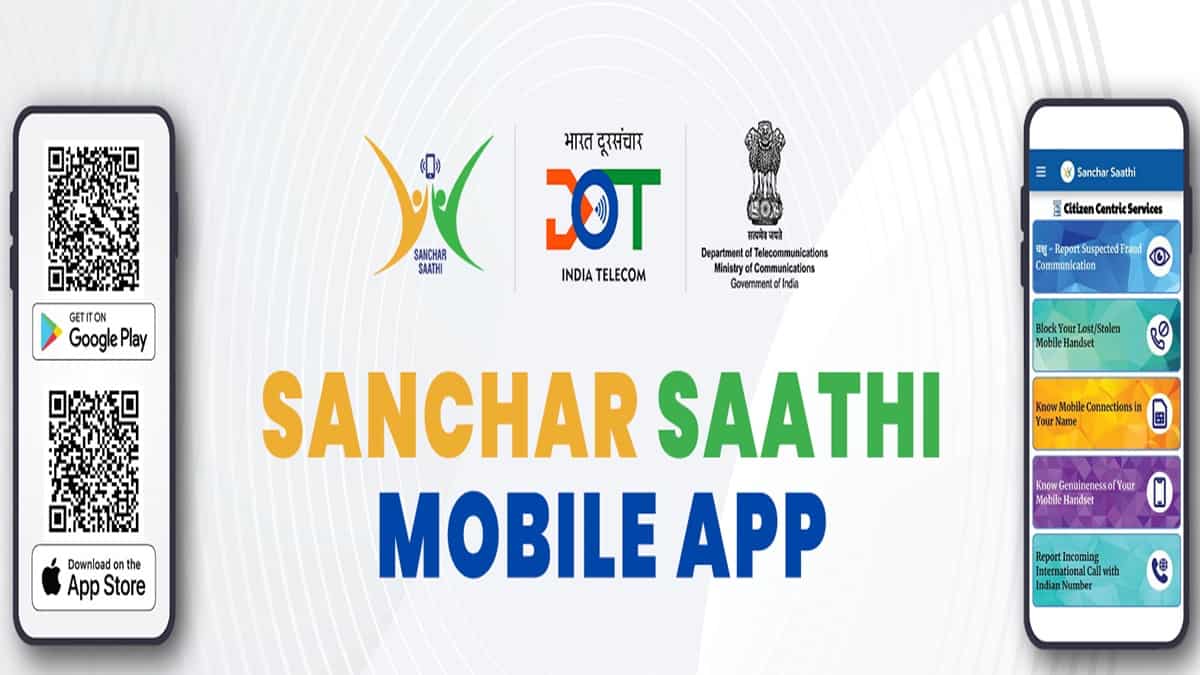
The app is available on both Android and iOS. It was launched in January this year. The app helps users block a stolen phone, report spam calls or messages, and check all mobile connections linked to their ID. After criticism from users, Union Minister Jyotiraditya Scindia said that consumers will be allowed to delete the preloaded app from new phones.
A majority of Indians use Android phones. So the permissions requested by the app on Android have drawn more attention. Version 1.5 of the app asks for multiple permissions, including some used by core system apps.
1. Make & manage phone calls
The app uses this to detect mobile numbers stored on the device. It also checks the phone’s state and identity.
2. Send SMS
This is required to send a registration message to DoT on 14422.
3. Call and SMS logs
The permission allows users to report fraud calls and messages directly within the app.
4. Photos and files
Used to upload images while reporting spam calls, messages, or a stolen handset.
5. Camera
Needed to scan the IMEI barcode to verify if a phone is genuine or reported stolen.
iOS: Only 2 permissions allowed
Apple’s closed ecosystem restricts several permissions that Android apps can access. So the app works with fewer permissions on iPhones.
1. Photos and files
Used to upload images during reporting.
2. Camera
Required to scan the phone’s IMEI barcode.
The app cannot automatically send SMS on iPhones. Users must manually tap “send” during registration. iOS also blocks access to phone call management and SMS logs, which limits what the app can read.
Does the app share user data?
According to the Sanchar Saathi App privacy policy page, the platform uses administrative, technical and physical controls to secure any personal information collected.
The policy page also states that the app does not share personally identifiable information with any third party. Sharing happens only when required by law enforcement agencies under existing laws. The page adds that user data is protected against loss, misuse, or unauthorized access.
Doonited Affiliated: Syndicate News Hunt
This report has been published as part of an auto-generated syndicated wire feed. Except for the headline, the content has not been modified or edited by Doonited