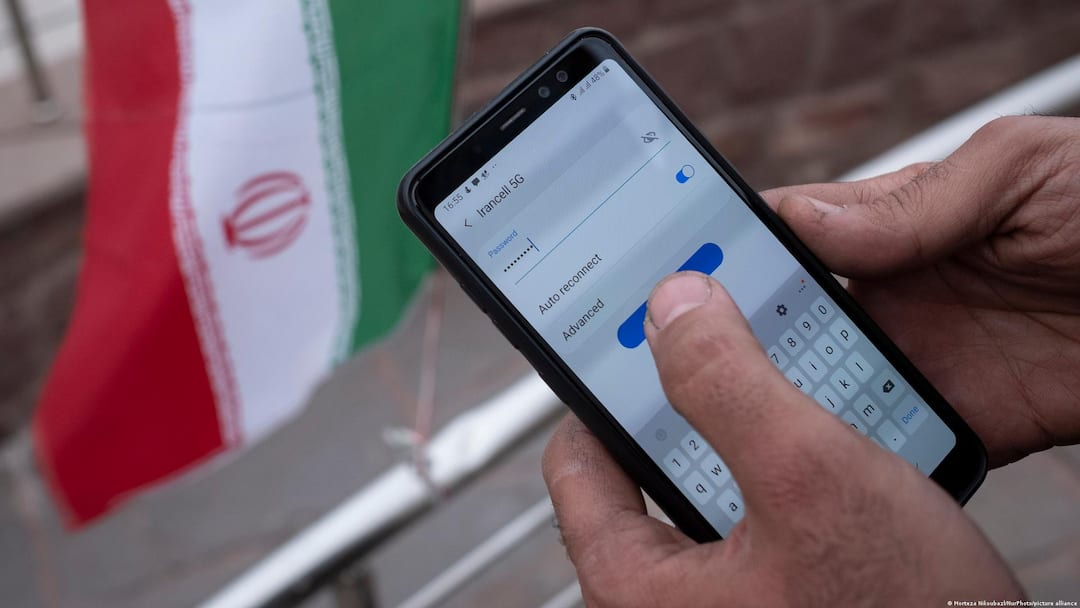
- The measure aims to aid economic activity amid prolonged shutdowns.
Iran’s National Security Council recently approved a plan to grant certain groups paid internet access, albeit with a daily usage limit on foreign websites and international data traffic.
The internet in Iran has been shut down since the US and Israel launched attacks on February 28.
The so-called “Internet Pro” does not refer to a technical upgrade but allows users standard internet access that bypasses the block.
According to journalist and internet researcher Solmaz Eikder, major platforms like Instagram, X, and YouTube—which have long been blocked in Iran—still cannot be used even by many Internet Pro users without using a Virtual Private Network (VPN).
Eikder has been living in exile in Europe for five years. She works for “Filterban,” a research initiative focusing on internet censorship, digital repression and surveillance in Iran. The initiative is frequently used by journalists, activists and researchers who study digital repression in Iran.
Iran’s longest internet shutdown in history
The internet in Iran has been shut down since the US-Israeli attacks on February 28. The shutdown, which has now lasted for more than 80 days, is thelongest yet in Iran, but not the first of its kind.
For years, the Iranian security apparatus has used this method primarily to disrupt communication between Iranians while cutting off the outside world. This most recently occurred during the nationwide protests in January, which the regime brutally suppressed.
Millions of people are now once again cut off from the digital economy and communication.
According to government spokesperson Fatemeh Mohadscherani, Internet Pro is intended to “prevent disruptions to economic activity and ensure business communication in times of crisis.”
What is ‘Internet Pro’?
The plan is offered to certain professional groups, such as members of the Chamber of Commerce, startups, technology companies and retailers. They receive an initial package of 50 gigabytes of data, which costs about $11.
“That’s a lot of money in Iran,” said Eikder. Since the war began, many households have been under growing economic pressure. Inflation has risen to over 50%, while the rial has lost significant value against the dollar, which has sharply increased prices for basic necessities.
Destroyed industrial facilities and massive production losses have hit the economy hard. Tens of thousands of jobs have been lost.
But not captured in the statistics are millions of small income opportunities that have been wiped out by internet blocks.
“Many women from small towns and villages had been selling products such as dried fruit, handmade clothing or food online,” said Eikder. “This income played an important role for their families, but this opportunity has now been taken away from them.”
Internet access becomes a luxury in Iran
Within Iran, there has been widespread criticism of the new system. The newspaper Shargh and other media outlets have criticized the introduction of Internet Pro, which transforms access to communication and information from a public and civil right into a privilege.
Women who serve as their families’ primary breadwinners and who previously earned income online, along with students, are not included among the groups who can access Internet Pro.
One 19-year-old engineering student told DW under condition of anonymity that she isn’t sure she would accept any offer to access Internet Pro. In the system, every user is identified via their national ID number and registered mobile number.
The student continues to buy a VPN configuration on the black market that allows her to access the internet. However, many of her friends and acquaintances can no longer afford VPNs.
“It has become extremely difficult for people in Iran to access independent news and reliable information,” said Oliver Linow, an internet freedom specialist at DW, which has been blocked online in Iran since 2009.
“Since then, we have provided people in the country with censorship circumvention tools that allow access to independent journalism. However, these tools are often no longer effective during a near-total internet shutdown,” Linow said.
Iranian President Masoud Pezeshkian has promised in recent weeks that internet service will soon be restored.
In Iran, a number of agencies — ranging from the National Security Council to the Supreme Council for Cyberspace — are involved in decisions regarding the state’s approach to digital control.
A new crisis management team led by Vice President Mohammad Reza Aref has been established to put an end to the “multiplicity of voices” and overlapping jurisdictions in Iran’s internet policy.
No one knows what the new crisis management team actually is. According to information from the newspaper Sharq, government officials have been expressly prohibited from publicly explaining the details or responsibilities of the new body or discussing it with the media.
Disclaimer: This report first appeared on Deutsche Welle, and has been republished on ABP Live as part of a special arrangement. Apart from the headline, no changes have been made in the report by ABP Live.
Breaking: BJP vs Congress Clash Over Inflation Remarks as Rahul Gandhi’s “Traitor” Comment Sparks Row
Doonited Affiliated: Syndicate News Hunt
This report has been published as part of an auto-generated syndicated wire feed. Except for the headline, the content has not been modified or edited by Doonited