Five goals, four water breaks, three red cards and a glittering opening ceremony.
The World Cup 2026 opening day delivered everything you could ask for.
Recommended Stories
list of 3 itemsend of list
From an early thunder strike to a late winning goal, Thursday was filled with drama, stretching from Mexico City to Zapopan.
Al Jazeera breaks down the key takeaways from the 2026 FIFA World Cup’s day 1:
Is this going to be the World Cup with the most red cards?
The three red cards brandished to Yaya Sithole, Themba Zwame and Cesar Montes during Mexico’s 2-0 win over South Africa were an unusual sight at a World Cup.
In the last two editions, Qatar 2022 and Russia 2018, only four red cards were handed out during the entire tournament. This year’s World Cup opening game nearly matched that singlehandedly.
With officiating at the start of the tournament usually setting the tone for the rest of the campaign, the sequence of sending offs at Estadio Azteca could be repeated several times during the 39-day, 104-match spectacle in North America.
Thursday’s three reds fell just one short of the record of four at a World Cup 2006 game, nicknamed the “Battle of Nuremberg”, between Portugal and the Netherlands.
The record for the most red cards – 28 – was also set at the same tournament in Germany.
Controversial VAR at the centre of debate again
The look of confusion and disbelief among South African players after Zwane was sent off for flinging an arm into Mexico’s Roberto Alvarado’s face prompted the debate: Is Video Assistant Referee (VAR) playing spoilsport again?
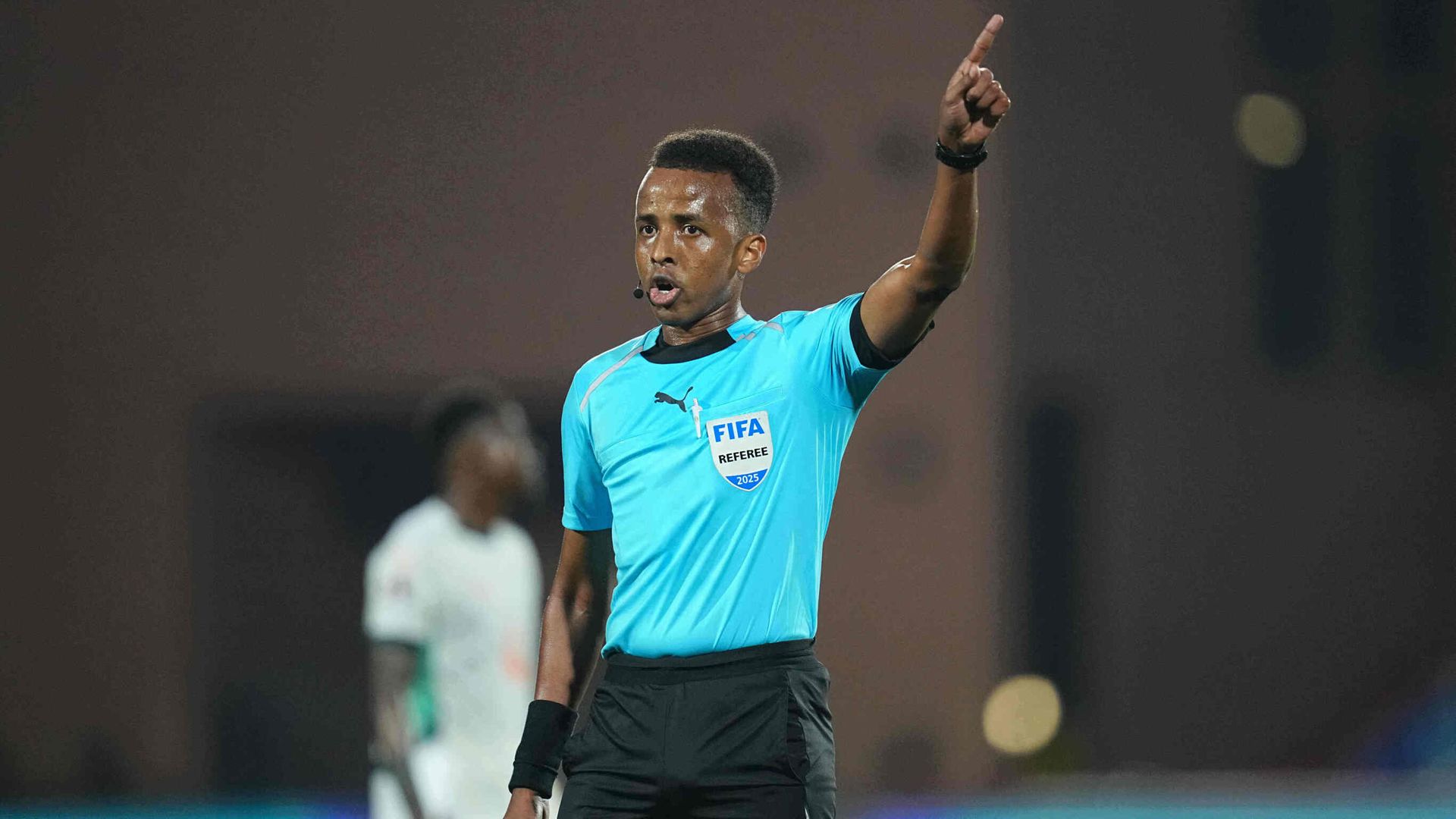
Referee Wilton Sampaio did not initially pull out the red card, but after being sent to the pitchside monitor by VAR, Sampaio decided to send Zwane off.
While the replays were unclear, it seemed Zwane was trying to move past Alvarado, but his hand caught the Mexican’s face in the process.
Zwane was ultimately booked for “violent conduct”, a controversial decision, which seemed harsh given it was not an obvious call. South Africa coach Hugo Broos was not convinced by it, either.
“The second red card, I think the Mexican player blocked my player,” Broos said in the post-match media conference.
“It’s the position of the referee, and we have to accept it also, but I don’t think [it was a red], it was too soft to give that as a red card.”
Hydration breaks or momentum killers?
The introduction of fixed hydration breaks – one in each half – came into effect for the first time at the World Cup on Thursday, and attracted early criticism from viewers and coaches alike.
While some broadcasters stuck with the live feed featuring players, others cut to commercials, disrupting the match-viewing experience for fans watching on TV.
Viewers in the United States were frustrated after broadcaster Fox cut away to full-screen commercials and they missed some live action during the second half of the Mexico vs South Africa opening match.
US head coach Mauricio Pochettino had a mixed opinion over the three-minute breaks, which are held regardless of weather conditions and introduced by FIFA to prioritise player welfare.
“I don’t like it. I only like it when the conditions are very extreme, but when the conditions are good, it is not necessary to have water breaks,” he said during a news conference on Thursday.
“For me, it’s 50-50. For coaches and staff, it’s a chance to make some changes or fix problems. But it’s part of the game, and we accept that.
“I don’t agree with it, but it’s not a big issue and won’t have a big effect on the games,” he said, adding that he did not watch the opening game.
Son Heung-min misfires, but South Korea prevail
Son Heung-min has often been the hero of the South Korea national team on the biggest stage, but on Thursday, even though the talisman got the lion’s share of the chances, he failed to score in their 2-1 win over Czechia.
Son worked seamlessly with the impressive Lee Kang-in and Lee Jae-sung to create a host of first-half chances, with the trio combining darting runs through the middle with a succession of dangerous pass-and-go moves that they just could not finish.
But Oh Hyeon-gyu and Hwang In-beom stepped up to the occasion, bagging a goal each to steer the Koreans to a dramatic late comeback win over Czechia.

South Korea vs Czechia: A clash of styles
Even though both teams opted for a 3-4-3 formation, there was a stark difference in their systems and approach.
South Korea played a fluid, possession-based style of football, while Czechia were heavily reliant on dead balls, opting for a rugged, route-one tactic.
Although the Czechs broke forward first with direct, physical play, the Koreans – buoyed by a largely Mexican crowd rooting for them – bounced back with their dominance of possession and stylish play, getting the better of their set-piece specialist opponents.
Doonited Affiliated: Syndicate News Hunt
This report has been published as part of an auto-generated syndicated wire feed. Except for the headline, the content has not been modified or edited by Doonited