

India’s Global Acquisition Drive: Why Indian Companies Are Buying Abroad
Indian companies are increasingly looking beyond India’s borders—not simply to sell more products, but to secure the assets, capabilities and supply chains that may determine who remains competitive in the next decade.
That shift is becoming visible in India’s overseas mergers and acquisitions.
According to JPMorgan data cited by Reuters, Indian outbound M&A has already reached nearly $24 billion in 2026, putting the year on track for a record. JPMorgan says geopolitical volatility and the strategic importance of resources such as critical minerals are encouraging Indian companies to look overseas.
The interesting part is not merely the size of the cheque.
It is what Indian companies are trying to buy.
India Is Buying More Than Companies
Traditional overseas acquisitions usually had a straightforward logic.
Buy a foreign company to enter a market. Acquire a brand. Obtain technology. Gain customers. Expand distribution.
Those motivations remain.
But the global business environment has changed.
Pandemic-era disruptions, wars, export restrictions, sanctions and competition over critical minerals have demonstrated that supply chains can become strategic vulnerabilities.
A factory may be perfectly efficient until its raw material stops arriving.
A battery manufacturer may have excellent technology but still depend on minerals processed thousands of kilometres away.
A pharmaceutical company may have products ready for global markets but need established regulatory and distribution networks.
Consequently, the overseas acquisition is increasingly becoming a strategic instrument.
Indian companies are effectively asking:
What do we need to own, control or access abroad so that our businesses remain competitive at home and internationally?
The $24 Billion Number Needs Some Context
JPMorgan’s estimate puts Indian outbound deals at close to $24 billion so far in 2026 and on track for a record year. Overall Indian M&A reached about $100 billion across 680 deals in the first half of 2026, according to JPMorgan data reported by Reuters.
But another dataset illustrates an important feature of the market.
Boston Consulting Group found that outbound M&A value increased by $3.8 billion during the first seven months of 2026 compared with the same period in 2025, even as overall Indian M&A volumes declined. BCG says larger transactions are taking a greater share of the market, with deals above $1 billion representing a significantly larger proportion of deal value than in 2025.
So this is not necessarily a story about Indian companies making hundreds of small purchases abroad.
It is increasingly a story about fewer, larger and more strategically targeted bets.
That distinction matters.
Sun Pharma and Organon: A Global Platform in One Deal
The clearest example is Sun Pharmaceutical Industries’ proposed acquisition of U.S.-based Organon.
The transaction is valued at approximately $11.75 billion, making it one of the defining overseas acquisitions in India’s current M&A cycle. Reuters included the transaction among the major contributors to India’s outbound deal value in 2026.
For Sun Pharma, the attraction is not simply another overseas company.
Organon provides an established international pharmaceutical platform, products, commercial infrastructure and market presence.
Building that platform organically across numerous countries could take years.
Acquisition compresses that timeline.
But there is a catch that corporate press releases naturally do not put in giant letters:
Buying a global company and successfully integrating a global company are two different jobs.
Financing costs, regulatory approvals, employee retention, cultural integration, currency movements and the performance of the acquired portfolio will ultimately determine whether the acquisition creates lasting value.
The acquisition announcement is the beginning of the story, not the ending.
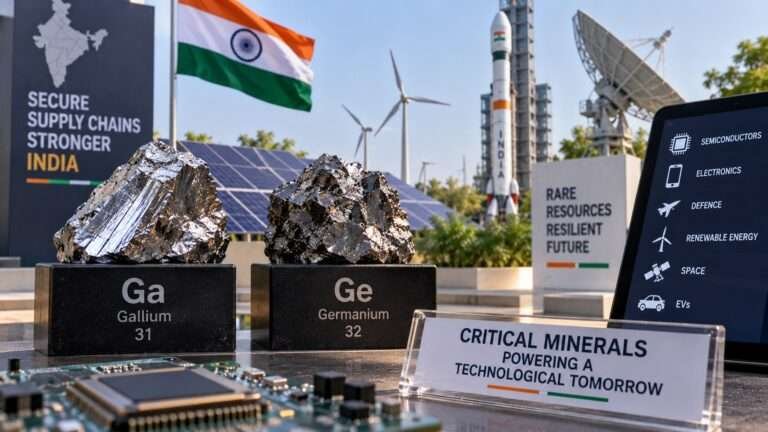
Critical Minerals: The New Corporate Shopping List
Perhaps the most consequential development is happening in minerals.
Lithium, nickel, cobalt, graphite and rare earths are essential to batteries, electronics, electric vehicles, renewable-energy systems and several advanced industrial applications.
India’s rapidly expanding manufacturing ambitions therefore create a corresponding need for reliable supplies.
Indian companies are responding by looking directly at overseas resources.
Lohum, an Indian critical-minerals company, is seeking nickel-mining assets in Indonesia and the Philippines. The company currently produces about 1,000 metric tonnes of nickel annually from recycled material and is targeting a tenfold increase within 18 months. It is also developing lithium interests in Zimbabwe and exploring rare-earth opportunities in Southeast Asia.
Earlier this month, Reuters reported that Lohum had shipped its first lithium ore from Zimbabwe, where it holds rights to 10 mining blocks. The company plans to develop processing capabilities there rather than simply export raw material.
That last point is particularly important.
The objective is not simply:
“Find a mine.”
It is increasingly:
“Build a supply chain.”
Africa Is Becoming Part of India’s Strategic Resource Map
India’s interest is not limited to one mineral or one country.
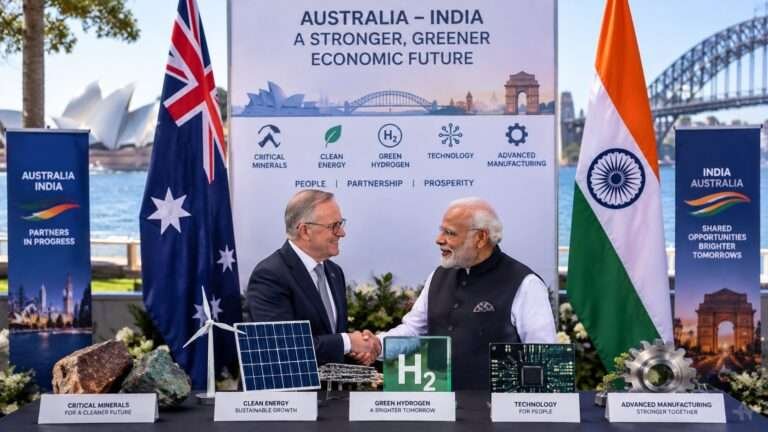
Reuters reported earlier in September that India had resumed discussions with Zambia over investment opportunities involving copper and other critical minerals. The talks are part of India’s broader effort to find overseas sources of raw materials required by its growing economy.
There is also a wider African opportunity.
Solar Industries India agreed to acquire South Africa’s Omnia Holdings for approximately $1.36 billion. Omnia operates across mining and agriculture and has a presence in more than 20 countries. Solar Industries said the acquisition would expand its global mining business.
This demonstrates another feature of India’s outbound strategy.
Sometimes an Indian company does not buy a mine directly.
It buys the industrial capability surrounding the mine.
That can include explosives, engineering, processing, logistics, technology, customers and established regional networks.
The acquisition target therefore becomes a gateway into an entire industry.
Technology Is Another Reason to Go Abroad
Resources are only one part of the equation.
BCG identifies a second major rationale for outbound acquisitions: acquiring capabilities that cannot easily be built at home.
The consultancy specifically points to Indian technology companies buying AI-enabled IT-services capabilities abroad, including Coforge’s acquisition of Encora and Infosys’s deals involving Versent and Stratus.
This is strategically different from simply acquiring revenue.
A mature overseas technology company can bring specialist engineers, intellectual property, enterprise customers, delivery capabilities and relationships that would otherwise take years to assemble.
In the global technology race, time itself has become an asset.
Strong Balance Sheets Are Changing the Equation
Why can Indian companies make these increasingly large bets?
JPMorgan’s Paul Uren told Reuters that a number of Indian companies have strong acquisition capacity and access to both equity and debt markets.
That financial capacity matters because overseas acquisitions can require enormous amounts of capital.
It also changes India’s position in the global corporate hierarchy.
For decades, India was primarily discussed as a market where multinational companies wanted to invest.
Now Indian companies are increasingly becoming multinational buyers themselves.
The direction of capital is no longer one-way.
But Overseas Expansion Has Risks
There is an understandable temptation to interpret rising outbound M&A as proof that Indian companies have “arrived” globally.
That would be premature.
Large acquisitions can fail.
Companies can overpay. Debt can become expensive. Currency movements can reduce returns. Regulators can impose restrictions. Cultural differences can complicate integration. Political changes can affect strategic assets.
And when an acquisition is justified as “strategic”, financial discipline does not disappear.
Quite the opposite.
A strategic asset still has to earn its cost of capital.
There is also a broader economic question: if Indian companies are investing substantial amounts overseas, what does India gain domestically?
The answer should ideally extend beyond dividends.
A successful acquisition can bring technology, international customers, intellectual property, raw materials, management expertise and global supply-chain connections back into India’s economic ecosystem.
A poorly integrated acquisition may simply become an expensive foreign subsidiary.
That difference will matter enormously.
The Real Transformation Is in the Objective
The most significant change may therefore not be the $24 billion figure itself.
It is the changing definition of what an overseas acquisition is supposed to accomplish.
Indian companies are increasingly buying:
- Resources to strengthen supply security
- Technology to accelerate capability building
- Customers to expand global revenue
- Distribution networks to enter established markets
- Manufacturing and industrial capabilities to deepen global operations
- Specialised talent and intellectual property to shorten development cycles
- Strategic positions in sectors affected by geopolitical competition
This is much more sophisticated than the old idea of simply “going global.”
Doonited Editorial Perspective
India’s outbound acquisition drive should not be viewed automatically as either a corporate triumph or a loss of Indian capital.
The more useful question is what strategic capability each rupee creates.
If an Indian company buys a foreign asset simply because it is large or fashionable, the transaction may produce a spectacular headline without producing equivalent long-term value.
But if the acquisition secures minerals, technology, customers, manufacturing capabilities or international distribution—and connects those assets with India’s expanding domestic industrial base—it can become an extension of India’s economic strategy.
That is where the real opportunity lies.
India does not have to choose between building in India and buying abroad.
The more powerful model may be to do both.
Build manufacturing, research and technology capabilities in India while acquiring complementary resources, customers and expertise around the world.
In that model, the global company is not abandoning India.
It is using the world to make its Indian base more competitive.
DOONITED INSIGHT
The next phase of Indian globalisation may not be about exporting Indian products to the world. It may be about owning strategic pieces of global supply chains—and connecting them back to India.
Meaningful Learning for Readers
When evaluating an overseas acquisition, the headline purchase price tells only half the story.
The more important questions are:
What is being bought? Why is it strategically necessary? What capability does it create? And what ultimately comes back to the Indian economy?
Those questions will determine whether India’s current outbound M&A surge becomes a lasting expansion of Indian corporate power—or simply another expensive chapter in the history of global acquisitions.


World Beyond the News
Bees Communicate Where Food Is
Honeybees use movement patterns known as waggle dances to communicate information about food locations.
Street Food Reflects Local History
Many famous street foods developed from migration, trade, local ingredients and the everyday needs of working communities.
A Day on Venus Is Extremely Long
Venus rotates so slowly that one rotation relative to distant stars takes longer than its trip around the Sun.
Human Achievement Continues to Push Limits
Athletes, engineers, scientists and explorers regularly establish new benchmarks in speed, endurance, scale and precision.