- RBI lowers FY27 growth forecast amidst mounting global risks.
India’s villages have emerged as one of the economy’s brightest spots over the past year, helping support consumption even as global uncertainties intensified. But the Reserve Bank of India (RBI) now sees fresh risks on the horizon.
A potentially weaker-than-expected south-west monsoon, coupled with rising energy costs and disruptions linked to the conflict in West Asia, could test the resilience of rural demand and private consumption in the months ahead, RBI Governor Sanjay Malhotra cautioned on Friday.
The warning came shortly after the central bank lowered its GDP growth forecast for FY27, citing growing uncertainty in the global environment and increasing downside risks to economic activity.
Rural India Remains A Key Growth Driver
For much of the past year, policymakers have looked to rural India to support economic momentum. Improved farm incomes, government spending and recovering consumption patterns have helped sustain demand in several sectors, from consumer goods to automobiles.
However, Malhotra acknowledged that weather-related challenges could affect this trend.
“Rural demand, yes; private consumption, yes. Some impact will be there,” the governor said while responding to a question during the post-monetary policy press conference.
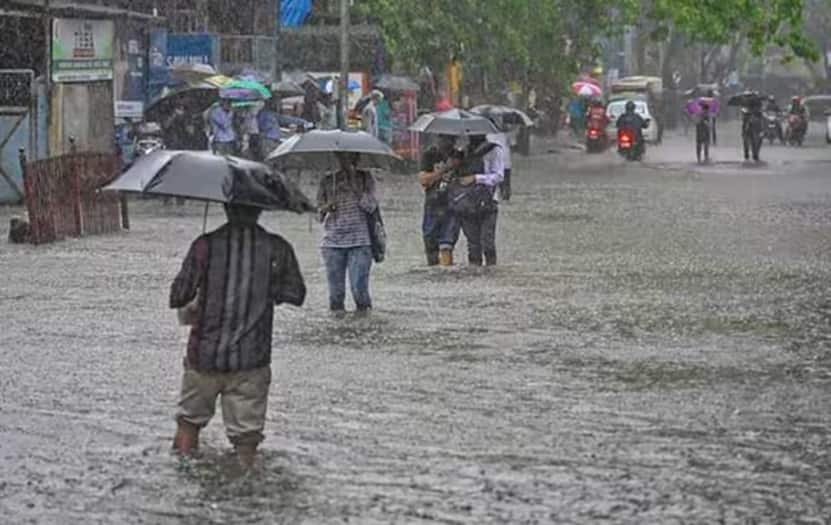
The RBI believes a projected deficiency in the south-west monsoon could affect agricultural production and, in turn, influence spending patterns in rural areas.
A weaker monsoon typically raises concerns about crop output, farm incomes and consumption demand, particularly in regions that remain heavily dependent on rainfall.
Also Read: RBI MPC June 2026: From Oil Shock To Inflation Risks, What The RBI Is Worried About
Can Government Measures Offset The Impact?
While recognising the risks, the RBI governor also pointed to several initiatives that could help soften the blow.
“Additionally, the projected deficiency in the south-west monsoon will have implications for agricultural production and rural demand. However, programmes and initiatives for crop diversification, water harvesting and conservation, climate-resilient practices and short-duration crops, among others, are expected to mitigate the impact,” Malhotra said.
The comments suggest policymakers are banking on a combination of agricultural reforms and climate-adaptation measures to reduce the economy’s vulnerability to erratic weather conditions.
Such interventions have become increasingly important as changing weather patterns pose new challenges for farming and rural livelihoods.
West Asia Conflict Adds Another Layer Of Risk
The monsoon is not the only concern weighing on the RBI’s outlook.
The central bank also highlighted the impact of rising energy prices and supply-chain disruptions stemming from the ongoing conflict in West Asia.
Higher crude oil prices can ripple through the economy, increasing transportation costs, raising input prices for businesses and ultimately affecting consumer spending.
“Going ahead, the rise in prices of energy and other inputs, coupled with supply disruptions, is likely to weigh on economic activity,” Malhotra said.
The governor noted that the eventual impact would depend on how long the conflict continues and how quickly global supply chains return to normal.
Read MORE : RBI MPC June 2026: What RBI’s Latest GDP Outlook Reveals About India’s Economic Resilience
Import Diversification Comes At A Cost
The RBI also warned that while India may be able to secure alternative sources for key imports, such adjustments are unlikely to come cheaply.
According to the central bank, diversification of import sources could improve the availability of affected commodities but may increase costs for businesses and consumers.
“While import diversification in affected commodities is likely to improve supply, it would come at a higher cost. The full impact, however, will depend on the duration of the conflict, the time taken for normalisation of supply chains and the burden-sharing approach among the stakeholders,” Malhotra said.
The observation underscores a broader challenge facing policymakers: maintaining growth while navigating an increasingly volatile global environment.
RBI Cuts FY27 Growth Forecast
Reflecting these concerns, the RBI revised its growth projections lower for the current financial year.
The central bank reduced its FY27 GDP growth forecast to 6.6 per cent from the earlier estimate of 6.9 per cent, citing heightened uncertainty linked to the West Asia crisis and broader global risks.
The revised quarterly projections place GDP growth at:
Q1 FY27: 6.6 per cent
Q2 FY27: 6.3 per cent
Q3 FY27: 6.5 per cent
Q4 FY27: 6.8 per cent
The downgrade signals the RBI’s view that external risks are likely to weigh on economic activity even as domestic fundamentals remain relatively resilient.
Read MORE : RBI MPC June 2026: India Offers Tax-Free G-Secs To Foreign Investors Amid Oil, Rupee And War Risks
Growth Story Intact, But Challenges Are Mounting
Despite the downward revision, the central bank has not abandoned its broader confidence in the Indian economy.
However, the message from the RBI is clear: the path ahead is becoming more complicated.
A weaker monsoon, higher energy prices, volatile financial markets and prolonged global supply disruptions are all emerging as potential headwinds at a time when policymakers are trying to sustain growth and support consumption.
“Prolonged global supply chain disruptions, volatility in global financial markets, and weather-related shocks continue to pose downside risks to the domestic growth outlook,” Malhotra said.
For now, rural demand remains healthy and consumption trends are holding up. But as India enters the critical monsoon season, policymakers will be watching both the skies and global markets closely.
BREAKING NOW: Indore fire tragedy as EV short circuit triggers deadly explosions
Doonited Affiliated: Syndicate News Hunt
This report has been published as part of an auto-generated syndicated wire feed. Except for the headline, the content has not been modified or edited by Doonited