
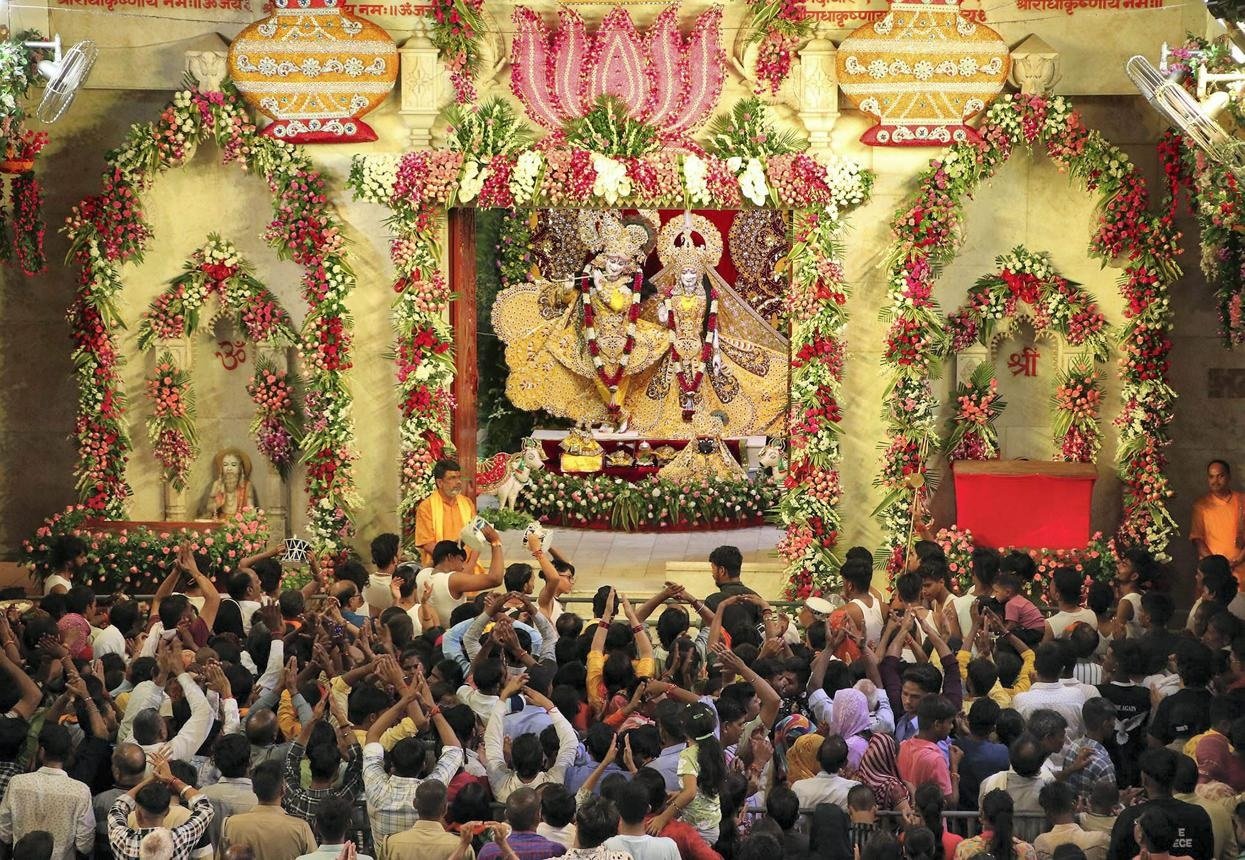
Janmashtami: The Midnight Birth of Krishna and the Story That Still Speaks to India
There is something unusual about the way India celebrates the birth of Krishna. It is not simply a festival of lights, prayers and sweets. Millions wait until midnight to celebrate the arrival of a child who, according to Hindu tradition, was born inside a prison at a moment when fear and oppression had surrounded his family.
That contrast—darkness outside, hope within—is at the heart of Janmashtami.
In 2026, Janmashtami is being observed on September 4, with the central midnight worship extending into the early hours of September 5. The festival falls on Krishna Paksha Ashtami, the eighth lunar day of the dark fortnight.
Why was Krishna born in a prison?
According to Hindu religious tradition, Krishna was born to Devaki and Vasudeva in Mathura, where the couple had been imprisoned by Devaki’s brother, Kansa.
The traditional account says Kansa had received a prophecy that Devaki’s eighth child would become the cause of his downfall. Fearing that prediction, he imprisoned Devaki and Vasudeva and killed their earlier children. Krishna’s birth therefore comes into the story not as the arrival of a prince in a palace, but as the birth of a child in captivity.
The story then takes a dramatic turn.
Tradition says that after Krishna’s birth at midnight, Vasudeva carried the newborn child from Mathura towards Gokul, where Krishna was subsequently raised by Nanda and Yashoda. The story of Krishna’s birth and childhood is preserved in Hindu religious literature, including the Bhagavata Purana and the Mahabharata.
These accounts belong to the religious and sacred tradition surrounding Krishna; they should not be presented as independently established historical events.

Why does the celebration happen at midnight?
For devotees, midnight is not an arbitrary ritual time.
The traditional account places Krishna’s birth at midnight, which is why worshippers remain awake and gather for the Nishita Kaal, the midnight period associated with Krishna’s appearance.
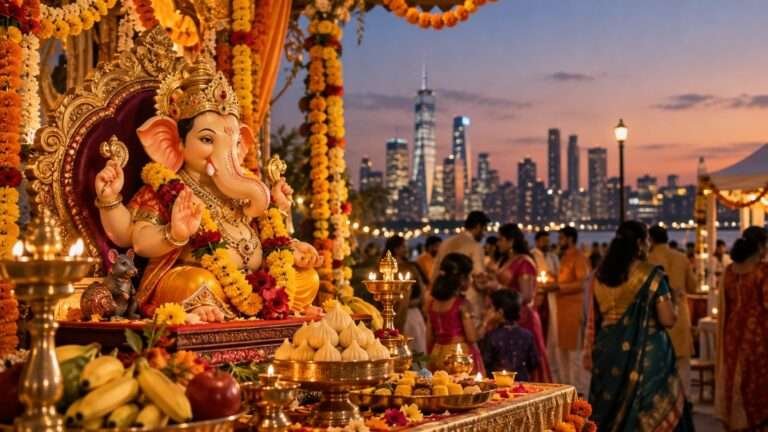
At temples and homes, the moment is marked through prayer, aarti, devotional singing, offerings and the ceremonial placing of an infant Krishna idol in a cradle. The exact timing of the midnight worship varies according to location and the relevant lunar calculations.
The significance of Ashtami is equally important. The word refers to the eighth lunar day, while Janmashtami literally connects janma—birth—with Ashtami. This is why the festival does not fall on the same Gregorian calendar date every year.
From Mathura to Maharashtra, one story takes many forms
Janmashtami is one festival, but India does not celebrate it in only one way.
Mathura and Vrindavan remain closely associated with Krishna’s life and are major centres of celebration. Temples are decorated with flowers and lights, while devotional music, kirtans, prayers and Rasleela performances bring Krishna’s stories into public life.
In Dwarka, Krishna’s association with the ancient city gives the festival another distinctive character. In Maharashtra and other parts of western India, Janmashtami is strongly connected with Dahi Handi, in which teams form human pyramids to reach and break a suspended pot.
Dahi Handi draws upon traditional stories of Krishna’s childhood fondness for butter and curd. What began as a religious-cultural expression has also become a highly visible community celebration involving teamwork, performance and public participation.
And the celebration does not necessarily end when midnight passes. The following day is associated with Nandotsav, celebrating the joy surrounding Krishna’s arrival in the household of Nanda.
The lesson hidden behind the celebration
Perhaps the most interesting part of Janmashtami is that the festival has survived not by remaining identical, but by becoming part of India’s many regional cultures.
The same Krishna appears through different languages, music, food, dance, theatre and local traditions. The official Indian tourism portal describes Janmashtami celebrations ranging from devotional singing and dance-drama to fasting, temple rituals and Dahi Handi.
That cultural variety is important.
A festival becomes more than a date on the calendar when every generation finds a reason to participate in it.
For some, Krishna is the divine child. For others, he is the philosophical voice of the Bhagavad Gita. For communities, he is part of music, theatre, food and collective celebration. India’s President, in her 2026 Janmashtami message, similarly highlighted values associated with Krishna’s teachings including truth, righteousness, justice, compassion and selfless service.

DOONITED Editorial Perspective
Janmashtami is at its most meaningful when the spectacle does not completely overshadow the story.
The decorations, midnight celebrations and Dahi Handi create the colour of the festival. But the deeper value lies in asking why this story has remained relevant for generations.
A child born in captivity becomes, in tradition, a symbol of hope against oppression. A festival based on an ancient sacred narrative becomes a living part of India’s regional cultures. And a celebration that lasts only a night continues to raise questions about duty, courage, justice and the choices people make in difficult circumstances.
That may be the enduring lesson of Janmashtami: traditions survive not merely because people repeat them, but because each generation discovers meaning in them again.

World Beyond the News
Why Elephants Stay Close to Their Herd
Elephants live in highly social family groups and use calls, touch and body movements to maintain strong bonds.
Most of the Deep Ocean Remains Difficult to Explore
Extreme pressure, darkness and distance make deep-ocean exploration one of Earth’s greatest scientific challenges.
Spacecraft Can Travel Without Traditional Roads
Spacecraft use carefully calculated trajectories and gravity assists to travel enormous distances through space.
Why Movie Trailers Are Released in Stages
Major films often use teaser trailers, full trailers and final promotional spots to build awareness over time.