
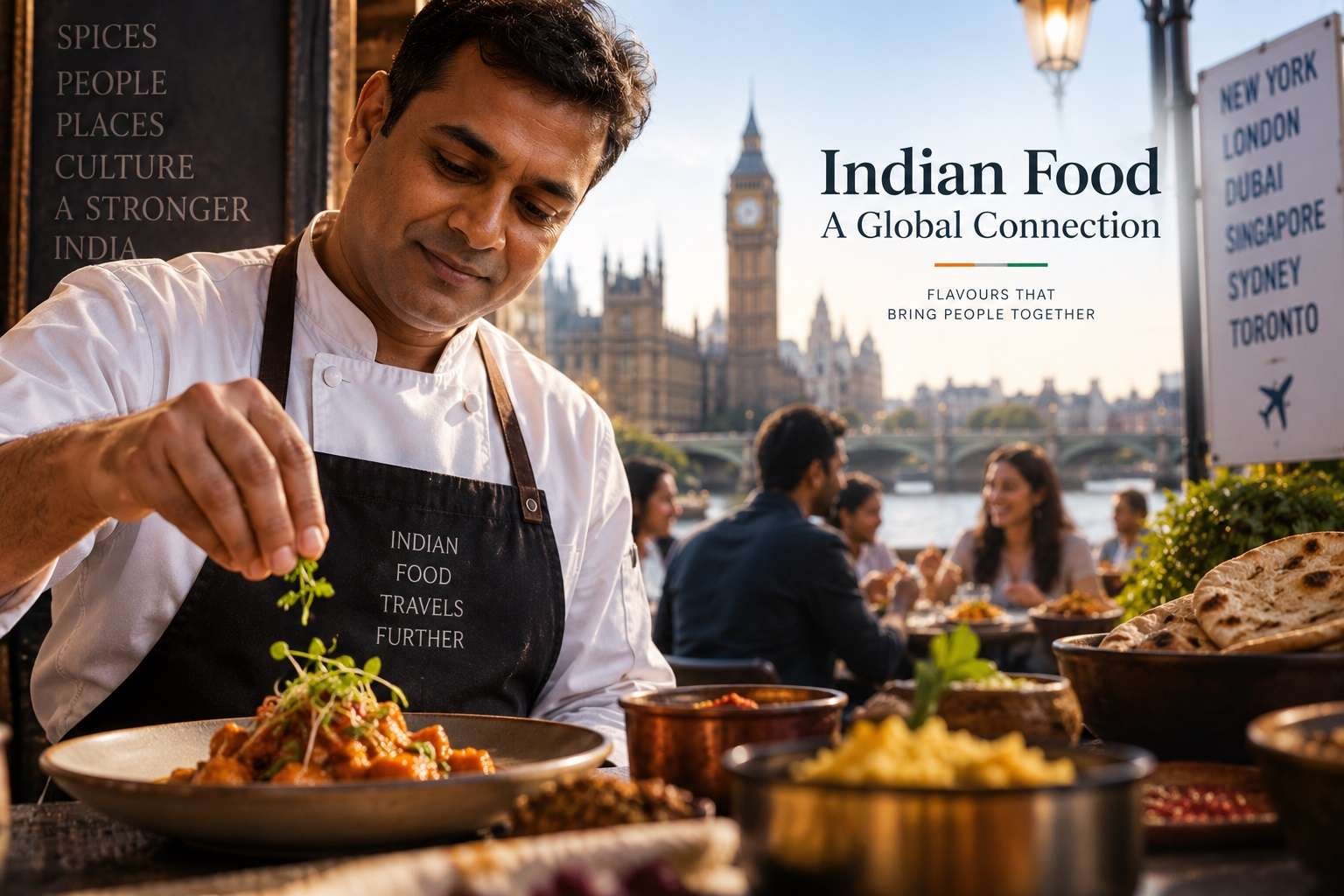
How Indian Food Became India’s Most Delicious Ambassador to the World
There are many ways for a country to introduce itself to the world.
India has diplomats.
It has Bollywood.
It has yoga.
It has technology companies, cricket, literature and a diaspora spread across continents.
But there is another Indian ambassador that rarely needs a passport.
Food.
A plate of biryani can start a conversation between strangers.
A masala dosa can make someone curious about South India.
A cup of chai can turn an ordinary meeting into a longer conversation.
And somewhere between the first bite of naan and the second helping of dal, an interesting thing happens:
India stops being an abstract country and becomes something personal.
That is the quiet power of cuisine.
Food can introduce a country without giving a lecture
For someone who has never visited India, the first encounter with Indian culture may not be a museum, a textbook or a diplomatic reception.
It may be a restaurant.
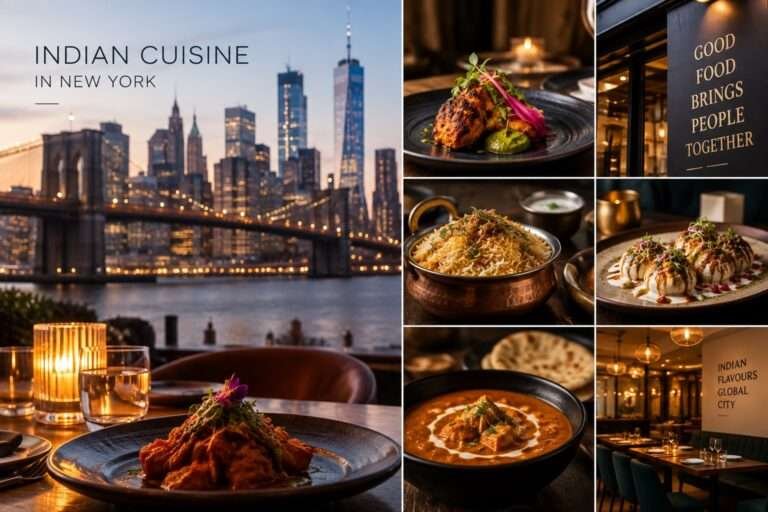
Indian restaurants have become part of the everyday culinary landscape in cities across North America, Europe, the Gulf, Southeast Asia and elsewhere.
Research on India’s cultural soft power has specifically identified Indian food as an increasingly important component of India’s international image. Indian dishes and ingredients—including samosa, chaat, biryani, naan and masala dosa—have moved into food cultures far beyond India.
That matters because food is unusually democratic.
You don’t need to understand India’s constitutional system to enjoy a dosa.
You don’t need to know Sanskrit to appreciate cardamom.
And nobody has ever demanded that a person complete a 200-page cultural orientation manual before ordering butter chicken.
The plate is the introduction.

From “curry” to a much bigger India
There is, however, an important problem with the international image of Indian cuisine.
For decades, the word “curry” was often used outside South Asia as an umbrella term for an enormous variety of dishes.
That made Indian food easier to market—but also flattened its complexity.
India does not have one cuisine.
It has an extraordinary collection of regional culinary traditions shaped by geography, climate, religion, agriculture, trade and history.
The food of Kerala cannot simply be reduced to the food of Punjab.
Goan cuisine is not Bengali cuisine.
A Maharashtrian kitchen does not cook like a Kashmiri kitchen.
And even within a single state, recipes can change dramatically between communities and districts.
The global Indian restaurant industry is increasingly reflecting this diversity.
Modern chefs and restaurants are bringing more regional dishes and techniques to international diners rather than relying exclusively on the familiar restaurant formula.
That is an important cultural shift.
The world is slowly moving from knowing “Indian food” to discovering India’s many foods.
The restaurant is an informal classroom
An Indian restaurant can teach without behaving like a classroom.
A menu might introduce someone to a regional ingredient.
A waiter may explain why one curry is coconut-based while another uses mustard.
A chef may explain the difference between a Punjabi preparation and a Goan one.
A diner who came expecting “something spicy” may discover that Indian cuisine is not simply a competition to determine who can survive the chilli.
That experience creates curiosity.
And curiosity is an important ingredient in cultural understanding.
Recent research on Indian diaspora restaurants argues that these establishments can operate as informal sites of cultural diplomacy, functioning outside formal state-controlled diplomacy.
That is a useful way to understand the phenomenon.
The restaurant owner is not an ambassador appointed by a government.
The chef isn’t delivering a foreign-policy speech.
But the restaurant is nevertheless shaping someone’s understanding of India.

Then the kitchen moved into the home
The cultural journey becomes even more interesting when people stop merely eating Indian food and start cooking it.
Indian ingredients have become increasingly accessible in supermarkets and speciality stores around the world.
Spices, basmati rice, ghee, lentils, coconut products, pickles, chutneys and ready-to-cook ingredients have helped move Indian food beyond the restaurant.
And then something changes.
A person who once ordered dal at a restaurant may eventually buy lentils.
Someone who discovered cumin may begin experimenting with tempering.
Someone who encountered garam masala may start asking which spices actually belong in it.
The relationship has moved from consumption to participation.
That is much more powerful culturally.
What tadka teaches without saying a word
Take tadka, also called chhonk in several Indian culinary traditions.
Spices are briefly tempered in hot oil or ghee before being added to a dish.
It can transform the aroma of an otherwise familiar preparation almost instantly.
But it is important not to over-romanticise the technique.
Tadka is first and foremost cooking.
Its cultural significance comes from the knowledge surrounding it: which spices are used, when they are added, how long they are heated and which regional traditions use which combinations.
A person learning that process is not merely following instructions.
They are learning something about the logic of an Indian kitchen.
And that can lead to a larger curiosity:
Why does this region cook this way?
Why is mustard important here?
Why does coconut dominate there?
Why is this dish associated with a particular festival?
A recipe can therefore become a doorway into history.
Food also corrects the “one India” problem
Perhaps the most important cultural contribution of Indian cuisine abroad is that it can challenge the idea that India is culturally uniform.
The global diner may begin with chicken tikka.
Then discover biryani.
Then masala dosa.
Then Bengali fish.
Then Goan seafood.
Then Maharashtrian snacks.
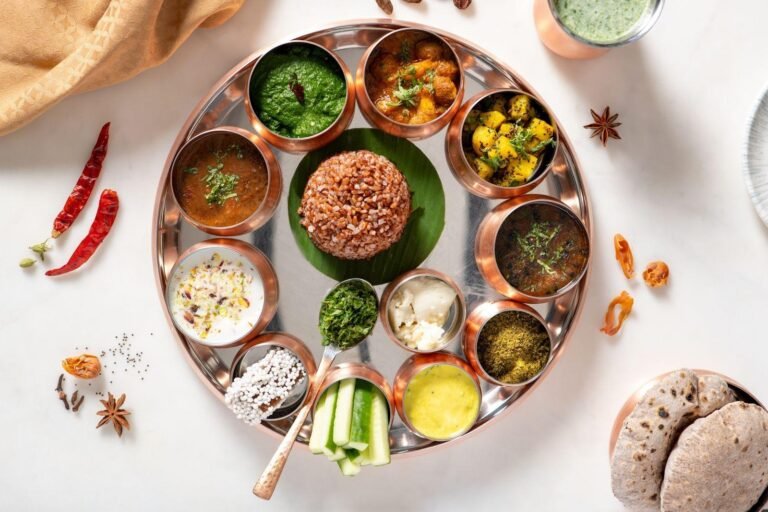
Then Gujarati thali.
Suddenly, “Indian food” becomes a much bigger concept.
This mirrors India itself.
A country of hundreds of languages, multiple religious traditions, dramatically different climates and thousands of regional culinary practices cannot reasonably be represented by one menu.
Food is one of the easiest ways to discover that diversity.

There is also a problem with “authenticity”
Here the story needs some honesty.
Indian cuisine abroad has often been adapted to local tastes.
That is not necessarily a bad thing.
Every immigrant cuisine changes.
Chinese food in America is not identical to food in Guangzhou.
Italian-American cuisine developed differently from food in Naples.
And Indian food outside India has followed the same pattern.
The problem arises when the adapted version becomes the only version available.
If international diners know Indian cuisine only through a handful of heavily modified dishes, they are not really discovering India’s culinary diversity.
They are discovering one commercially successful interpretation of it.
That is why the rise of regional Indian restaurants is important.
More diversity on the menu means more accurate cultural representation.
Food can become diplomacy—but don’t overstate it
The term gastrodiplomacy is increasingly used to describe the use of food to improve a country’s international image and relationships.
India has recognised this potential institutionally. The Indian Council for Cultural Relations has explicitly discussed Indian cuisine as a component of India’s soft power and the importance of taking its culinary diversity to the world.
India’s tourism policy also incorporates the philosophy of Atithi Devo Bhava—”The Guest is God” as part of its approach to hospitality.
But there is an important distinction.
A good restaurant is not automatically a diplomatic mission.
Food cannot solve political disputes.
A delicious biryani does not negotiate a trade agreement.
And no quantity of naan can substitute for competent foreign policy.
Food’s power is softer.
It creates familiarity.
It makes conversation easier.
It can make another country’s culture feel less distant.
That is precisely why it matters.
The diaspora may be the real engine
One of the most interesting aspects of India’s culinary influence is that much of it has developed organically through the Indian diaspora.
Indian restaurants abroad are businesses.
Their owners need customers.
Chefs adapt menus.
Ingredients follow demand.
Communities preserve recipes.
Young chefs experiment.
And gradually, local populations become familiar with Indian flavours.
Recent scholarship describes these diaspora restaurants as decentralised, informal soft-power actors rather than extensions of government diplomacy.
That may actually make their influence stronger.
There is no official script.
The customer simply eats.
And then comes back if the food is good.
That is perhaps the most ruthless form of cultural diplomacy imaginable.
The embassy can invite you once. A good restaurant can make you return every Friday.
India’s next culinary opportunity
The next stage of India’s global food story should not be about convincing the world that Indian food is popular.
That has largely been established.
The bigger opportunity is to make the world understand how diverse Indian food really is.
More regional restaurants.
More Indian chefs working internationally.
More Indian ingredients entering global kitchens.
More documentation of traditional recipes.
More responsible food tourism.
More attention to lesser-known cuisines.
And perhaps most importantly, more storytelling around the people and communities behind the food.
Because a dish is rarely just a dish.
It can carry geography.
Migration.
Religion.
Agriculture.
Trade.
Family memory.
And history.
DOONITED Editorial Perspective
India’s greatest culinary advantage may be something the country sometimes forgets:
It does not need to invent a global food identity. It already has one.
The challenge is to explain it properly.
For too long, Indian cuisine abroad could be reduced to a few familiar dishes and the vague instruction to “make it spicy.”
That is not India’s culinary story.
India’s real food story is messier—and far more interesting.
It is the story of coastal trade, mountain agriculture, royal kitchens, temple food, street food, migration, vegetarian traditions, meat traditions, colonial encounters, local adaptation and generations of family cooking.
If the world discovers even a fraction of that diversity, India’s culinary soft power becomes much stronger.
Not because someone ordered another curry.
But because someone became curious about where that curry came from.
The bigger insight
Culture becomes powerful when people voluntarily invite it into their lives.
That is what makes food such an effective form of soft power.
Nobody has to persuade someone to appreciate a good dosa.
Nobody needs a diplomatic briefing before discovering the pleasure of chai.
And nobody needs to understand the entire history of India before falling in love with a dish.
The first bite creates familiarity. Familiarity creates curiosity. Curiosity creates conversation. And conversation can become understanding.
That is why Indian food may be one of India’s most effective—and least intimidating—global ambassadors.
The tandoor, it turns out, has been doing foreign policy for quite some time.

World Beyond the News
Bees Communicate Where Food Is
Honeybees use movement patterns known as waggle dances to communicate information about food locations.
Street Food Reflects Local History
Many famous street foods developed from migration, trade, local ingredients and the everyday needs of working communities.
A Day on Venus Is Extremely Long
Venus rotates so slowly that one rotation relative to distant stars takes longer than its trip around the Sun.
Human Achievement Continues to Push Limits
Athletes, engineers, scientists and explorers regularly establish new benchmarks in speed, endurance, scale and precision.