
How Spices, Diversity and the Indian Diaspora Took a Cuisine Global
Ask someone in London, New York, Melbourne, Dubai or Singapore what they know about Indian food and there is a good chance the answer will arrive surprisingly quickly.
Curry.
Naan.
Biryani.
Samosa.
Perhaps paneer.
But that is where the interesting part begins.
Because Indian food is not really one cuisine.
It is a remarkably large collection of regional culinary traditions shaped by geography, agriculture, religion, trade, migration and centuries of cultural exchange.
And somehow, this extraordinarily complicated food system has managed to become extraordinarily portable.
That is one reason Indian food has become a global phenomenon.
It did not conquer the world with one dish.
It arrived with thousands.
The first secret: Indian food knows how to build flavour
Salt and pepper can certainly make food delicious.
Indian cooking looked at that arrangement and apparently decided that two ingredients were not enough.
Cumin, coriander, turmeric, cardamom, cloves, cinnamon, black pepper, mustard seeds, fenugreek, chilli, ginger and garlic are among the many ingredients used across India’s culinary traditions.
But the important point is not simply the number of spices.
It is how they are combined and prepared.
Spices may be roasted, ground, fried in oil, added whole or combined into masalas at different stages of cooking.
The result is often a layered flavour rather than a single dominant taste.
That is one reason an Indian dish can seem to change as you eat it.
First comes the aroma.
Then heat.
Then acidity.
Then sweetness or bitterness.
Then the spices return for an encore—as though the dinner had booked a second performance.
The complexity of Indian cooking has also been recognised by food historians. Smithsonian has described Indian cuisine as exceptionally varied and linked its spice traditions to both culinary and historical practices.
India doesn’t have one food culture
This may be the biggest reason outsiders sometimes misunderstand Indian cuisine.
What is called “Indian food” abroad can hide enormous regional differences.
A Punjabi meal can be dramatically different from a Bengali meal.
A Maharashtrian kitchen has its own ingredients and techniques.
Kerala’s cuisine reflects its coastal geography and long history of spice cultivation and trade.
Tamil cuisine has its own combinations of rice, lentils, tamarind and spices.
Gujarat has a strong vegetarian culinary tradition.
Hyderabad is famous for biryani and other dishes shaped by its distinctive history.
Kashmir has its own rich culinary vocabulary.
And India’s Northeast offers traditions that are still relatively unfamiliar to many international diners.
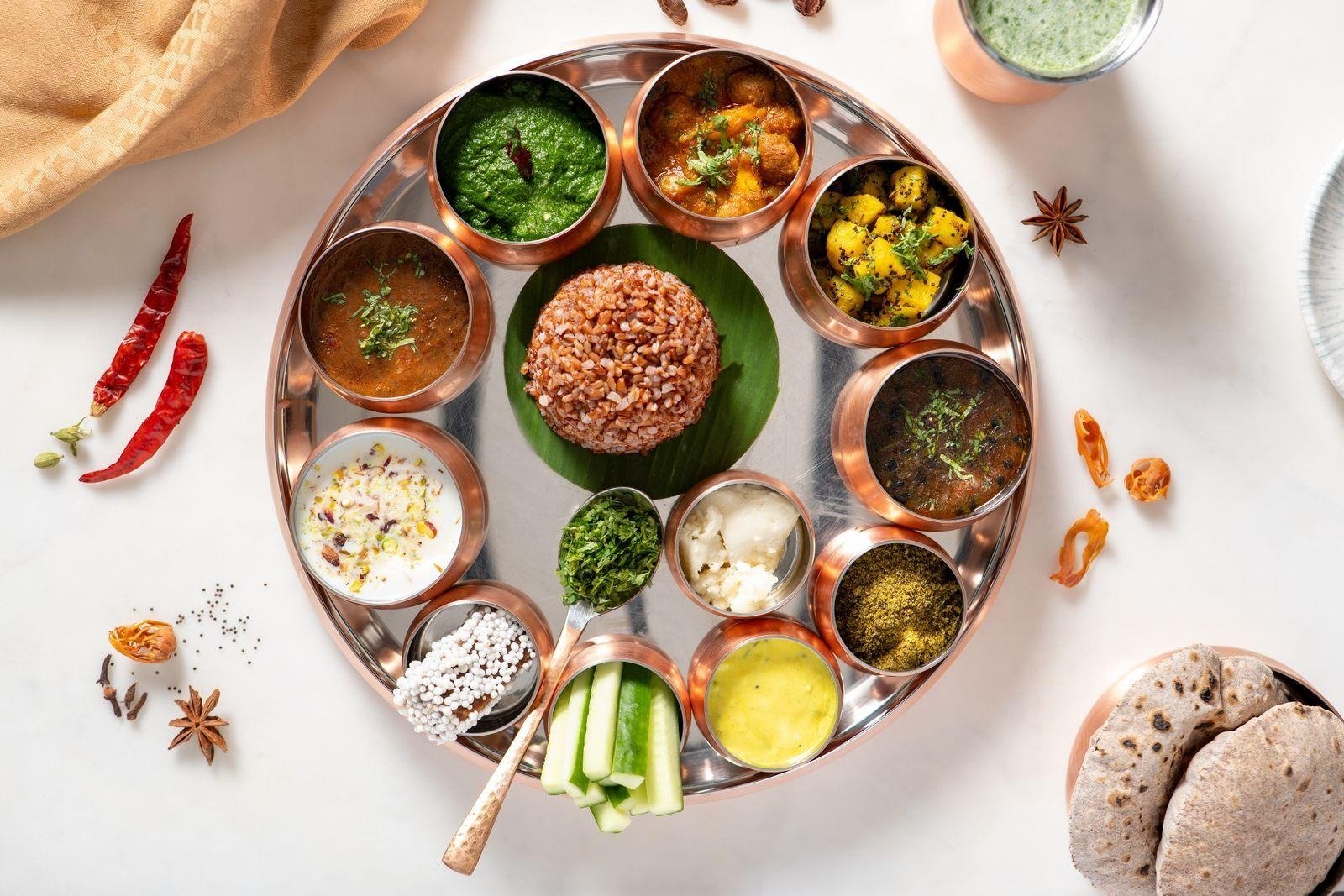
The thali is perhaps the perfect metaphor for this diversity.
One plate can contain rice, dal, vegetables, bread, chutney, curd, pickles and sweets—each with a different taste and texture.
And even the thali changes from state to state.
Smithsonian’s exploration of Indian food has similarly highlighted how dishes and cooking traditions vary dramatically across India’s regions.
So when someone says, “I don’t like Indian food,” the logical response may be:
Which Indian food?
That is rather like saying you don’t like European food because you once had a disappointing sandwich.

Vegetarian food gave India another global advantage
India’s long-established vegetarian traditions have also given its cuisine unusual depth in plant-based cooking.
Dal, chana, rajma, peas, vegetables, grains, fermented batters and dairy products can become complete dishes rather than merely side dishes.
Chana masala, for example, turns chickpeas into a substantial, highly seasoned meal.
Dosa and idli demonstrate how fermentation can transform relatively simple ingredients.
Paneer provides another versatile source of protein and texture.
And then there are dozens of regional preparations that use vegetables in ways unfamiliar to people accustomed to meat-centred menus.
Smithsonian has highlighted India’s extensive vegetarian food tradition and, in one account, noted the enormous variety available to vegetarian diners.
This has become particularly relevant as vegetarian and plant-based eating have gained greater visibility internationally.
But there is an important qualification.
Indian cuisine is not exclusively vegetarian, nor is every vegetarian Indian dish automatically healthy.
Samosas are vegetarian.
So are many sweets.
Nobody should be eating a plate of jalebi while imagining they have just completed a nutritional consultation.
Indian food offers enormous plant-based variety, but nutrition depends on the actual dish, ingredients, preparation and portion.
Then came the Indian diaspora
Food rarely travels alone.
People carry it.
The expansion of Indian communities across Britain, North America, the Gulf, Australia, Southeast Asia and elsewhere created a natural infrastructure for Indian cuisine.
Restaurants opened.
Grocery stores stocked spices and lentils.
Families imported recipes.
Festivals created opportunities to introduce food to wider communities.
And restaurants adapted.
The story of Indian food in Britain is particularly revealing. The British government itself noted the enormous presence of Indian restaurants in the UK and described Indian curry as an important part of British culinary culture. A 2016 government statement cited more than 9,000 Indian restaurants in Britain at the time.
In the United States, Smithsonian reporting has connected the growth of Indian restaurants and South Asian food establishments with the large immigration wave of the second half of the 20th century.
The diaspora therefore did more than preserve Indian food.
It introduced Indian food to new customers.
That difference is enormous.

Indian food learned to travel
One of the great strengths of Indian cuisine is its adaptability.
A restaurant in London may serve a milder version of a dish.
A chef in New York may reinterpret an Indian recipe using local ingredients.
An Australian restaurant may create a modern Indian tasting menu.
A vegetarian restaurant may focus almost entirely on South Indian cuisine.
Some adaptations are thoughtful.
Others are less successful.
And sometimes the result is so far removed from its source that an Indian grandmother might require a few minutes of quiet contemplation.
But culinary adaptation is not necessarily cultural betrayal.
Food has always travelled and changed.
Tomatoes, potatoes and chillies—now fundamental to many Indian kitchens—became established in India after arriving from the Americas following the Columbian exchange.
Indian cuisine itself is therefore partly a story of adaptation.
Its strength has often been the ability to absorb ingredients and techniques while giving them a distinctly Indian identity.
Indian restaurants became cultural ambassadors
A good restaurant does something more than sell dinner.
It provides an introduction.
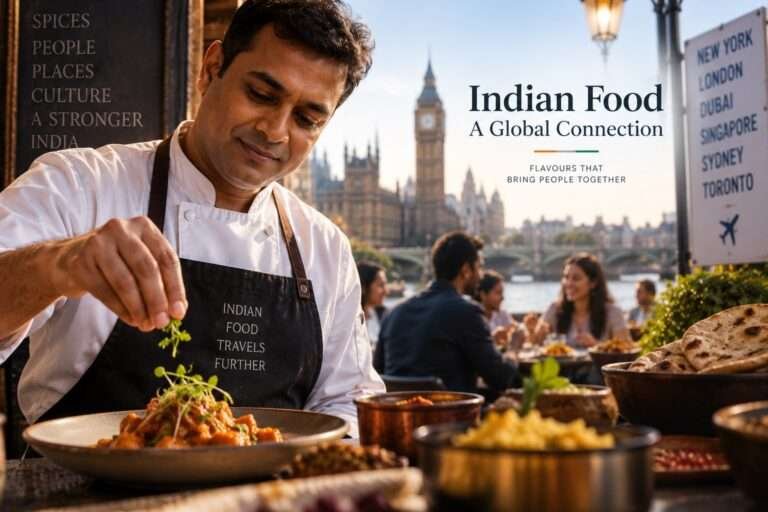
A person who has never visited India may encounter cardamom, cumin, coriander, naan, dosa or biryani for the first time in a restaurant thousands of kilometres from the subcontinent.
That meal can create curiosity.
What is this spice?
Where did this dish come from?
Why is it eaten this way?
What is the difference between North and South Indian cuisine?
Suddenly dinner has become geography.
And that is soft power of a particularly delicious kind.
India does not need a diplomatic speech to explain its diversity if someone in Toronto is happily discovering a Gujarati thali.
The health story needs some honesty
Indian cuisine is sometimes marketed internationally as a kind of edible wellness programme.
That requires caution.
Turmeric is traditionally important in Indian cooking and has also been used in Ayurvedic medicine. Curcumin, one of turmeric’s major compounds, has been studied for possible anti-inflammatory effects.
But modern scientific evidence is more complicated than the internet often suggests.
The U.S. National Center for Complementary and Integrative Health says there is not enough evidence to definitively conclude that turmeric or curcumin supplementation provides benefits for many health conditions. Some research is promising, but higher-quality evidence is still required.
That distinction matters.
Eating a turmeric-containing curry is food.
Taking concentrated curcumin supplements is something else.
Indian cuisine deserves appreciation without turning every spice into a pharmaceutical advertisement.

Global popularity is also creating a new opportunity
Indian food’s international success creates opportunities beyond restaurants.
There is growing potential for Indian spices, packaged foods, ready-to-eat products, regional snacks, cooking ingredients, specialty beverages and culinary tourism.
But India’s biggest opportunity may be something less obvious:
regional authenticity.
For years, international consumers often encountered a relatively narrow version of Indian food.
Butter chicken.
Tikka.
Naan.
Curry.
Those dishes remain popular—and there is nothing wrong with that.
But India’s culinary wealth is vastly larger.
Imagine introducing the world more systematically to Malvani seafood, Assamese preparations, Nagpuri specialities, Bengali vegetarian cuisine, Konkani food, Rajasthani dishes, Kashmiri cuisine, Kerala’s traditional meals or the enormous variety of millet-based foods.
The next stage of Indian food’s global journey may therefore be about moving from “Indian food” to India’s many foods.
DOONITED Editorial Perspective
The global success of Indian cuisine is not simply a victory for spices.
It is a victory for diversity and adaptability.
Indian food travelled because Indians travelled.
It survived because families preserved it.
It expanded because entrepreneurs opened restaurants and shops.
It became accessible because chefs adapted it.
And it continues to evolve because younger cooks are willing to experiment without necessarily abandoning tradition.
There is also an important lesson for India.
The world may know “Indian curry,” but it has only scratched the surface of Indian cuisine.
India’s next culinary opportunity is not to convince the world that Indian food is better than Italian, Japanese, Mexican or Thai food.
That argument is unnecessary—and every Italian grandmother is perfectly capable of defending her pasta without our assistance.
The smarter ambition is to make the world more curious about India’s enormous culinary diversity.
Because food has an unusual power.
It can cross borders without a visa.
It can start conversations without a speech.
And sometimes, the easiest way to introduce the world to India is not through a policy document.
It is through a plate.

World Beyond the News
Why Elephants Stay Close to Their Herd
Elephants live in highly social family groups and use calls, touch and body movements to maintain strong bonds.
Most of the Deep Ocean Remains Difficult to Explore
Extreme pressure, darkness and distance make deep-ocean exploration one of Earth’s greatest scientific challenges.
Spacecraft Can Travel Without Traditional Roads
Spacecraft use carefully calculated trajectories and gravity assists to travel enormous distances through space.
Why Movie Trailers Are Released in Stages
Major films often use teaser trailers, full trailers and final promotional spots to build awareness over time.