
Ganesh Chaturthi Goes Global: How India’s Ganpati Tradition Is Finding New Homes Around the World
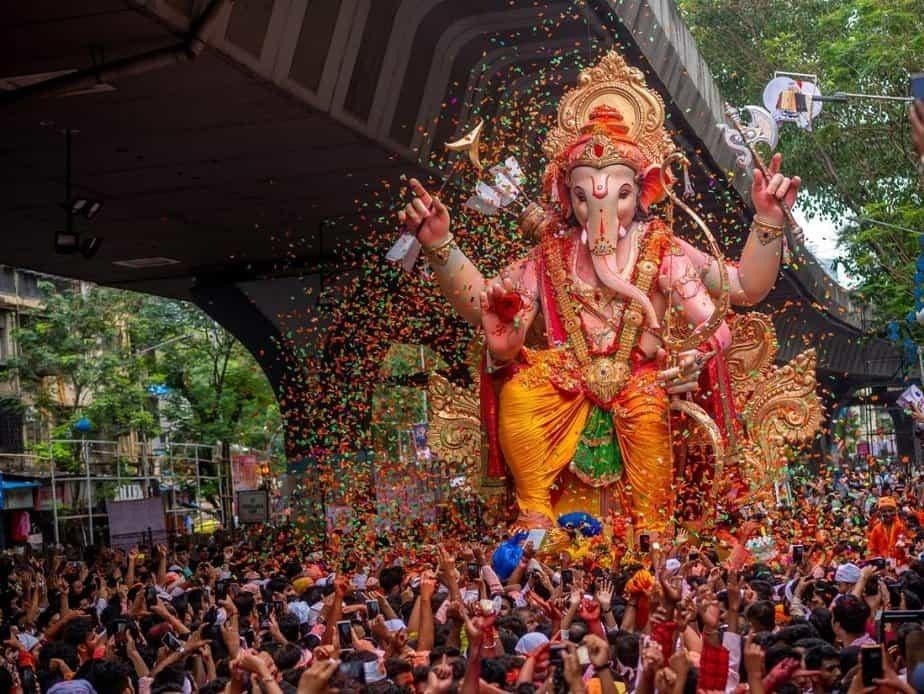
On the streets of Mumbai, Ganesh Chaturthi is unmistakable: towering idols, music, processions, decorated pandals and the familiar cry of “Ganpati Bappa Morya.”
But the festival is no longer confined to Maharashtra—or even to India.
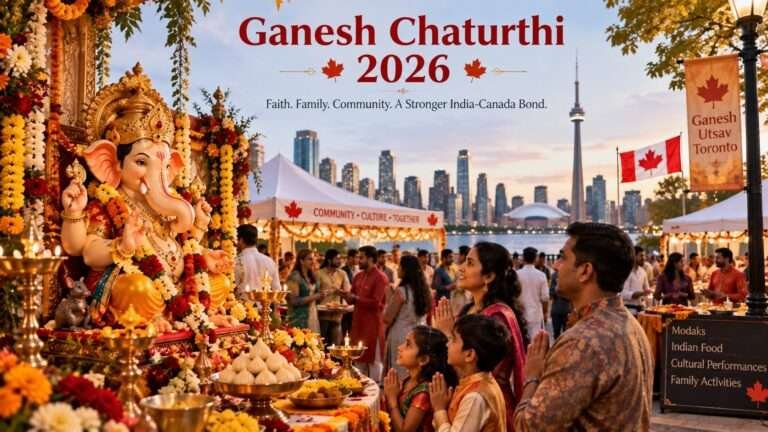
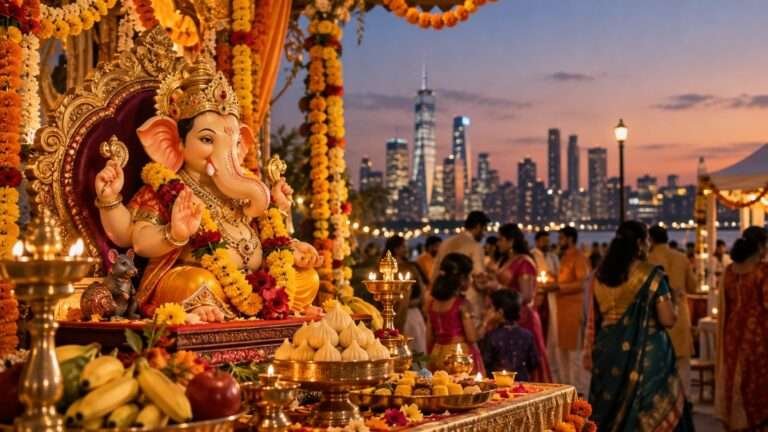
Across cities with established Indian and Hindu communities, Ganesh Chaturthi has developed its own international presence. Temples, cultural organisations and diaspora communities are organising prayers, cultural programmes and processions, adapting a deeply Indian festival to the laws, spaces and social environments of their adopted countries.
In 2026, that global journey is particularly visible in places as different as Paris, Berlin and Mauritius.
From Maharashtra to the world
Ganesh Chaturthi commemorates the worship of Lord Ganesha and is traditionally marked by the installation of Ganesha idols, prayers and cultural activities, followed by visarjan in many traditions.
In Maharashtra, the festival has become one of the defining expressions of public cultural life. The Maharashtra Tourism and Government of India’s Incredible India portal also highlights the festival’s community dimension and growing emphasis on environmentally responsible celebrations.
The festival’s international expansion has followed a familiar pattern of the Indian diaspora.
People carry traditions with them.
But they do not necessarily reproduce them exactly as they were experienced in India.
A community in London, Paris or Berlin has different regulations, different public spaces and different relationships with local authorities. The result is often a festival that retains its religious identity while acquiring a distinctly local character.

Paris: a procession through the French capital
Paris offers one of the clearest examples.
The city’s official tourism organisation lists the Festival of Ganesh around the Sri Manicka Vinayakar Alayam temple in the 18th arrondissement. The 2026 event was scheduled for August 30, with religious ceremonies at the temple followed by a procession through the Marx Dormoy district. The programme included decorated floats, dancers, musicians, blessed offerings and the traditional breaking of coconuts.
This is significant because the celebration is not taking place in an isolated cultural venue.
It becomes part of the public life of Paris.
The procession brings an Indian religious and cultural tradition into a European urban environment, where it is encountered not only by devotees but also by residents and visitors.
That creates a form of cultural exchange that cannot be achieved through a textbook.
Berlin: building an Indian cultural space
Berlin provides another interesting example.
The Sri Ganesha Hindu Temple in Neukölln describes itself as Berlin’s first permanent Hindu temple in the South Indian Dravidian style. Its 2026 calendar includes Ganeshotsav Berlin from September 14 to 26, featuring twice-daily puja, more than 50 cultural programmes and a grand visarjan procession.
The significance goes beyond the festival itself.
A permanent temple gives a community a physical place in which traditions can be practised throughout the year.
For younger members of the Indian diaspora, such institutions can become particularly important. Children who may speak a different dominant language at school and grow up surrounded by European culture can still encounter Indian rituals, music, food, languages and stories within their own community.
Ganesh Chaturthi becomes one part of that larger cultural ecosystem.
Mauritius: when tradition becomes part of the national calendar
Mauritius presents an even more distinctive case.
The country’s government has officially amended its 2026 public-holiday schedule to recognise Ganesh Chaturthi on September 15, 2026, following a request from the Mauritius Marathi Mandali Federation.
That is an important distinction from simply having a diaspora organisation conduct a festival.
When a religious or cultural observance appears on a national public-holiday calendar, it demonstrates how traditions associated with a particular migrant community can become embedded within the broader social fabric of another country.
Mauritius is particularly relevant to India’s cultural story because its population includes a long-established population of Indian origin. Yet the festival’s place in Mauritian public life should not be reduced to an extension of India. It has developed within Mauritius’s own multicultural society.

The environmental question travels too
Ganesh Chaturthi’s international growth also carries an important responsibility.
Traditional visarjan raises environmental questions when idols, paints and decorative materials enter natural water bodies. India’s own public discussion around Ganesh Chaturthi has increasingly emphasised clay idols, natural materials and responsible immersion practices. The Incredible India portal specifically encourages eco-friendly idols and natural decorations.
For communities celebrating abroad, environmental considerations can become even more important because local regulations may be strict.
That means the globalisation of Ganesh Chaturthi is not simply about transporting Indian customs overseas.
It also requires adaptation.
A successful overseas celebration must respect local environmental rules, public-space regulations and community expectations while retaining the essence of the festival.
That balance is not a weakness.
It may actually be one of the reasons the tradition can survive internationally.
More than religion
The global Ganesh festival also demonstrates something broader about Indian culture.
Indian cultural influence does not travel only through films, food, technology or business.
It travels through festivals.
A Ganesh procession can introduce people to Indian music. A temple programme can expose visitors to Indian traditions. A community meal can bring together people who might otherwise never meet.
For diaspora families, the festival can simultaneously be religious, cultural and generational.
Grandparents may remember Ganpati celebrations in India.
Parents may recreate elements of those memories abroad.
Children may experience the same tradition in a completely different social environment.
Yet the emotional connection can continue.
The real challenge of going global
There is, however, a danger in describing every overseas Ganesh Chaturthi as a “massive global festival.”
The celebrations are not identical in scale, organisation or social significance.
Some are major public processions. Others are intimate temple or community gatherings.
The important development is not that every city is attempting to recreate Mumbai.
It is that communities are finding ways to preserve a living tradition while adapting it to their surroundings.
That is a more sustainable form of cultural transmission.
India’s cultural story is being rewritten abroad
Ganesh Chaturthi’s journey across borders is ultimately a story about people.
The festival has travelled because Indians and people of Indian heritage have travelled. Temples and community organisations have provided spaces for traditions to continue. Local authorities have, in some places, incorporated or facilitated public celebrations.
And the tradition continues to evolve.
Paris has its procession.
Berlin has built a permanent temple community.
Mauritius has placed Ganesh Chaturthi within its official public-holiday calendar.
None of these celebrations needs to be an exact copy of Maharashtra to be meaningful.
DOONITED Editorial Perspective: The global spread of Ganesh Chaturthi should not be measured simply by the number of countries where an idol is installed. Its deeper significance lies in the ability of a tradition to retain its identity while adapting responsibly to new societies. For India, this is a powerful form of cultural influence—but one that works best when it is organic, inclusive and respectful of local laws and environmental responsibilities. The strongest sign that Ganpati has truly gone global is not that the festival looks exactly like Mumbai; it is that people thousands of kilometres away have made it part of their own community life.

World Beyond the News
Birds Can Navigate Using Earth’s Magnetic Field
Several bird species can sense Earth’s magnetic field, helping them navigate during long-distance migration.
Fermentation Is a Global Food Tradition
People across continents have used fermentation for centuries to preserve food and create distinctive flavours.
Modern Batteries Store Energy Chemically
Rechargeable batteries repeatedly move ions between electrodes, allowing electrical energy to be stored and released.
Why Songs Become Global Hits
Streaming platforms, short-form video, playlists and international collaborations can rapidly carry music across borders.