
How Indian Directors Are Taking Their Own Stories to the World in 2026
There was a time when Indian cinema’s international identity was often reduced to a few familiar ingredients: Bollywood songs, elaborate weddings, colourful costumes and the occasional art-house film that festival audiences discovered almost by accident.
In 2026, that picture looks considerably different.
Indian filmmakers are increasingly arriving at the world’s major film festivals not simply as representatives of a large film industry, but as individual cinematic voices.
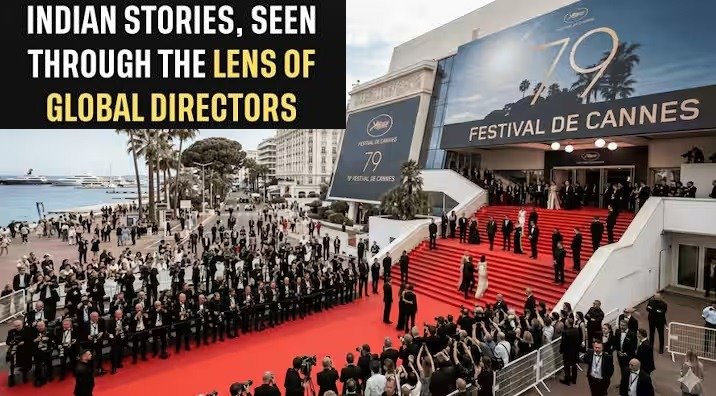
The most visible example is Payal Kapadia, who became president of the jury for the 65th Cannes Critics’ Week in 2026. Critics’ Week runs alongside the main Cannes Film Festival and is particularly focused on emerging filmmakers. Kapadia’s appointment followed her historic 2024 Grand Prix win for All We Imagine as Light.
That progression is worth noticing.
First, a filmmaker’s film is selected.
Then it competes.
Then it wins.
And eventually, the filmmaker returns to help decide which new voices deserve attention.
Cinema has a funny way of turning yesterday’s newcomer into tomorrow’s gatekeeper.
Payal Kapadia’s Cannes journey is bigger than one award
Kapadia’s story did not begin with the Grand Prix.
Her film All We Imagine as Light was India’s first film in the Cannes Competition in three decades when it competed in 2024, and it went on to win the Grand Prix. The Festival de Cannes describes the film as Kapadia’s feature debut and highlights its Mumbai-centred story and multilingual character.
She returned to Cannes in 2025 as a member of the main Competition jury.
Then came 2026.
This time she presided over Critics’ Week.
That makes her 2026 role particularly significant because Critics’ Week is not primarily about established commercial cinema. It is a platform where emerging filmmakers can acquire international visibility.
The symbolism is powerful: an Indian independent filmmaker who once needed a festival platform is now sitting on the other side of the table, helping evaluate the next generation.
But there is an important distinction.
Kapadia did not become president of the main Cannes Competition jury in 2026.
The main 2026 Cannes jury was headed by South Korean filmmaker Park Chan-wook. Kapadia’s position was President of the Critics’ Week jury.
Getting the terminology right matters because international recognition does not need exaggeration.
The actual achievement is already impressive.
Venice offers another Indian story
While Cannes provided one kind of milestone, Venice is offering another.
Director Anuparna Roy returned to the Venice International Film Festival in 2026 with Lovers in the Blue Night, her second consecutive film at Venice.
The official Venice programme lists the film in the Orizzonti section. It is a 107-minute Hindi-language India-USA production.
Roy’s rise is remarkable precisely because it is not a conventional industry success story.
Her debut feature, Songs of Forgotten Trees, was presented in Venice’s Orizzonti section in 2025, where she became the first Indian woman to win the section’s Best Director award, according to Venice-related reporting.
Her second film draws from a deeply personal memory from her childhood in West Bengal and explores several lives on the margins of an imagined Mumbai.
That is an important characteristic of the new Indian festival wave.
The films are not necessarily trying to explain India to foreigners.
They are telling specific Indian stories—and allowing international audiences to enter them.
That is a very different proposition.
And look at what TIFF is showing
The 2026 Toronto International Film Festival provides perhaps the clearest evidence that the international appetite for Indian cinema is becoming more diverse.
TIFF has selected seven Indian films for its 2026 edition.
And the selection is anything but predictable.
There is a Malayalam vampire western.
A film set in Nagaland and told in the Konyak language.
A Tamil action film.
A Hindi-language film about Phoolan Devi.
A restoration of John Abraham’s 1986 Malayalam classic Amma Ariyan.
There are also works from filmmakers such as Shaunak Sen and Rahul Roye.
Think about that list for a moment.
A vampire western.
In Malayalam.
Set partly in the Rajasthan desert.
That is not exactly the standard international stereotype of Indian cinema.
And perhaps that is the point.
The more Indian filmmakers become comfortable with their own cultural specificity, the less they need to manufacture something that looks “international.”
Regional languages are becoming an international advantage
For decades, the global conversation around Indian cinema was disproportionately dominated by Hindi films.
That is changing.
Malayalam, Tamil, Assamese, Bengali, Marathi, Manipuri, Konyak and many other languages increasingly appear in international cinematic conversations.
This is not simply a matter of linguistic diversity.
It expands the kinds of stories that can travel.
A film does not have to be spoken in English to communicate internationally.
A village, a family conflict, loneliness, migration, desire, ambition, injustice or friendship can cross borders without translation of the underlying emotion.
Subtitles can translate words.
They cannot manufacture authenticity.
And international festivals appear increasingly interested in films that bring unusual worlds rather than merely polished versions of familiar ones.
TIFF’s 2026 Indian selection is an excellent illustration. Its programming includes stories from different regions, genres and linguistic backgrounds rather than presenting a single definition of what “Indian cinema” should look like.
Srinagar wants a place in the global cinema map too
The internationalisation of Indian cinema is not happening only outside India.
It is also creating new platforms inside the country.
The inaugural International Film Festival of Jammu & Kashmir (IFFJK) opened in Srinagar on September 7, 2026.
The festival has assembled an international jury including cinematographer-filmmaker Santosh Sivan, filmmaker Sriram Raghavan, German filmmaker and curator Dorothee Wenner, Japanese media entrepreneur and documentary filmmaker Keiko Bang, and filmmaker Himansu Sekhar Khatua.
The significance goes beyond celebrity names.
Jammu & Kashmir has a long relationship with Indian cinema as a filming destination. The new festival is attempting to turn that history into a contemporary cultural and cinematic platform.
If successful, Srinagar could become more than a beautiful backdrop for somebody else’s film.
It could become a place where filmmakers come to discover, make, discuss and showcase cinema.
That would be a meaningful shift.
The next generation is already entering the pipeline
The global festival ecosystem is also investing in emerging Indian filmmakers.
At Berlinale Talents 2026, seven Indian film professionals were selected, including Subarna Dash and Tanushree Das, alongside Anadi Athaley, Vedant Srinivas, Thanikachalam SA, Kislay and Devraj Bhaumik.
Programs such as Berlinale Talents matter because international careers are rarely built by one festival screening.
They are built through networks.
A filmmaker meets a producer.
A producer meets another filmmaker.
A festival programmer discovers a new voice.
A workshop provides mentorship.
A project finds financing.
A short film becomes a feature.
And suddenly a filmmaker who was unknown outside a small circle is being discussed in Berlin, Cannes, Venice or Toronto.
The glamorous red carpet is only the visible tip of a very large iceberg.
The rest is workshops, development labs, financing meetings, rejected pitches and somebody repeatedly saying, “We need one more draft.”
Does this mean Indian mainstream cinema is losing its place?
Not necessarily.
One of the more interesting details in the TIFF 2026 selection is that there is no mainstream Hindi film in the seven-film Indian slate.
That should not automatically be interpreted as a rejection of Hindi cinema.
TIFF programming reflects the submissions it receives, the films selected for particular sections and the festival’s curatorial objectives.
The more useful conclusion is that international festivals are finding increasing value in India’s independent and regional cinema.
That is good news for the wider industry.
A country’s cinematic influence becomes stronger when it has multiple layers.
Commercial blockbusters can provide visibility.
Regional cinema can provide cultural depth.
Independent filmmakers can provide experimentation.
Documentary filmmakers can provide social observation.
And emerging directors can challenge all of them.
A healthy cinema ecosystem needs the entire family—not just the loudest cousin at the wedding.
What has changed?
Technology is part of the answer.
Digital cameras have reduced some production barriers.
Streaming platforms have expanded international access.
Subtitles and digital distribution have made language less restrictive.
Film festivals have become more connected.
And Indian filmmakers now have more opportunities to develop relationships with international producers, programmers and financiers.
But technology alone does not explain the change.
There is also greater confidence among filmmakers to tell stories on their own terms.
The question is no longer necessarily:
“Will the world understand this Indian story?”
It increasingly becomes:
“Is this story told well enough for the world to care?”
That is a much more powerful question.
The real Indian advantage may be diversity
India does not have one cinema.
It has hundreds of cinematic cultures.
Different languages.
Different histories.
Different social realities.
Different landscapes.
Different traditions of storytelling.
Different audiences.
That complexity can sometimes look like a problem from the inside.
For international cinema, it can be an extraordinary advantage.
A filmmaker from Kerala does not need to imitate Paris to become international.
A filmmaker from Nagaland does not need to make a Mumbai film to enter a global festival.
A Bengali filmmaker does not need to remove Bengal from a story to make it accessible to Toronto.
The strongest international films often do something surprisingly simple:
They become more specific, not less.
DOONITED Editorial Perspective: Stop trying to make Indian cinema look international
Perhaps the biggest lesson from India’s 2026 festival journey is that international recognition does not necessarily come from making Indian cinema less Indian.
It can come from making it more honest, more original and more technically accomplished.
Payal Kapadia’s Cannes journey, Anuparna Roy’s continuing presence at Venice, the unusual regional-language selection at TIFF, the emergence of new filmmakers through Berlinale Talents and the creation of new festival platforms in India all point towards a broader ecosystem.
But we should avoid declaring victory too early.
Festival success does not automatically translate into large theatrical audiences.
Critical acclaim does not guarantee financing.
A festival premiere does not guarantee distribution.
And one successful filmmaker cannot represent an entire country’s cinema.
The real test will be whether these opportunities become sustainable pathways for hundreds of filmmakers—not just a handful of exceptional names.
India already produces an enormous number of films.
The next achievement is ensuring that more of India’s best films can travel, compete, find audiences and build careers around the world.
That would be a genuine cinematic revolution.
The world is not discovering India for the first time
Indian cinema has travelled internationally for decades.
What is changing is the range of Indian voices travelling with it.
From Cannes to Venice.
From Toronto to Berlin.
From Malayalam vampire westerns to Konyak-language stories.
From established festival names to first-time filmmakers.
From Mumbai to Srinagar—and from India’s regional filmmaking cultures to audiences thousands of kilometres away.
The new story is not that India has finally arrived in world cinema.
It is more interesting than that.
India has always had stories worth hearing. In 2026, more of the world is finally getting to hear them in their original voices.

World Beyond the News
Why Elephants Stay Close to Their Herd
Elephants live in highly social family groups and use calls, touch and body movements to maintain strong bonds.
Most of the Deep Ocean Remains Difficult to Explore
Extreme pressure, darkness and distance make deep-ocean exploration one of Earth’s greatest scientific challenges.
Spacecraft Can Travel Without Traditional Roads
Spacecraft use carefully calculated trajectories and gravity assists to travel enormous distances through space.
Why Movie Trailers Are Released in Stages
Major films often use teaser trailers, full trailers and final promotional spots to build awareness over time.