
Indus Waters Treaty: The Hague Ruling Creates a New Legal and Diplomatic Test for India-Pakistan
Water has always been more than a natural resource in South Asia. It is agriculture, electricity, food security and, increasingly, a matter of national strategy.
That is why the latest development surrounding the Indus Waters Treaty deserves attention well beyond the courtroom.
On August 31, 2026, a Court of Arbitration constituted under the 1960 treaty issued an award declaring that the agreement remains fully in force, despite India’s April 2025 decision to place it in abeyance. The tribunal also issued interim measures concerning the Ratle Hydroelectric Plant in Jammu and Kashmir. India has rejected the tribunal’s authority and maintained that its decision to hold the treaty in abeyance remains in force.
The result is not simply another India-Pakistan diplomatic disagreement. It is a clash between two fundamentally different positions: one centred on the treaty’s dispute-resolution mechanism and the other on India’s sovereign and security concerns.
What exactly did The Hague tribunal decide?
The tribunal examined India’s decision of April 2025 to place the treaty “in abeyance” following an attack in Indian-administered Jammu and Kashmir.
Its unanimous conclusion was that the grounds cited by India did not justify suspending or terminating the treaty. It therefore held that the Indus Waters Treaty remains fully in force and that its obligations continue to apply.
The tribunal also considered Pakistan’s request for interim restrictions on construction at the Ratle project.
It prohibited India from concreting portions of the Ratle dam wall and power-intake structure above specified levels until 90 days after a Neutral Expert issues a final decision on the project’s treaty compliance. That decision is expected around July 2027. The tribunal also imposed a reporting requirement concerning the construction schedule, while declining two other measures sought by Pakistan.
This distinction is important: the tribunal did not simply order India to stop all work on the Ratle project. Its interim measures are limited and connected to the ongoing technical dispute.
Why India rejected the ruling
India has consistently objected to the Court of Arbitration’s constitution and jurisdiction.
New Delhi’s position predates the latest award. In earlier statements, India argued that the arbitration process was inconsistent with the treaty because a separate Neutral Expert mechanism was already dealing with differences concerning the Kishenganga and Ratle projects. India has therefore refused to participate in the arbitration proceedings.
The PCA itself records that India did not participate in the proceedings, although the tribunal said it considered available material reflecting India’s views and repeatedly kept the opportunity for India to participate open.
This creates the central problem.
The tribunal considers itself competent under the treaty’s dispute-resolution provisions. India does not accept that competence.
So the disagreement is now partly about water and infrastructure, but equally about who has the authority to decide disputes under the treaty.
Why the Indus system matters
The Indus Waters Treaty was signed in 1960 after negotiations involving India, Pakistan and the World Bank.
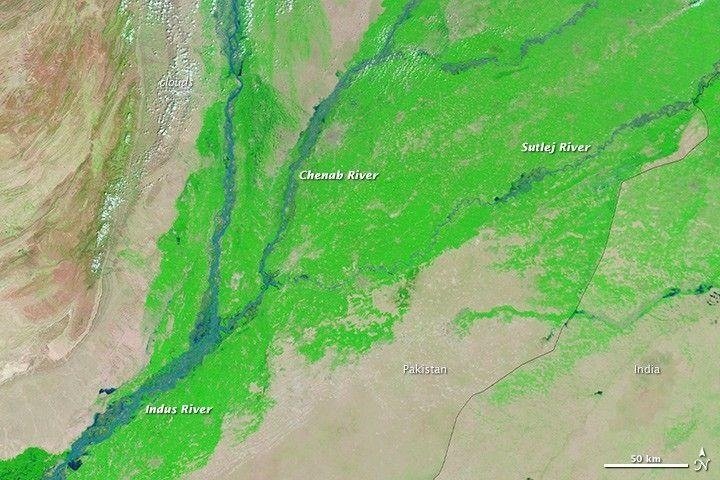
It divides the use of the river system between the two countries. The treaty gives India broad use of the eastern rivers—Ravi, Beas and Sutlej—while Pakistan receives the principal use of the western rivers—Indus, Jhelum and Chenab—subject to specified rights for India, including certain hydroelectric uses.
The agreement also created mechanisms for information exchange and dispute resolution.
For decades, the treaty survived wars and severe political hostility.
That history explains why the present dispute matters internationally.
It demonstrates both the durability of a carefully designed water-sharing agreement and the difficulty of maintaining such arrangements when the political relationship between the parties deteriorates sharply.
The Indian angle is immediate
For Indian readers, the issue is not an abstract dispute in The Hague.
The treaty directly affects the development and operation of hydroelectric projects in Jammu and Kashmir and therefore intersects with questions of energy, infrastructure and water management.
Projects such as Ratle and Kishenganga have been contentious because India regards hydroelectric development on the western rivers as permissible within the treaty’s framework, while Pakistan has repeatedly challenged aspects of their design. The PCA’s case materials confirm that both projects are involved in parallel dispute-resolution processes, including proceedings before a Neutral Expert.
There is also a larger lesson for India’s water strategy.
Climate variability, changing energy requirements and the need for greater renewable electricity generation make Himalayan water resources increasingly important. Yet infrastructure development in a transboundary river system requires both engineering capability and careful management of international obligations.
What happens next?
The immediate reality is that the two sides do not accept the same legal position.
The tribunal says the treaty remains binding. India says its abeyance decision remains effective and rejects the tribunal’s authority.
That means the practical consequences may extend beyond the wording of the latest award.
The Neutral Expert’s future decision on the Ratle project will be closely watched. So will India’s approach to construction, water-data arrangements and any future engagement under the treaty framework.
For Pakistan, the treaty remains a critical component of water security. For India, the dispute is tied to sovereignty, security and the freedom to develop infrastructure within its territory.
Neither perspective should be reduced to a slogan.
The larger lesson
The Indus Waters Treaty was created precisely because India and Pakistan knew that rivers do not respect political boundaries.
The current dispute demonstrates the opposite danger: political and security crises can eventually test even agreements that have survived for decades.
That is why the most important question is not simply who won in The Hague.
The more consequential question is whether India and Pakistan can eventually establish a workable framework in which legitimate security concerns, lawful infrastructure development, water security and technical cooperation can coexist.
Water cannot be negotiated as if it were merely another commodity.
It sustains millions of people, agriculture and ecosystems across borders.
The history of the Indus Waters Treaty shows that cooperation is possible even between adversaries. The present crisis shows how difficult it becomes when trust collapses.
DOONITED Editorial Perspective: The latest ruling should neither be presented as a straightforward victory for Pakistan nor dismissed as irrelevant because India rejects the tribunal’s jurisdiction. Both positions obscure the real issue. The more important development is that a treaty which survived decades of hostility is now facing an unusually serious test of its legal and political foundations. India’s security concerns deserve serious consideration, but long-term water security also requires predictable rules, credible technical processes and sustained diplomacy. The greatest strategic advantage for India will ultimately come from combining infrastructure and water-management capability with a clear, defensible and sustainable legal position.

World Beyond the News
Dolphins Use Individual Signature Whistles
Bottlenose dolphins develop distinctive whistles that function somewhat like individual acoustic identifiers.
The Pacific Is Earth’s Largest Ocean
The Pacific Ocean covers more area than any other ocean basin and stretches between Asia, Australia and the Americas.
Artificial Intelligence Learns Statistical Patterns
Modern machine-learning systems identify patterns in large datasets and use those patterns to generate predictions or outputs.
Why Some Stories Spread So Quickly
Emotion, novelty, visual appeal and easy sharing can make a story travel rapidly across social platforms.