
Teachers’ Day in India: Why September 5 Means More Than a Celebration
Every year on September 5, classrooms across India change character.
Students become performers, teachers become guests of honour, greeting cards appear on desks and school assemblies take on a celebratory mood. But behind the familiar celebrations lies a deeper idea: India chose to associate its Teachers’ Day with a philosopher-educator who believed that education was central to the development of both the individual and society.
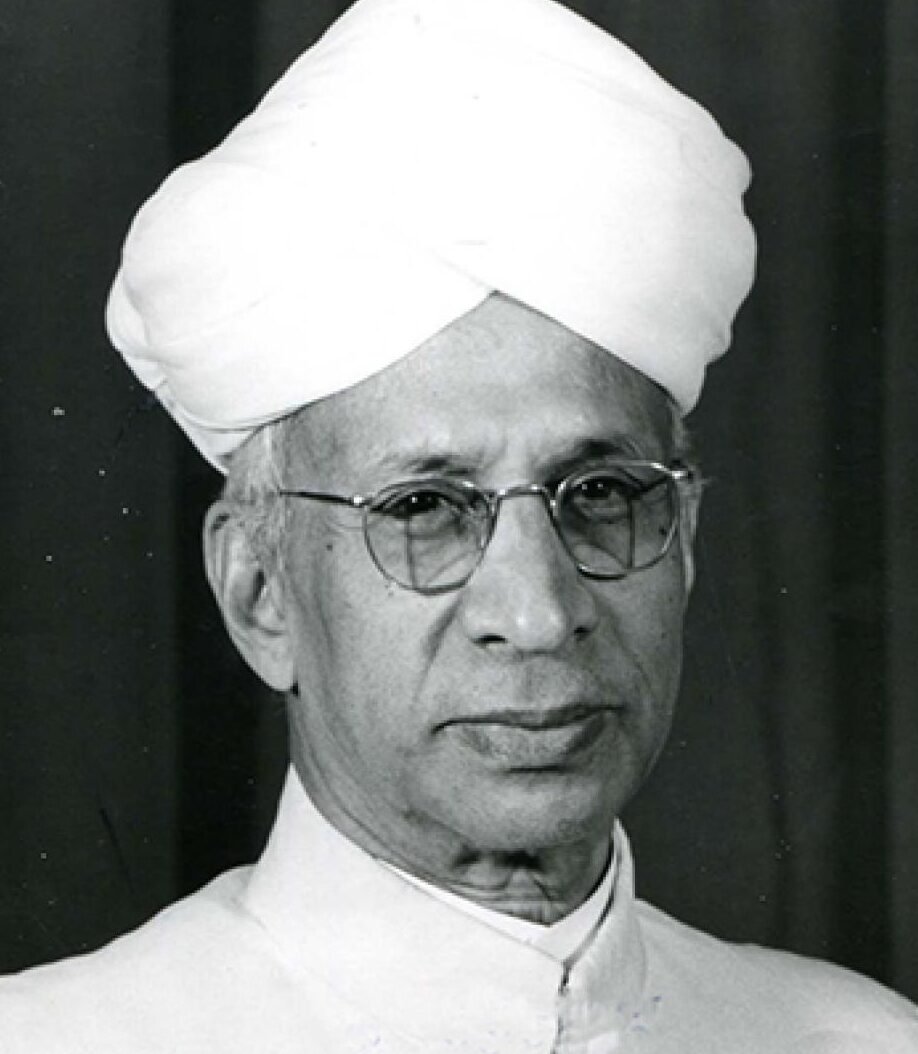
September 5 is the birth anniversary of Dr. Sarvepalli Radhakrishnan, India’s first Vice-President and second President, and a distinguished philosopher and teacher. India observes the day as National Teachers’ Day. The National Teachers’ Awards are also presented on September 5 to recognise meritorious educators.
But India’s September celebration is different from the international observance that follows one month later.
September 5 in India, October 5 around the world
The distinction is important.
India celebrates National Teachers’ Day on September 5, while World Teachers’ Day is observed internationally on October 5.
UNESCO says World Teachers’ Day has been celebrated since 1994. October 5 was chosen because it marks the anniversary of the adoption, in 1966, of the ILO/UNESCO Recommendation concerning the Status of Teachers. That international recommendation established benchmarks concerning teachers’ rights and responsibilities, preparation, recruitment, employment and working conditions.
So the two occasions have related but distinct purposes.
India’s September 5 observance has a strong national and historical association with Radhakrishnan. October 5 places teachers within a broader international conversation about the teaching profession and the conditions required for educators to do their work effectively.
The Radhakrishnan connection
Dr. Radhakrishnan’s association with September 5 is not simply about remembering a former President.
He was a philosopher and university teacher before becoming one of India’s most prominent constitutional office-holders. His career included academic leadership and teaching, making education a natural part of his public legacy.
The tradition surrounding Teachers’ Day holds that when students wanted to celebrate his birthday, Radhakrishnan suggested that the occasion instead be observed as a day honouring teachers.
Whether viewed as a historical anecdote or as a symbol of his attitude toward education, the idea captured something enduring: the importance of recognising the people who help others learn.
From greeting cards to national recognition
For generations of Indian students, Teachers’ Day has been an opportunity to express gratitude.
Schools and colleges may organise cultural programmes, special assemblies, student-teacher activities and other events. Yet recognition also exists at the national level.
The Government of India’s National Teachers’ Awards were instituted in 1958 to recognise outstanding teachers. The Ministry of Education says the awards are presented on September 5 and are intended to honour teachers whose commitment has enriched students’ lives and contributed to the quality of school education.
That distinction matters.
A teacher’s influence cannot always be measured through examination results. A good teacher can influence confidence, curiosity, discipline, critical thinking and a student’s willingness to continue learning.
The celebration also raises a difficult question
There is, however, a danger in reducing Teachers’ Day to one day of appreciation.
UNESCO’s current discussion about the teaching profession highlights challenges involving teacher shortages, working conditions, professional support, autonomy and changing demands on educators. UNESCO and the International Task Force on Teachers for Education 2030 estimate that the world will need 44 million additional teachers by 2030 to achieve universal primary and secondary education.
This gives Teachers’ Day a second meaning.
If society genuinely values teachers, appreciation cannot stop at flowers, speeches and social-media messages. It must also involve serious attention to teacher preparation, professional development, reasonable working conditions and the resources available in classrooms.
Technology has made this question even more important.
Teachers today are working in an environment shaped by digital learning, artificial intelligence, changing labour markets, climate pressures and increasingly diverse educational needs. UNESCO notes that these changes are creating challenges that were not anticipated when the 1966 international recommendation was adopted.
What India can learn from both Teachers’ Days
The September 5 and October 5 observances can therefore be seen as complementary.
September reminds India of its own educational tradition and the legacy associated with Radhakrishnan.
October places that tradition within a global discussion about the status of teachers.
Together, they suggest a straightforward principle: respect for teachers should be measured not only by how warmly we celebrate them, but also by how seriously we support them.
For students, Teachers’ Day can be a moment to say thank you.
For parents, it can be a reminder that education is a partnership.
For governments and education institutions, it should be an opportunity to examine whether teachers have the training, resources, professional dignity and working environment necessary to do their jobs well.
And for society as a whole, there is perhaps one enduring lesson.
A teacher’s greatest achievement may not be the student who remembers a particular lesson. It may be the student who, years later, becomes curious enough to keep learning without the teacher standing beside them.
That is when teaching becomes something larger than a profession.
It becomes a legacy.
DOONITED Editorial Perspective: Teachers’ Day should not become merely an annual ritual of praise. The strongest way to honour teachers is to create an education system in which capable educators can teach well, continue learning themselves and give every student a genuine opportunity to progress. September 5 gives India a reason to celebrate its teachers; the real responsibility is ensuring that the celebration has meaning throughout the year.

World Beyond the News
Bees Communicate Where Food Is
Honeybees use movement patterns known as waggle dances to communicate information about food locations.
Street Food Reflects Local History
Many famous street foods developed from migration, trade, local ingredients and the everyday needs of working communities.
A Day on Venus Is Extremely Long
Venus rotates so slowly that one rotation relative to distant stars takes longer than its trip around the Sun.
Human Achievement Continues to Push Limits
Athletes, engineers, scientists and explorers regularly establish new benchmarks in speed, endurance, scale and precision.