
Argentina Will Stop at the 10th Minute for Messi: A Football Farewell Beyond the Scoreboard
Football normally rewards movement. Goals change matches, referees keep the clock running and supporters expect the game to continue until the final whistle.
But this weekend, Argentine football will deliberately stop.
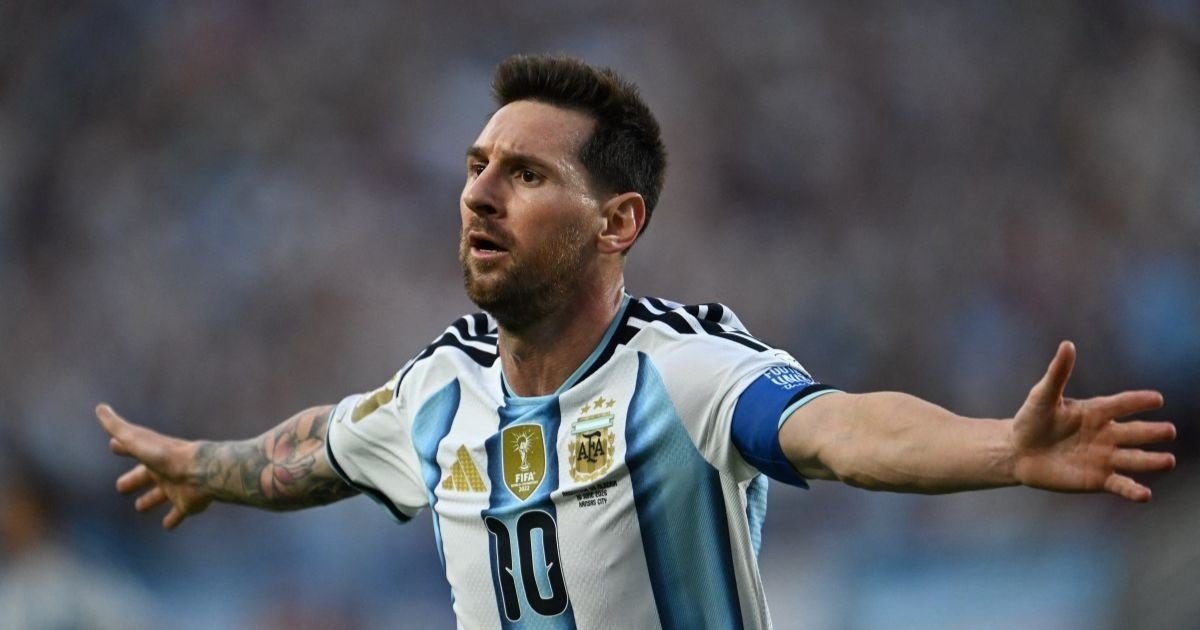
Across Argentina, matches are scheduled to pause in the 10th minute for a minute of applause in honour of Lionel Messi, following his retirement from international football. The choice of the 10th minute is unmistakable: it represents the number Messi made synonymous with his career for Argentina. The Argentine Football Association has also asked stadiums with screens to show a commemorative video before matches.
It is an unusually simple tribute to an unusually complicated football story.
From disappointment to redemption
Messi’s international career did not begin as the perfect story that hindsight sometimes creates.
He made his Argentina senior debut in 2005 and, for years, carried enormous expectations. There were painful defeats, including major-final disappointments, and his relationship with sections of Argentine football supporters was far more complicated than his extraordinary club career might suggest.
He even announced an international retirement in 2016 before returning to the national team.
The second half of his international career changed everything.
Argentina won the 2021 Copa América, the 2022 World Cup and the 2024 Copa América, transforming Messi’s national-team legacy. His Argentina career ultimately ended with 207 appearances and 125 goals, both national records.
The 2026 World Cup provided one final chapter. Argentina reached the final but lost to Spain. Messi subsequently confirmed that he would no longer play for the national team.
At 39, the decision marks the end of a 21-year international journey.
Why the 10th minute matters
The Argentine tribute is more than a ceremonial gesture.
Stopping every match at the same moment creates something rare in modern sport: a national experience that does not depend on which club a supporter follows.
A fan watching one domestic team will participate in exactly the same tribute as a supporter watching another team hundreds of kilometres away.
And the symbolism is precise.
The number 10 was once simply a shirt number. Messi turned it into an identity. For Argentina, it became associated not merely with a player but with an era.
For one minute, the scoreboard will become secondary.
That may be the most appropriate tribute to a footballer whose greatest influence was often impossible to capture in statistics alone.
What Messi’s story means for India
For Indian football followers, Messi’s farewell is also a reminder of how sporting heroes can influence audiences far beyond their own national borders.
India has its own deep football traditions, particularly in places such as West Bengal, Goa, Kerala and the Northeast. Indian supporters have followed international football for generations, often forming emotional connections with players and teams thousands of kilometres away.
Messi’s appeal illustrates the global nature of modern football: a player can become part of the sporting memories of people who have never seen him play in their own country.
There is also a lesson here for Indian football.
Great football cultures are not built only around star players. They are built around memory, identity, grassroots participation, clubs, supporters and continuity between generations.
Messi did not create Argentine football. Argentina already possessed a remarkable football culture. What he did was become one of its most recognisable modern symbols.
India does not need to reproduce Argentina’s football model. But it can learn from the importance Argentina places on football as a shared cultural experience.
A career should not be judged by the final match
Messi’s international farewell comes after defeat rather than victory.
That is significant.
There is sometimes a tendency in sport to measure greatness by the final result: win the last match and the ending feels perfect; lose it and the story is somehow considered incomplete.
Real careers are rarely that neat.
Messi leaves international football after losing the 2026 World Cup final, but that result does not erase the World Cup triumph in Qatar four years earlier, the Copa América victories, the records or the decades of performances that preceded them.
His story demonstrates something more valuable: legacy is accumulated over time, not decided by one afternoon.
That is perhaps the most intelligent way to understand Argentina’s 10th-minute tribute.
The game will stop for one minute.
Then it will continue.
That is exactly how football—and life—works.
The next generation must eventually take the field. Messi’s era cannot continue forever, and Argentina’s football future cannot depend indefinitely on one extraordinary player.
But for one minute, the country will acknowledge what has already happened.
And sometimes, in sport, that is enough.
DOONITED Editorial Perspective: Messi’s retirement is not simply the departure of a famous footballer. It is an example of how sustained excellence can become part of a nation’s cultural memory. Argentina’s decision to honour him collectively, rather than through one farewell match alone, recognises that his international career belongs not only to the player but also to the supporters who experienced its disappointments, victories and transformation.

World Beyond the News
Why Elephants Stay Close to Their Herd
Elephants live in highly social family groups and use calls, touch and body movements to maintain strong bonds.
Most of the Deep Ocean Remains Difficult to Explore
Extreme pressure, darkness and distance make deep-ocean exploration one of Earth’s greatest scientific challenges.
Spacecraft Can Travel Without Traditional Roads
Spacecraft use carefully calculated trajectories and gravity assists to travel enormous distances through space.
Why Movie Trailers Are Released in Stages
Major films often use teaser trailers, full trailers and final promotional spots to build awareness over time.