
India at Asian Games 2026: A Record-Sized Team Carries the Momentum of Hangzhou to Japan
The next chapter of India’s Asian sporting story begins in Japan.
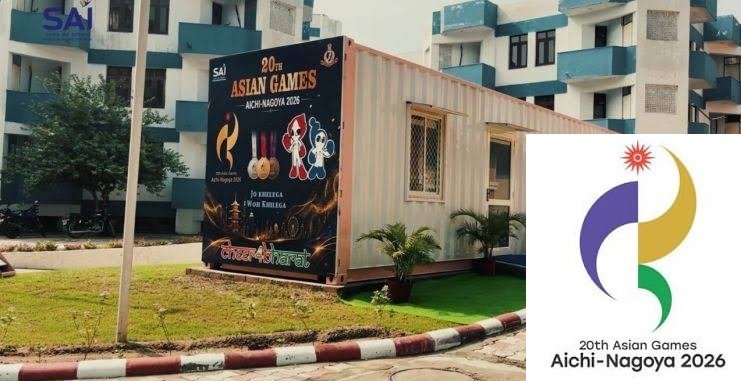
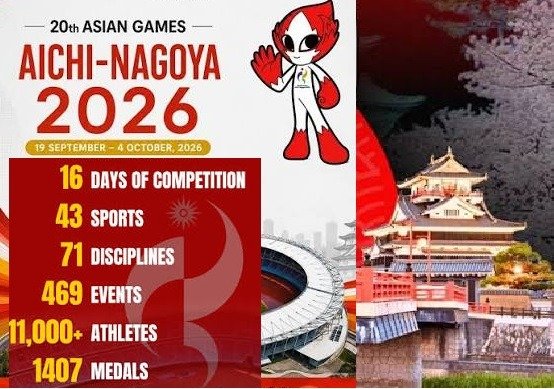
The 20th Asian Games, Aichi-Nagoya 2026, officially open on September 19 and run through October 4, bringing together athletes from across the continent in one of the biggest multi-sport competitions before the Los Angeles 2028 Olympic Games.
For India, there is an additional layer of significance.
The country is arriving after its greatest Asian Games performance ever.
At Hangzhou, India won 107 medals — 28 gold, 38 silver and 41 bronze — and finished fourth in the overall standings.
Now comes the difficult part of sport:
Doing it again.
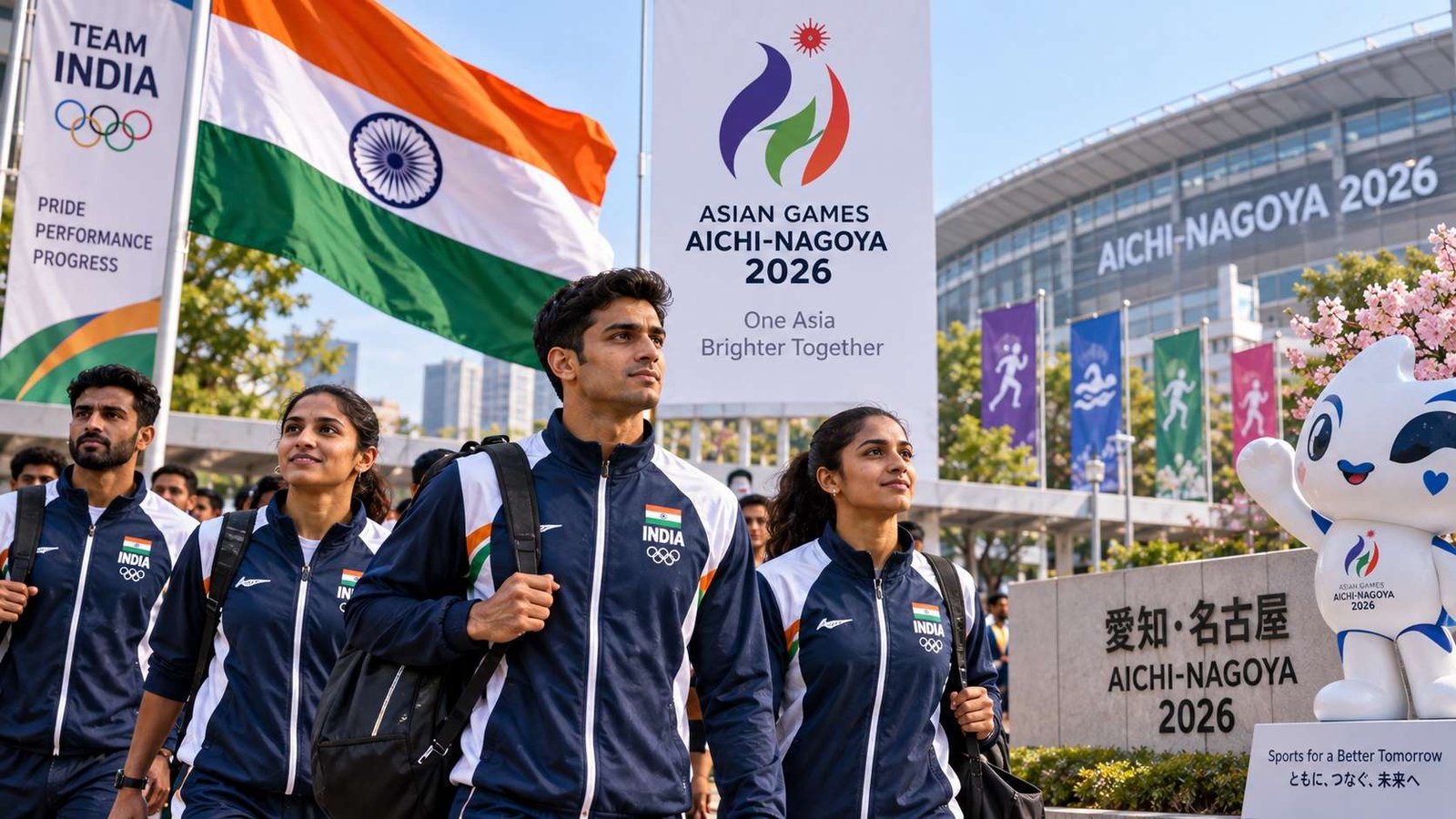
India sends 503 athletes to Japan
India’s final delegation has grown to 503 athletes — 269 men and 234 women — according to the Olympic Council of Asia’s September update. More than 300 members of the athlete contingent are making their Asian Games debut, according to India’s Sports Ministry’s send-off information.
That is more than just a number.
It indicates both experience and renewal.
There are established Olympic and Asian Games medallists heading to Japan, but alongside them is a substantial group entering the continental championship for the first time.
The Games therefore represent two Indian sporting stories at once:
the established champions defending their positions, and the next generation trying to take theirs.
Manu Bhaker and Tajinderpal Toor lead the opening ceremony
Two athletes with very different sporting backgrounds will carry India’s flag at the opening ceremony: Manu Bhaker and Tajinderpal Singh Toor.
Bhaker arrives as a double Olympic medallist and one of the most recognisable names in Indian shooting.
Toor brings a different kind of experience. The shot-putter is a two-time Asian Games gold medallist and will attempt to defend his title in Japan. The OCA has also identified him among the athletes seeking a third successive Asian Games gold medal.
Their selection is symbolic of India’s changing sporting profile.
Shooting has become one of India’s major medal-producing disciplines, while athletics is increasingly producing champions capable of competing at the highest international level.
And then there is the flag itself.
For the athletes carrying it, the job lasts minutes.
For the thousands watching, the image lasts considerably longer.
Athletics carries the largest Indian squad
Athletics is India’s largest delegation, with 73 athletes.
The squad includes some of India’s best-known names, including Neeraj Chopra, Avinash Sable, Tajinderpal Singh Toor, Parul Chaudhary and Annu Rani.
Chopra’s presence naturally attracts enormous attention.
The javelin star is already a two-time Olympic medallist and will attempt to win his third consecutive Asian Games gold medal. He won in Jakarta in 2018 and Hangzhou in 2022.
But reducing India’s athletics campaign to one athlete would miss the larger story.
At Hangzhou, athletics was India’s most successful sport by total medals, producing 29 medals — six gold, 14 silver and nine bronze.
The depth matters.
A medal-winning athletics programme cannot depend on one superstar forever. India needs finalists, medal contenders and emerging athletes across events.
Aichi-Nagoya will provide another test of that depth.
Cricket and kabaddi return as defending champions
India will also defend its men’s and women’s gold medals in cricket and kabaddi.
Cricket’s presence is particularly significant because the sport is part of the Los Angeles 2028 Olympic programme.
At Aichi-Nagoya, both men’s and women’s competitions will be played in the T20 format.
For Indian audiences accustomed to cricket being treated as a separate universe, its place within the Asian Games also underlines how the sport’s international footprint continues to expand.
Kabaddi, meanwhile, remains one of the sports in which India’s Asian Games history is particularly strong.
Defending a title, however, is never simply a matter of repeating the past.
Every opponent has had two years to study what worked last time.
Sport is wonderfully inconvenient that way.
The scoreboard remembers nothing about yesterday.
Hockey carries its own pressure
India’s men’s and women’s hockey teams will also attract significant attention.
The men’s team enters the competition as the defending Asian Games champion, while India is directly qualified for the 12-team men’s competition alongside Pakistan, China, Japan, Korea and Malaysia.
The men’s pool places India alongside Japan, Korea, Bangladesh, Sri Lanka and Indonesia, while the women’s competition has India in a pool with Japan, Thailand, Singapore, Indonesia and Uzbekistan.
For Indian hockey, Asian Games performance has significance beyond the medal table because the sport remains closely tied to the country’s Olympic ambitions.
The Aichi-Nagoya tournament is therefore another opportunity to measure India’s progress against Asia’s strongest hockey nations.
Shooting, badminton, boxing and wrestling add depth
India’s campaign will not depend on the headline sports alone.
The badminton team has 20 athletes, including PV Sindhu, Lakshya Sen and Ayush Shetty. The squad also includes the established men’s doubles pairing of Satwik Sairaj Rankireddy and Chirag Shetty and women’s doubles pair Gayatri Gopichand and Treesa Jolly.
Boxing has 11 representatives, while wrestling has 16.
The wrestling team includes Antim Panghal and Olympic bronze medallist Aman Sehrawat, while the boxing squad features athletes such as Lovlina Borgohain.
Shooting, meanwhile, remains another important part of India’s medal programme.
The presence of established Olympic medallists alongside younger competitors gives several disciplines a mixture of experience and experimentation.
A Games that is bigger than the medal count
Aichi-Nagoya 2026 is being staged across 41 sports, 66 disciplines and 456 events, with competition spread across venues in Nagoya, Aichi Prefecture and other Japanese locations. Swimming, diving and equestrian events are also being held in Tokyo.
There is also a new sporting element.
Mixed martial arts makes its Asian Games debut, while cricket returns to the programme.
Tagball is another new addition, and India’s campaign actually began before the official opening ceremony, with the men’s doubles team competing in tagball on September 17.
That illustrates something often forgotten about multi-sport competitions.
The opening ceremony may mark the formal beginning.
The competition has already begun.
The real challenge after Hangzhou
India’s 107-medal haul at Hangzhou changed the psychological conversation around Indian sport.
The country was no longer simply celebrating occasional Olympic success.
It was demonstrating greater depth across a large continental competition.
But that creates a new expectation.
Once a record becomes history, people immediately start asking whether it can be repeated.
That is not necessarily useful for an athlete preparing for a final.
A javelin thrower does not gain extra centimetres because a newspaper has written “107”.
A boxer does not receive an easier opponent because the previous Games were successful.
And a hockey goalkeeper cannot save a shot using the medal table.
The athletes still have to compete.
The next generation matters most
Perhaps the most significant number in India’s delegation is not 503.
It is 300-plus first-time Asian Games athletes.
That group represents the longer-term value of Aichi-Nagoya.
Medals matter, but so does experience.
An athlete who competes at a major continental championship learns how to travel, recover, manage pressure, compete against unfamiliar opponents and handle the atmosphere of a multi-sport event.
Those lessons can become valuable at future Asian Games, World Championships and Olympic competitions.
A successful sporting system therefore needs both:
today’s medals and tomorrow’s athletes.
Doonited Editorial Perspective
India should approach Aichi-Nagoya with ambition, but the country’s sporting progress should not be judged solely by whether the final medal count is above or below Hangzhou’s 107.
The more meaningful question is whether India’s sporting depth continues to expand.
Are more athletes reaching finals?
Are more disciplines producing international-level competitors?
Are women receiving sustained pathways into elite sport?
Are younger athletes moving from junior success into senior competition?
And can India’s federations convert promising talent into consistent international performers?
Those questions will tell us more about the health of Indian sport than one medal tally.
A record is wonderful.
A sustainable sporting system is better.
The Doonited Insight
India goes to Japan with 503 athletes, established champions and a large generation of newcomers.
That makes Aichi-Nagoya more than another medal hunt.
It is a test of whether India’s sporting rise is becoming deeper and more sustainable.
The stars will understandably receive the cameras.
Neeraj Chopra, Manu Bhaker, Tajinderpal Singh Toor, PV Sindhu and other established names will carry enormous attention.
But somewhere behind them will be an athlete competing at an Asian Games for the first time.
That athlete may not make tomorrow’s headline.
They may be the reason India’s headline looks different four years from now.

World Beyond the News
Bees Communicate Where Food Is
Honeybees use movement patterns known as waggle dances to communicate information about food locations.
Street Food Reflects Local History
Many famous street foods developed from migration, trade, local ingredients and the everyday needs of working communities.
A Day on Venus Is Extremely Long
Venus rotates so slowly that one rotation relative to distant stars takes longer than its trip around the Sun.
Human Achievement Continues to Push Limits
Athletes, engineers, scientists and explorers regularly establish new benchmarks in speed, endurance, scale and precision.