
Raja Kumari and Kanika Kapoor Take Diwali to Times Square: Indian Music and Diaspora Identity on a Global Stage
When Indian music takes centre stage in Times Square, the occasion becomes more than a festival performance. It becomes a public expression of identity in one of the world’s most recognisable urban spaces.
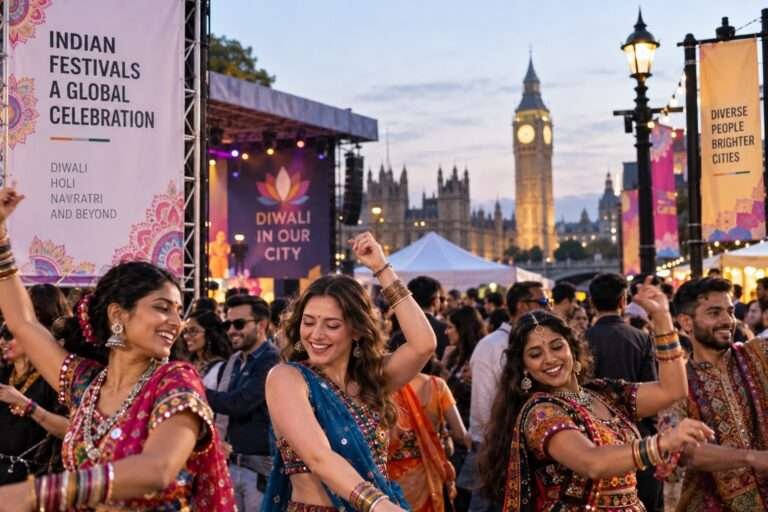
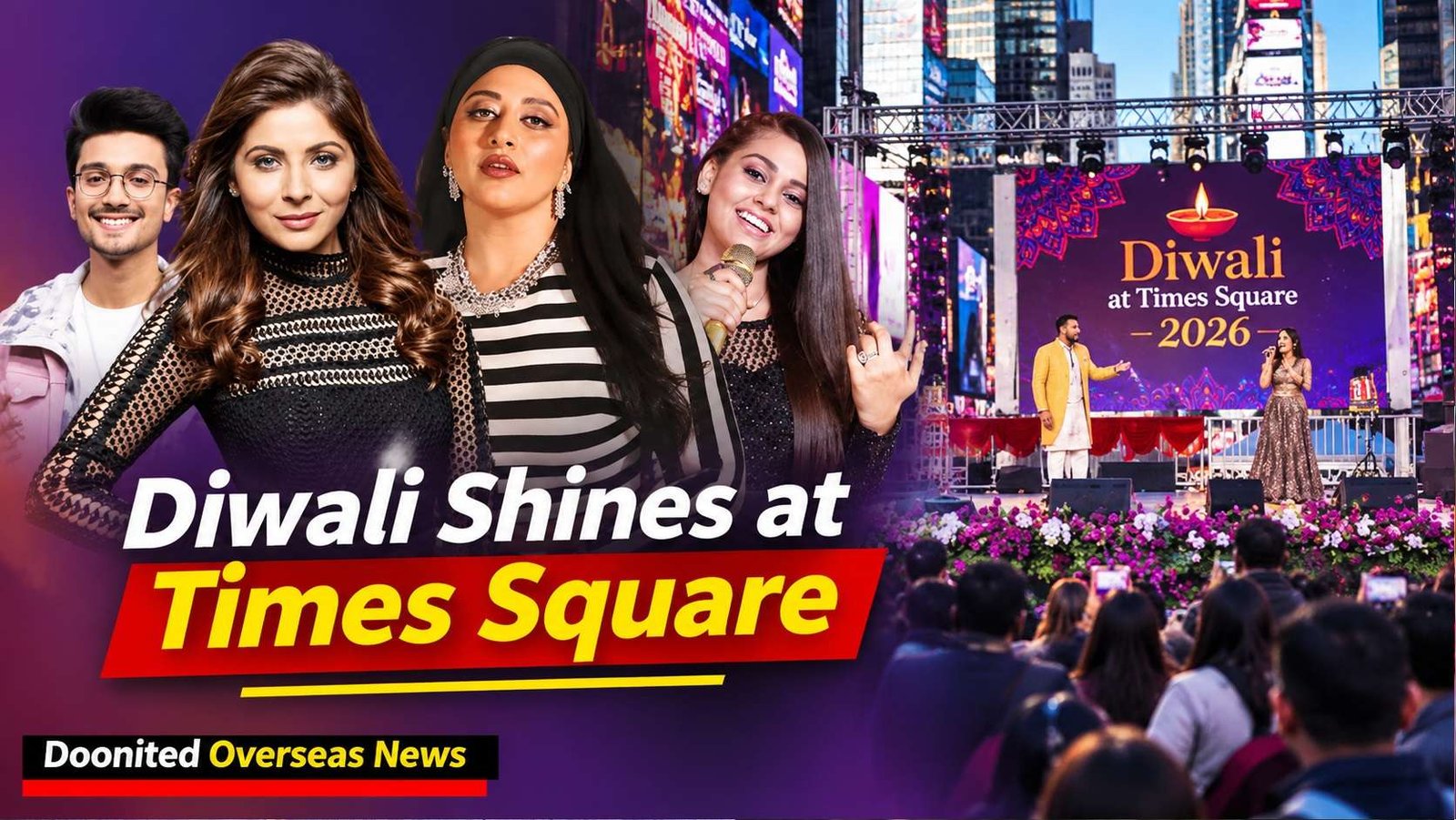
The 11th edition of Diwali at Times Square, held on Saturday, October 24, 2026, brought Indian music, dance, food and cultural traditions to Manhattan’s Broadway. Organised by Neeta Bhasin’s Sammaan For All, the free public celebration attracted thousands of members of the Indian and wider South Asian diaspora, alongside American visitors and other communities.
The evening’s Light Up Times Square Concert featured Indian-American rapper and singer Raja Kumari, Bollywood playback singer Kanika Kapoor, Indian Idol Season 13 winner Rishi Singh and Season 12 finalist Shanmukha Priya. Other performers included Sparsh Shah, known as Purhythm, Kunal Lamba, known as the Singing Chef, and Saanvi Nacha.
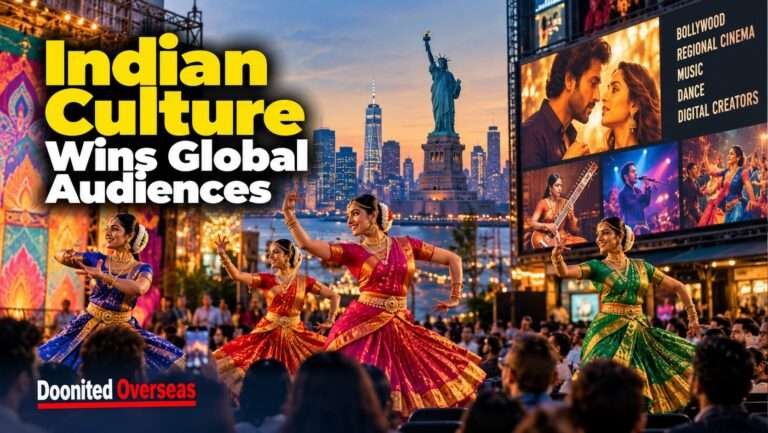
The festival demonstrated how Indian cultural expression is finding space on international public platforms—not only through established Bollywood music, but also through artists whose work connects Indian influences with contemporary global audiences.
Raja Kumari and Kanika Kapoor: two different musical journeys
The pairing of Raja Kumari and Kanika Kapoor brought together two distinct strands of Indian popular music.
Raja Kumari, an Indian-American artist, has developed a musical identity combining hip-hop, rap and Indian classical influences. Her work draws on her Indian heritage while engaging with international music audiences. Her presence at Times Square was particularly relevant to the diaspora: she represents a generation of artists whose cultural identities are shaped by both Indian roots and American creative industries.
Kanika Kapoor, meanwhile, is widely recognised for Bollywood playback hits including Baby Doll and Chittiyaan Kalaiyaan. Her songs have become familiar across Indian communities worldwide, making her music a natural fit for a festival where audiences span generations and national backgrounds.
Their participation highlighted the range of contemporary Indian music, from film-based popular entertainment to independent cross-cultural expression.
More than a concert: a day of Indian and multicultural traditions
The programme began with the Diwali Bazaar, which opened at 11 am, followed by a procession from 12.30 pm. The afternoon’s Colors of India segment brought together cultural performances representing Indian traditions and the diversity of the wider American community, including Indian, Indo-Caribbean and Hispanic dance groups.
A children’s zone offered activities such as diya painting, rangoli creation and Bollywood dance workshops. These activities helped make the event a family-oriented celebration rather than simply an evening concert.
The diya-lighting ceremony was another central moment. It was synchronised with a countdown and a festive illumination of the One Times Square Ball Drop Tower, culminating in a Happy Diwali display.
For Indian-origin families raising children in the United States, such public celebrations provide an opportunity to introduce younger generations to familiar traditions in a setting that also welcomes their non-Indian friends and neighbours.
The organiser behind the Times Square celebration
The festival is organised by Sammaan For All, founded by Neeta Bhasin. Since its launch in 2013, Diwali at Times Square has aimed to bring Indian art, culture and heritage into a prominent public space while sharing the festival’s message of harmony and togetherness with people from different backgrounds.
The event has also developed an institutional connection with the Indian Consulate in New York. Consul General Binaya Srikanta Pradhan joined the 2026 celebrations, while the Consulate had hosted a press conference ahead of the festival on October 14.
The Consulate’s public message described the celebration as an opportunity to strengthen people-to-people ties between India and the United States. Such participation gives the event a cultural-diplomacy dimension, although its primary character remains a community-led public festival.
Recognising Indian-American achievements
The Times Square celebration was preceded by a separate awards and gala dinner on October 23 at Tribeca 360. The event recognised Indian Americans for contributions across philanthropy, innovation, medicine, entrepreneurship, journalism and public service.
Among the honourees were Aroon Shivdasani, Executive Director of the Indo-American Arts Council, who received the Sammaan Award; Tejpaul Bhatia, CEO of Nebex, named Man of the Year; and Anu Duggal, founding partner of Female Founders Fund, named Woman of the Year.
Journalist Seema Mody received recognition for excellence in media and journalism. Justice Karen Gopee was honoured for justice and community service, while Dr Rachana Kulkarni received an award for medicine and community service. Environmental activist Nithya Tammana was recognised with the Youth Inspiration Award, and Naresh Kumar received the Philanthropy Award.
The distinction between the two events is important: the October 23 gala was a separate recognition programme, while the October 24 festival was the free public celebration in Times Square.
What Times Square represents for the Indian diaspora
The importance of Diwali at Times Square lies partly in its location. A festival traditionally celebrated in homes, temples and community spaces is brought into a highly visible public setting in the United States.
That visibility matters for a diaspora whose members are active across business, technology, medicine, education, media, arts and public life. It allows Indian heritage to be presented not as a private community identity, but as part of the wider cultural landscape of American cities.
The event also illustrates how diaspora-led cultural initiatives can connect established Bollywood audiences with younger artists and multicultural communities. Its long-term value will depend on sustaining participation, supporting emerging performers and ensuring that the celebration continues to represent the diversity of Indian and South Asian experiences.
The 2026 edition has concluded, with organisers indicating that the next event date will be announced for 2027. But the larger message remains relevant: Indian culture can travel beyond national borders without losing its identity—and Times Square has become one of the public stages on which that story is being told.

World Beyond the News
Birds Can Navigate Using Earth’s Magnetic Field
Several bird species can sense Earth’s magnetic field, helping them navigate during long-distance migration.
Fermentation Is a Global Food Tradition
People across continents have used fermentation for centuries to preserve food and create distinctive flavours.
Modern Batteries Store Energy Chemically
Rechargeable batteries repeatedly move ions between electrodes, allowing electrical energy to be stored and released.
Why Songs Become Global Hits
Streaming platforms, short-form video, playlists and international collaborations can rapidly carry music across borders.