
EOS-05: ISRO Puts a New Eye in the Sky as India Expands Its Earth-Observation Capability
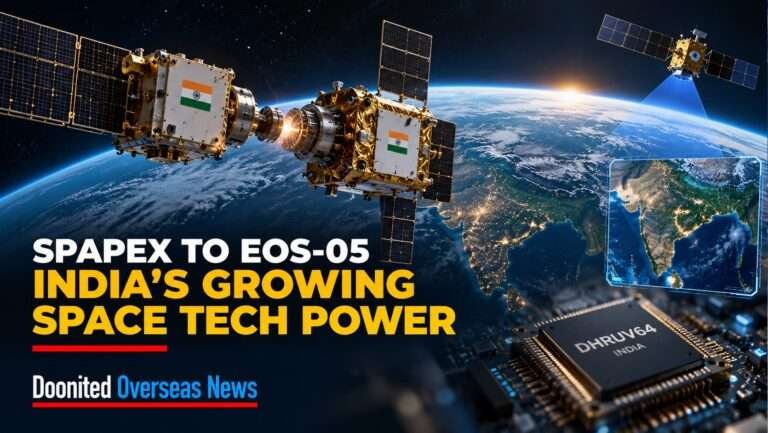
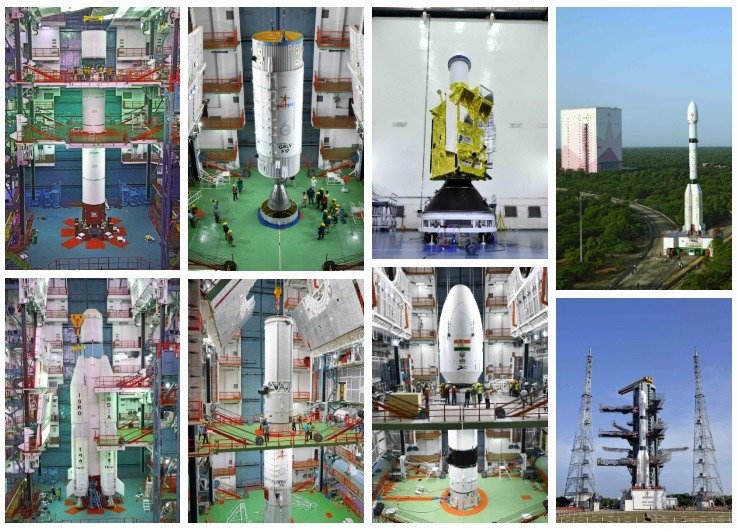
At 2:55 a.m. on September 4, 2026, the night sky over Sriharikota lit up as India’s Geosynchronous Satellite Launch Vehicle, GSLV-F17, lifted off carrying EOS-05, an advanced Earth-observation spacecraft.
The successful mission was more than another rocket launch. It marked the arrival of a new kind of observation capability for India: an imaging satellite designed to operate from geosynchronous orbit, allowing it to repeatedly observe a large geographical region for extended periods. ISRO describes EOS-05 as India’s first imaging satellite from geosynchronous orbit.
What happened at Sriharikota?
The GSLV-F17 mission launched from the Second Launch Pad at the Satish Dhawan Space Centre, Sriharikota.
ISRO confirmed that the vehicle successfully placed EOS-05 into a Sub-Geosynchronous Transfer Orbit (Sub-GTO). The spacecraft will subsequently perform orbital manoeuvres to reach its operational geosynchronous orbit. The mission was the 19th flight of the GSLV.
GSLV is a three-stage launch vehicle combining solid, liquid and cryogenic propulsion. Its indigenous cryogenic upper stage provides the capability to place roughly two-tonne-class spacecraft into high-energy transfer orbits.
EOS-05 is therefore not simply a passenger launched into space. The mission demonstrates India’s ability to combine a heavy Earth-observation payload with a launcher capable of reaching the demanding high-orbit regime.
Why is EOS-05 different?
Most Earth-observation satellites operate in lower orbits and pass over different parts of Earth as they circle the planet.
A geosynchronous platform works differently.
At roughly 36,000 kilometres above Earth, a satellite can maintain a persistent view of a broad region. That makes this type of orbit particularly valuable when the objective is not merely to obtain occasional images but to observe changing conditions over time.
For India, that capability can have applications extending well beyond traditional satellite imagery.
ISRO says Earth-observation data are used for agriculture, water resources, urban planning, environmental monitoring, forestry, ocean resources and disaster management.
That means the value of EOS-05 will ultimately be measured not by the spectacle of its launch, but by what institutions can do with the information it provides.
From farming to disaster management
Consider a cyclone developing over the Bay of Bengal.
A satellite capable of repeatedly observing a large area can provide valuable information about changing cloud systems and environmental conditions. Similarly, during floods, landslides or other major disasters, timely Earth-observation information can help authorities understand the scale and location of affected areas.
Agriculture provides another important application.
Satellite observations can contribute to monitoring crops, vegetation and water resources over large areas. For a country as geographically diverse as India, the ability to observe large regions repeatedly can complement information gathered from ground-based systems.
The same principle applies to urban expansion, forests, coastlines and water bodies.
In other words, EOS-05 represents an investment in information infrastructure.
A successful mission after a difficult period
The achievement also has an institutional dimension.
ISRO’s launch record in recent years has included both major successes and setbacks. The January 2026 PSLV-C62/EOS-N1 mission was unsuccessful, while the May 2025 PSLV-C61/EOS-09 mission was also not accomplished. ISRO’s official launch records list GSLV-F16/NISAR in July 2025 as the previous successful GSLV mission before F17.
EOS-05 therefore became the agency’s first successful orbital mission of the current financial year, according to current reporting.
That makes reliability an important part of the story.
Space programmes are not judged only by spectacular achievements. They are judged by whether complex systems can perform repeatedly, predictably and safely. Every successful mission adds operational confidence; every failure provides technical information that must be converted into corrective action.
The bigger Indian space story
EOS-05 arrives at a time when India’s space programme is expanding beyond traditional government-led operations.
ISRO is simultaneously preparing for additional launches, the NavIC programme and the first uncrewed mission of Gaganyaan, India’s human-spaceflight programme. ISRO Chairman V. Narayanan said the agency is targeting six more launches during the current financial year, while preparations continue for the first uncrewed Gaganyaan mission in 2026.
There is also a broader shift towards greater participation by Indian industry in space activities.
This is strategically important. If ISRO increasingly concentrates on advanced research, complex missions and frontier technologies while industry takes greater responsibility for routine production and manufacturing, India’s space ecosystem could eventually become larger and more commercially capable.
But that transition should be judged by execution rather than announcements.
The real measure of EOS-05
The most important lesson from EOS-05 is simple: space technology becomes valuable when space-based information improves decisions on Earth.
A successful launch is the beginning, not the conclusion.
The real test will be the quality, reliability and usefulness of the data EOS-05 delivers to scientists, planners, farmers, disaster-management agencies and other users.
For India, that is a much more meaningful measure of space power than simply counting launches.
EOS-05 has given the country another eye in the sky.
Now the challenge is to make sure that what this eye sees becomes useful knowledge on the ground.
DOONITED Editorial Perspective: The EOS-05 mission deserves attention not merely because it is technically impressive, but because it represents a shift toward persistent Earth observation. India’s future space advantage will depend increasingly on how effectively it converts satellite technology into practical outcomes—better forecasting, stronger disaster response, more informed agriculture, environmental monitoring and smarter planning. The launch is a significant achievement, but its greatest value will be determined by what India does with the data after the rocket has disappeared from the sky.

World Beyond the News
Bees Communicate Where Food Is
Honeybees use movement patterns known as waggle dances to communicate information about food locations.
Street Food Reflects Local History
Many famous street foods developed from migration, trade, local ingredients and the everyday needs of working communities.
A Day on Venus Is Extremely Long
Venus rotates so slowly that one rotation relative to distant stars takes longer than its trip around the Sun.
Human Achievement Continues to Push Limits
Athletes, engineers, scientists and explorers regularly establish new benchmarks in speed, endurance, scale and precision.