
El Niño Is Strengthening: What the Pacific Warming Means for India and the World
There is a vast stretch of ocean thousands of kilometres away from India that can influence weather patterns across the planet.
That ocean is the tropical Pacific. And right now, scientists are watching it particularly closely.
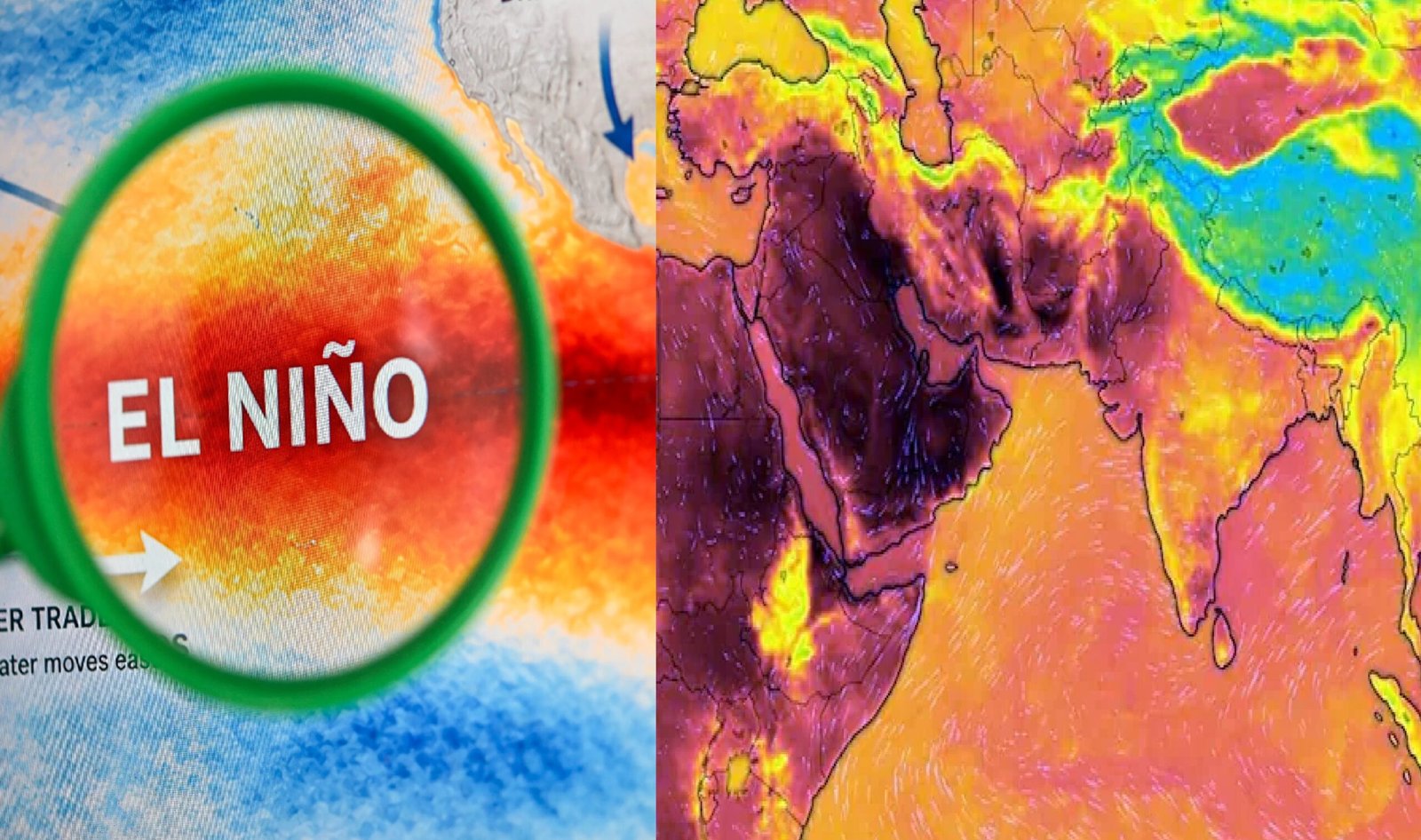
The World Meteorological Organization (WMO) reported on 3 September 2026 that El Niño is firmly established and is expected to strengthen into a very strong event in the coming months, potentially peaking towards the end of 2026. WMO forecasts give an exceptionally high, nearly 100%, likelihood that the phenomenon will persist through February 2027.
So what exactly is El Niño—and why should Indians care?
What is El Niño?
El Niño is a naturally occurring climate phenomenon associated with unusually warm sea-surface temperatures in the central and eastern tropical Pacific Ocean. It is part of the larger El Niño-Southern Oscillation, or ENSO, a recurring pattern involving interactions between the tropical Pacific Ocean and atmosphere.
The name has a surprisingly human origin. “El Niño” is Spanish for “the Christ Child”. The term was historically used by fishermen along the coast of Peru because the unusually warm ocean conditions often appeared around Christmas.
Under normal conditions, trade winds generally push warm surface water westward across the tropical Pacific towards Indonesia and Australia. This helps maintain cooler waters near the western coast of South America.
During El Niño, those winds weaken or sometimes reverse. Warm water moves eastward, altering ocean temperatures and atmospheric circulation. That seemingly distant change can then influence rainfall, temperature and weather systems in many parts of the world.
Why does El Niño matter to India?
For India, the most important connection is the southwest monsoon.
There is a well-established relationship between ENSO and Indian monsoon variability. Historical data maintained by the India Meteorological Department show that many El Niño years have been associated with weaker southwest monsoon rainfall. However, the relationship is not automatic: an El Niño does not guarantee drought across India.
This distinction matters.
India’s monsoon is influenced by several interacting climate systems, including the Indian Ocean Dipole (IOD). The IMD has specifically noted that the relationship between ENSO and India’s monsoon is not a simple one-to-one relationship. Positive IOD conditions, for example, can sometimes offset the rainfall-reducing influence associated with El Niño.
There is also a particularly interesting regional dimension.
A 2026 study published in the IMD’s MAUSAM journal examined 50 years of rainfall data from districts in the Nagpur division of central India. It found that El Niño events were associated with drier conditions in areas with low vegetation-index values, while positive IOD events were associated with wetter conditions. The study also found that IOD events showed a significant relationship with rainfall in the region.
In other words, the Pacific matters—but the Pacific does not control India’s weather alone.
Why is the current El Niño different?
The latest WMO assessment makes the present situation particularly significant.
The Niño 3.4 region—a standard area used to monitor El Niño—recorded sea-surface temperatures around 2.2°C to 2.6°C above average during late July to mid-August 2026, according to WMO. Temperatures beneath the ocean surface were even more exceptional in some locations, exceeding 8°C above average during July and early August.
WMO expects El Niño to intensify further before reaching very strong intensity later this year.
But an important scientific warning must be understood: a very strong El Niño does not automatically mean every country will experience an extreme disaster. Its consequences depend on geography, season and the interaction of other climate drivers.
For September-November 2026, WMO forecasts a broad likelihood of above-normal temperatures over much of the world’s land areas, while rainfall patterns are expected to shift significantly. A positive Indian Ocean Dipole is also expected to develop, potentially modifying the usual El Niño pattern.
El Niño is natural—but its consequences matter in a warmer world
El Niño itself is not caused by climate change. WMO explicitly describes it as a natural climate phenomenon.
However, a warmer atmosphere and ocean can amplify some of the consequences associated with climate variability, including extreme heat and heavy rainfall. WMO therefore stresses preparedness, forecasting and early action rather than simply waiting for extreme weather to occur.
That is perhaps the most important lesson for India.
The right question is not whether El Niño will “cause” a drought, flood or heatwave. Weather systems are more complicated than that.
The better question is: when a major natural climate signal is developing, are governments, farmers, businesses and communities prepared to respond to the risks it may increase?
For India, that means closely monitoring rainfall forecasts, agricultural conditions, water availability and temperature patterns rather than relying on the El Niño label alone.
The DOONITED perspective
El Niño demonstrates something fundamental about our planet: weather does not respect national borders.
A change in Pacific Ocean temperatures can influence atmospheric circulation thousands of kilometres away, while conditions in the Indian Ocean can alter how that influence reaches India.
For ordinary citizens, El Niño may sound like a distant scientific term. For farmers, water managers, energy planners and disaster authorities, however, it can become an important planning signal.
The science does not say that El Niño determines India’s weather.
It tells us something more useful: it changes the odds—and understanding those changing odds gives society time to prepare.
That is where climate science becomes practical.

World Beyond the News
Why Elephants Stay Close to Their Herd
Elephants live in highly social family groups and use calls, touch and body movements to maintain strong bonds.
Most of the Deep Ocean Remains Difficult to Explore
Extreme pressure, darkness and distance make deep-ocean exploration one of Earth’s greatest scientific challenges.
Spacecraft Can Travel Without Traditional Roads
Spacecraft use carefully calculated trajectories and gravity assists to travel enormous distances through space.
Why Movie Trailers Are Released in Stages
Major films often use teaser trailers, full trailers and final promotional spots to build awareness over time.