
Rising Seas, Rising Stakes: Why India Cannot Treat Sea-Level Rise as a Distant Problem
The sea does not need to arrive as a giant wave to change a city.
Sometimes the danger comes gradually—through higher tides, more frequent coastal flooding, saltwater entering freshwater systems and land that is slowly sinking. That makes rising sea levels one of the most difficult environmental risks to communicate because much of the damage develops quietly, long before it becomes a dramatic headline.
A new United Nations report has put that risk into sharper focus. It warns that sea levels are rising faster than at any point in recorded history and that hundreds of millions of people living in low-lying coastal areas face growing risks to homes, infrastructure, livelihoods and basic services.
For India, this is not simply an international climate story.
It is already a coastal-development question.
Why the numbers matter
According to the UN, around 770 million people—roughly one in every ten people globally—live in coastal areas less than five metres above the high-tide line and are exposed to significant risks. The report says average ocean levels are rising because warming seawater expands while glaciers and ice sheets lose mass. In 2024, the annual increase in global sea level reached nearly six millimetres, described in the report as the highest level recorded.
The significance is not simply that the ocean is getting higher.
A higher baseline means that storms, high tides and coastal flooding can begin from a more dangerous starting point.
That can put roads, ports, drainage systems, homes, businesses and essential services under increasing pressure.
Mumbai and Kolkata are part of the story
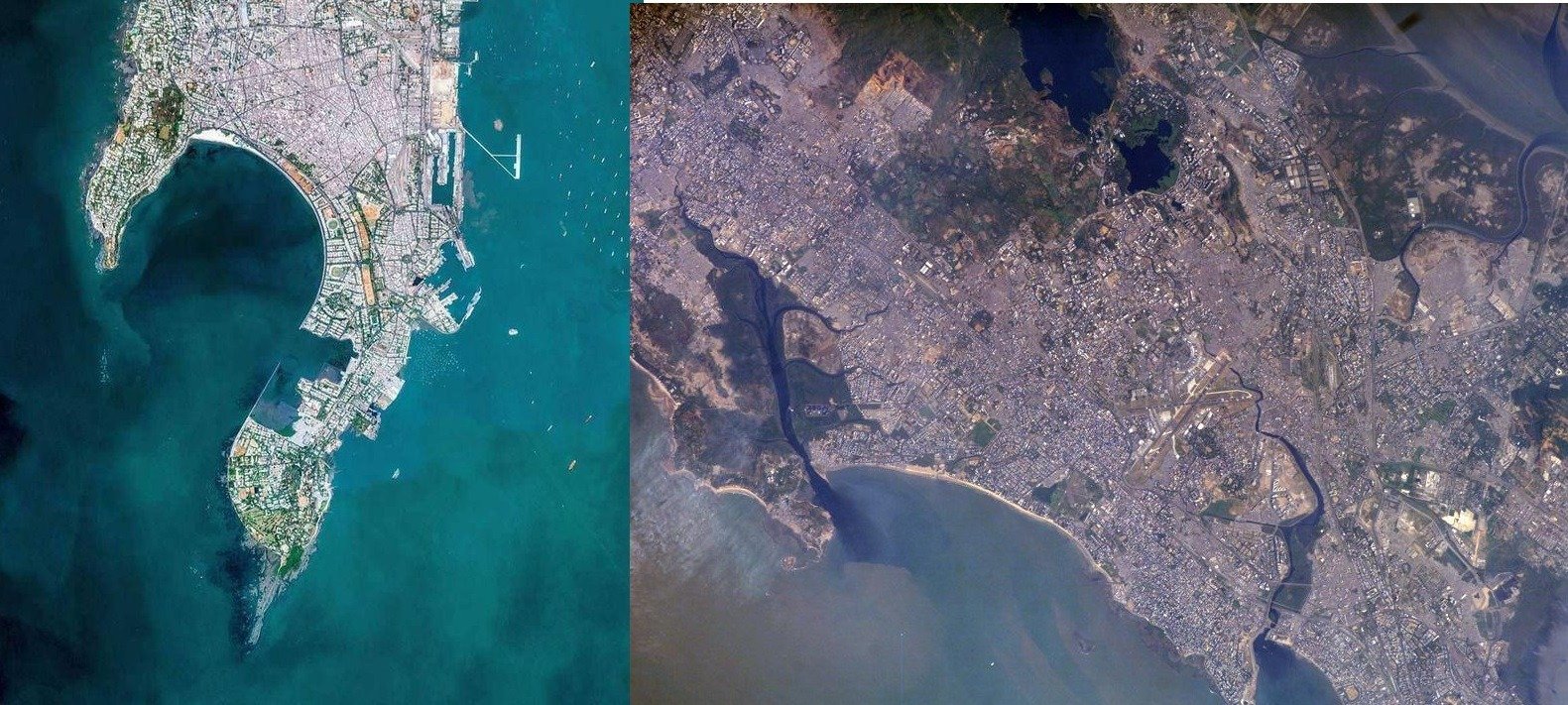
India’s exposure is particularly important because two of its major cities—Mumbai and Kolkata—are specifically highlighted in the UN report.
Together with Dhaka in Bangladesh, these low-lying South Asian cities are identified as areas where rising sea levels and land subsidence are increasing the risk of displacement. The UN report says more than 14 million people across these areas are at immediate risk of losing their homes to permanent inundation.
But sea-level rise does not mean that these cities will suddenly disappear beneath the sea.
That is an important distinction.
The real concern is the increasing frequency and severity of flooding, especially where rising seas interact with subsiding land, extreme weather and inadequate drainage or coastal protection.
For Mumbai, a densely populated city built along the Arabian Sea, the implications extend well beyond beaches.
The city is a major centre of finance, commerce, transport, entertainment and industry. Disruption to coastal infrastructure can therefore have economic consequences far beyond the neighbourhood immediately affected.
The hidden problem: saltwater
One of the less visible consequences of rising seas may be among the most damaging.
The UN report warns that saltwater intrusion can contaminate freshwater wells and soils, affecting drinking water, agriculture, irrigation and groundwater ecosystems.
This changes the story from one about coastlines to one about food and water security.
A community does not have to be permanently underwater to suffer.
If freshwater becomes harder to access, farmland becomes less productive, or infrastructure requires increasingly expensive protection, the economic and social pressure can arrive much earlier.
That is why adaptation needs to be considered alongside emissions reduction.
The global warning is equally serious
India is part of a much larger picture.
The UN report says that, without urgent adaptation measures, as many as 1.2 billion people could be displaced by 2050. It also estimates that damage to coastal infrastructure already exceeds $1.8 trillion, with annual global losses potentially reaching between $1.2 trillion and $4 trillion by the end of the century if adaptation is not implemented.
These figures are projections and estimates, not predictions that a particular number of people will certainly be displaced.
That distinction matters.
Climate risk depends on future emissions, local geography, adaptation, infrastructure investment and policy decisions. But uncertainty about the exact number does not remove the underlying risk.
What can India learn?
The constructive part of the UN report is that it does not present sea-level rise as an unsolvable problem.
Its recommendations include stronger early-warning systems, increased financing for climate adaptation, better scientific data, support for vulnerable communities and faster reductions in greenhouse-gas emissions.
For India, this means coastal planning cannot be separated from climate planning.
Cities need better flood-risk mapping, resilient infrastructure and reliable early-warning systems. Coastal development needs to account for changing environmental conditions rather than assuming that historical patterns will remain unchanged.
And perhaps most importantly, communities need information early enough to act.
DOONITED Editorial Perspective
There is a temptation to treat climate change through spectacular images—melting ice, flooded streets or disappearing islands.
But India’s more important climate story may be less dramatic.
It is about whether a Mumbai neighbourhood can keep its drainage functioning during extreme rainfall. Whether coastal infrastructure can withstand repeated flooding. Whether freshwater remains secure. Whether a family living near a vulnerable coast has enough warning to protect itself.
The UN’s warning should therefore not be read simply as a prediction of disaster.
It is a reminder about the value of preparation.
India cannot control the world’s oceans, and no single country can solve climate change alone. But it can decide how intelligently its cities are planned, how seriously coastal risks are measured, and how much protection is provided before the next crisis arrives.
The most useful response to a rising sea is not fear. It is preparation—and preparation becomes far more effective when it begins before the water reaches the doorstep.

World Beyond the News
Why Elephants Stay Close to Their Herd
Elephants live in highly social family groups and use calls, touch and body movements to maintain strong bonds.
Most of the Deep Ocean Remains Difficult to Explore
Extreme pressure, darkness and distance make deep-ocean exploration one of Earth’s greatest scientific challenges.
Spacecraft Can Travel Without Traditional Roads
Spacecraft use carefully calculated trajectories and gravity assists to travel enormous distances through space.
Why Movie Trailers Are Released in Stages
Major films often use teaser trailers, full trailers and final promotional spots to build awareness over time.