
Krishna Janmashtami Goes Global: How India’s Festival of Faith Is Celebrated Around the World
There was a time when Krishna Janmashtami was primarily experienced through India’s temples, homes, neighbourhood celebrations and midnight prayers.
Today, the festival can be heard far beyond India’s borders.
From temples and community halls to Hindu diaspora gatherings and international Vaishnava communities, the birth celebration of Lord Krishna has become part of the cultural calendar in many parts of the world. The forms may differ from country to country, but the central elements—devotion, music, chanting, storytelling, food and community—often remain recognisable.
The international spread of Janmashtami offers an interesting window into how Indian culture travels: not simply through institutions or governments, but through families, communities, religious organisations and generations of people living far from their ancestral homeland.

A festival that travels with people
Janmashtami commemorates the birth of Krishna according to Hindu religious tradition. Devotees commonly observe fasting, prayers, devotional singing and midnight celebrations associated with Krishna’s birth.
Outside India, these traditions often become community events.
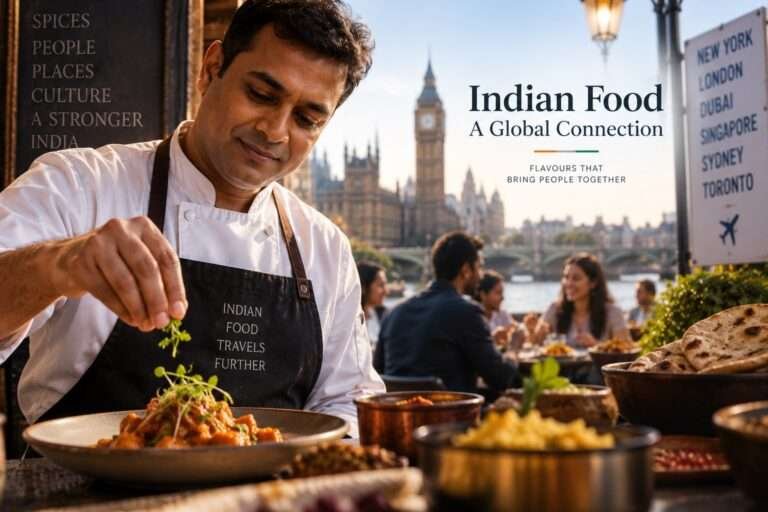
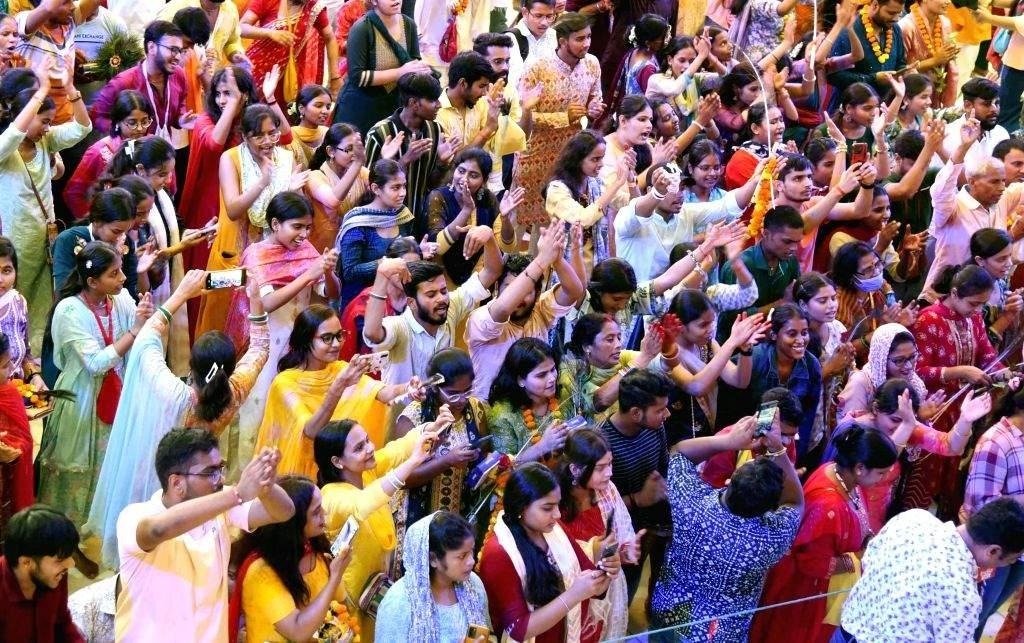
The International Society for Krishna Consciousness (ISKCON), one of the most internationally visible organisations associated with Krishna devotion, says Janmashtami is celebrated across its centres around the world. Its celebrations can include music, drama, dance, chanting, a midnight service and a vegetarian feast.
ISKCON’s international presence is significant in understanding this cultural journey. The organisation says it has hundreds of temples and preaching centres worldwide and welcomes people from different nationalities and backgrounds.
That means the international celebration of Krishna Janmashtami is not simply an Indian festival being reproduced overseas.
In many places, it has become a meeting point between Indian heritage and local communities.
America, Britain and beyond
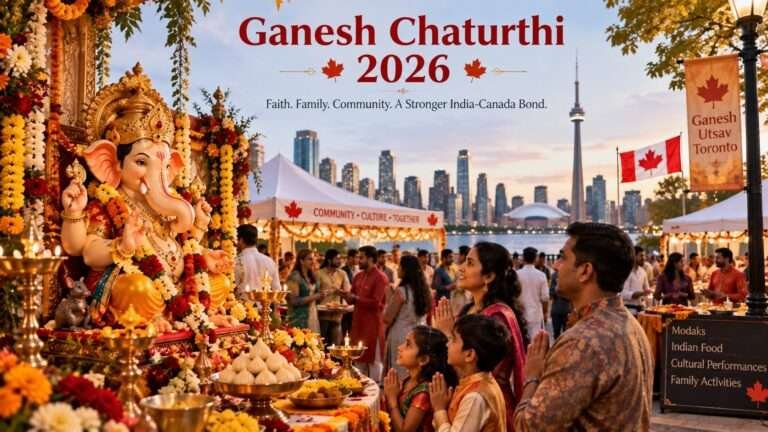
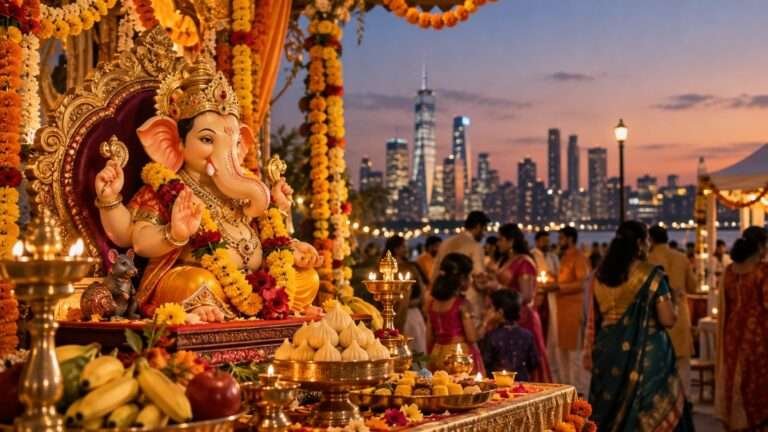
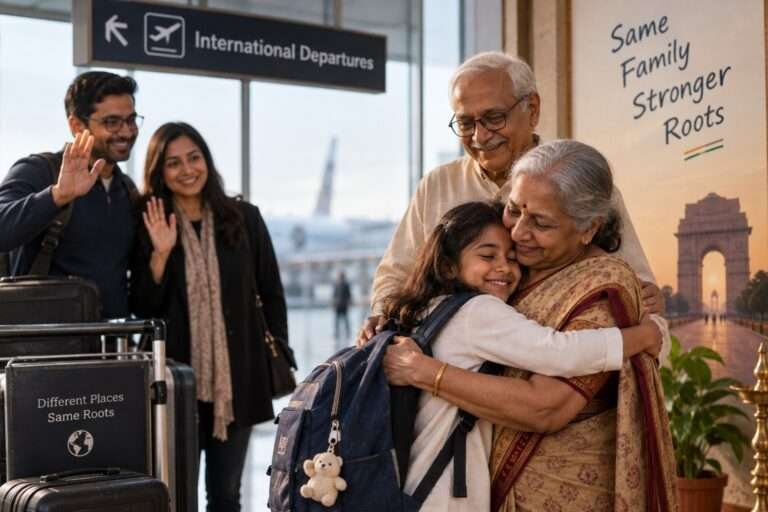
In countries with established Indian and Hindu diaspora communities, Janmashtami celebrations can bring together families who may have been separated from India for decades or even generations.
A temple may become the centre of the celebration. Families can arrive for prayers, children may participate in cultural programmes, and devotional music can continue toward midnight.
For younger members of the diaspora, such occasions can serve another purpose.
They provide a direct experience of Indian traditions that may otherwise exist mainly through family stories, food, language or digital media.
A child born thousands of kilometres from India may learn about Krishna not from a textbook, but through a temple celebration, a dramatic presentation, a bhajan or a story told by grandparents.
That cultural transmission is easy to overlook.
Yet it may be one of the most important reasons festivals survive across generations.

More than a religious gathering
Janmashtami celebrations abroad also demonstrate the broader cultural dimensions of Indian festivals.
Food becomes part of the experience. Music and dance bring people together. Traditional clothing creates a visual connection with heritage. Children participate in performances. Community volunteers organise programmes and distribute food.
In this sense, the festival operates on several levels simultaneously.
It is religious for devotees.
It is cultural for many families.
And it can also be educational for younger generations and for people outside the Hindu community who encounter Indian traditions for the first time.
ISKCON itself describes its communities as places for spiritual practice, learning and service, with festivals forming an important part of communal life.
India remains the cultural reference point
The global spread of Janmashtami does not reduce the importance of India’s own traditions.
Quite the opposite.
India remains the cultural and historical reference point from which many of these traditions originate. Cities and pilgrimage centres associated with Krishna—particularly Mathura and Vrindavan—continue to have enormous importance in the festival’s religious imagination.
Across India, however, Janmashtami itself is not a single uniform celebration.
Maharashtra is famous for Dahi Handi, while other regions emphasise midnight worship, devotional singing, temple rituals, processions or distinctive local traditions.
This regional diversity is important.
It shows that Indian culture has historically travelled not as one rigid package, but through many local expressions.
When those traditions reach another country, they can naturally acquire new forms.
Why this matters for India’s global cultural presence
There is a tendency to measure India’s global influence primarily through economics, technology, diplomacy or international institutions.
Those things matter.
But culture works differently.
A festival can create familiarity without a government campaign.
A song can cross a border without a diplomatic agreement.
A family tradition can survive in another country even when the people practising it have never lived in India.
Janmashtami is a good example of this quieter form of cultural influence.
The international celebration of the festival demonstrates how India’s civilisational traditions can remain relevant while adapting to new social environments.
For India, this is a form of cultural soft power—but it should not be exaggerated.
Not everyone attending a Janmashtami celebration overseas is necessarily an Indian, and not every celebration represents India officially. ISKCON itself emphasises that its movement is open to people of different backgrounds and nationalities.
That is precisely what makes the phenomenon interesting.
The next generation may be the real story
The most important question may not be how many people attend a Janmashtami celebration.
It may be what younger generations take away from it.
A second-generation Indian child living in London, New York, Melbourne, Nairobi or elsewhere may experience Krishna traditions differently from grandparents who grew up in India.
The language may change.
The music may be presented differently.
The social environment certainly changes.
But the festival can still provide a connection to family history, Indian culture and a religious tradition that has travelled across generations.
That is cultural continuity in action.
A festival that connects rather than separates
The global story of Krishna Janmashtami ultimately goes beyond geography.
India’s festival has travelled because people travelled, communities formed and traditions were carried with them. Organisations such as ISKCON have helped establish permanent spaces where those traditions can be practised and shared internationally.
The result is not simply an overseas version of an Indian festival.
It is a living example of how culture evolves while retaining its central identity.
For Indians abroad, Janmashtami can be a connection to home.
For younger generations, it can become a bridge to heritage.
And for international audiences, it can offer an introduction to one of India’s most enduring spiritual and cultural traditions.
DOONITED Editorial Perspective: India’s global cultural influence is strongest when it travels naturally through people rather than being presented as a campaign. Krishna Janmashtami demonstrates that principle particularly well. Its international celebrations are meaningful not because they make every overseas community “Indian,” but because they show how a tradition rooted in India can be preserved, adapted and shared across cultures. The real achievement is not exporting a festival unchanged; it is keeping its cultural meaning alive while allowing new generations and new communities to find their own connection with it.

World Beyond the News
Birds Can Navigate Using Earth’s Magnetic Field
Several bird species can sense Earth’s magnetic field, helping them navigate during long-distance migration.
Fermentation Is a Global Food Tradition
People across continents have used fermentation for centuries to preserve food and create distinctive flavours.
Modern Batteries Store Energy Chemically
Rechargeable batteries repeatedly move ions between electrodes, allowing electrical energy to be stored and released.
Why Songs Become Global Hits
Streaming platforms, short-form video, playlists and international collaborations can rapidly carry music across borders.