
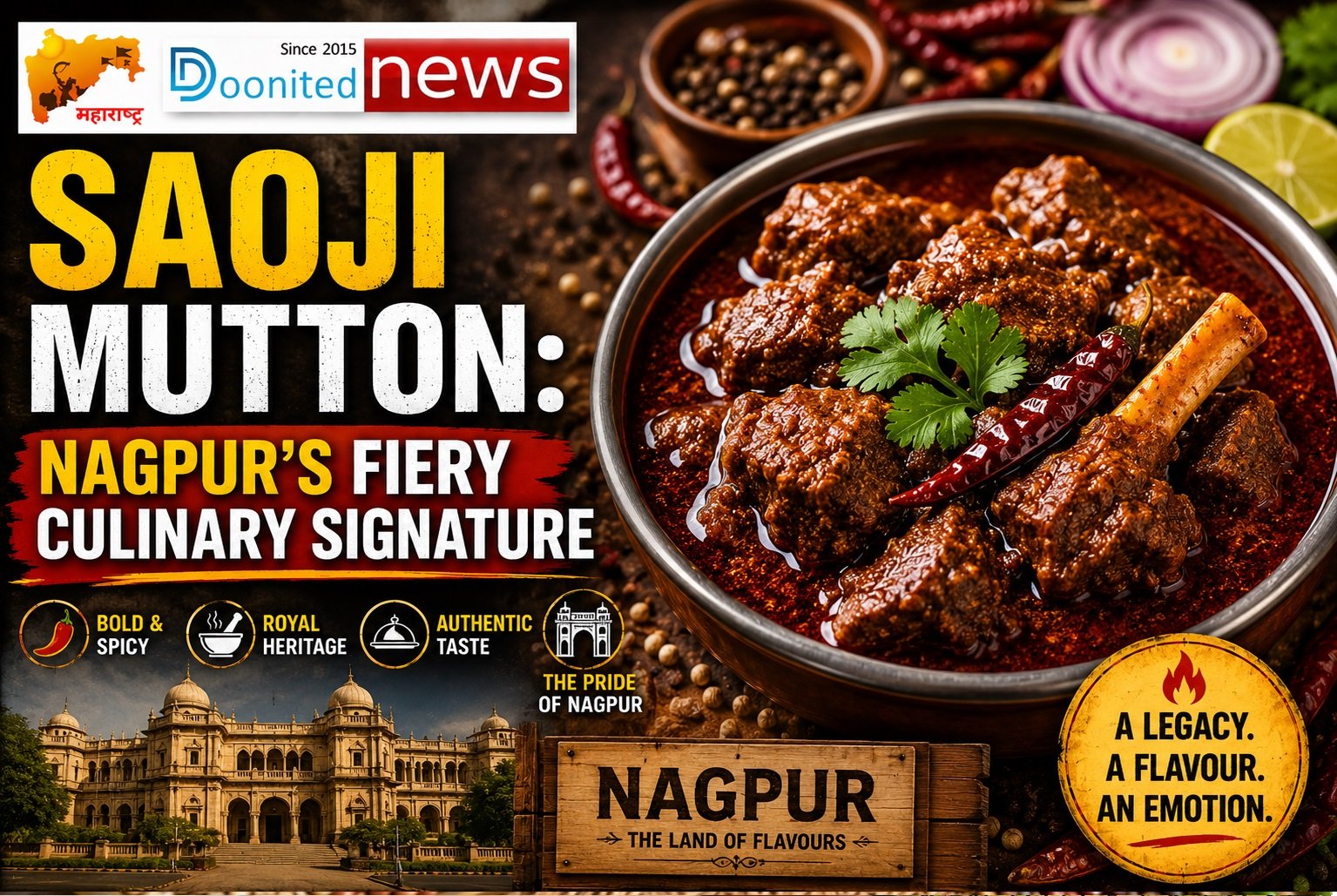
Saoji Mutton: Nagpur’s Fiery Culinary Signature | A Taste of Vidarbha’s Royal Legacy
By Pradeep Banerjee, Editor | Doonited News
When people speak of Nagpur, they often mention oranges, cricket, and the city’s central place on India’s map. But ask a true Nagpurkar what flavor represents the city, and the answer comes almost instantly: Saoji Mutton.
This is not merely a spicy curry. It is a culinary identity forged in the kitchens of old Nagpur, carried through generations of families, and perfected in humble eateries and iconic restaurants across Vidarbha. The first spoonful announces itself with black pepper, dry red chillies, roasted spices, and a deep smoky richness that lingers long after the meal ends.
As a journalist who has spent years travelling across Maharashtra documenting food, culture, and people, I have discovered that Saoji Mutton is perhaps the most honest expression of Nagpur’s character—bold, intense, warm, and unforgettable.

The Royal Beginning: How Saoji Cuisine Was Born
The story of Saoji cuisine goes back to the Bhonsle era of Nagpur. Historical food traditions suggest that the Bhonsle rulers maintained specialized kitchens where robust meat dishes were prepared for warriors, nobles, and honoured guests. Slow-cooked mutton seasoned with powerful spices was valued not only for taste but also for nourishment and stamina.
The term “Saoji” is associated with a community known for its distinctive spice blends and meat preparations. Over time, their culinary style spread through Nagpur and surrounding Vidarbha districts.
Unlike many Indian curries that rely heavily on chilli heat alone, Saoji cuisine builds flavor through layers of roasted spices—especially black pepper (kali mirch), dry red chillies, coriander, cumin, fennel, cloves, cinnamon, and poppy seeds. The result is heat with depth, not just heat with aggression.

Why Saoji Mutton Feels Different
Saoji Mutton has a personality that separates it from other Maharashtrian meat dishes.
Bold pepper heat
Black pepper provides a sharp, lingering warmth rather than only chilli burn.
Dark roasted masala
The masala is roasted until deep brown, creating a smoky, almost earthy aroma.
Slow cooking
The meat is simmered patiently until it becomes tender and absorbs every layer of spice.
Perfect pairing
Traditionally served with bhakri, chapati, or steamed rice, allowing the fiery gravy to shine.
Nagpur locals often joke that the first bite tests your courage, the second wins your heart, and the third makes you crave another plate.
The Best Saoji Mutton Restaurants in Nagpur
Food recommendations change with trends, but a few establishments have consistently earned the respect of local diners for authentic Saoji flavors.
Kalpana Restaurant
A legendary name among Nagpur food lovers. Known for intensely flavored Saoji mutton with a rich, pepper-forward gravy.

Hindu Hotel
One of the city’s oldest traditional eateries. Diners come here for old-style Saoji recipes that have changed very little over decades.

Guru Kripa Restaurant
Popular with families and regular local patrons. Their mutton curry and bheja preparations are especially appreciated.

Rajdhani Saoji Restaurant
A good option for visitors staying near the airport or Wardha Road area who want a cleaner restaurant setting without compromising traditional flavor.

My Editor’s Pick
If a visitor has only one meal in Nagpur and wants the closest experience to what locals passionately discuss, I would recommend Kalpana Restaurant in Sitabuldi. Go in the evening, order Saoji Mutton with jowar bhakri, and do not rush the meal.
Authentic Nagpur Saoji Mutton Recipe
Ingredients
For the mutton
-
500 g mutton (bone-in preferred)
-
2 tbsp oil or ghee
-
2 onions, finely chopped
-
1 tbsp ginger-garlic paste
-
Salt to taste
For Saoji masala
-
2 tbsp coriander seeds
-
1 tsp cumin seeds
-
1 tsp fennel seeds
-
1 tsp black peppercorns
-
6–8 dry red chillies
-
3 cloves
-
1 small cinnamon stick
-
1 tbsp dry coconut (optional)
-
1 tsp poppy seeds

Step-by-Step Method
-
Dry roast all masala ingredients until dark brown and aromatic. Cool and grind to a fine powder.
-
Heat oil or ghee in a heavy pan and sauté onions until deep golden brown.
-
Add ginger-garlic paste and cook until the raw aroma disappears.
-
Add mutton and sear on high heat for 5–7 minutes.
-
Add the ground Saoji masala and salt. Mix thoroughly.
-
Add enough hot water to cover the meat.
-
Cover and cook on low heat for 45–60 minutes, or pressure cook until tender.
-
Simmer uncovered for a few minutes until the gravy becomes thick, glossy, and intensely aromatic.
-
Serve hot with jowar bhakri, chapati, or steamed rice.

The Secret That Restaurants Rarely Tell You
The true character of Saoji Mutton comes from roasting the spices until almost smoky and then allowing the curry to rest for 20–30 minutes before serving. Many experienced cooks believe the flavor becomes noticeably deeper after resting.
What to Eat with Saoji Mutton
Traditional Nagpur homes often serve it with:
-
Jowar Bhakri (the classic pairing)
-
Chapati
-
Steamed rice
-
Sliced onions
-
Lemon wedges
-
Buttermilk to balance the heat
A Dish That Defines a City
Cities are often remembered by monuments, but sometimes a city is remembered by a single dish. For Nagpur, Saoji Mutton occupies that rare space. It carries the memory of Bhonsle kitchens, crowded Sitabuldi restaurants, family Sunday lunches, and generations of spice masters.
In an age when many regional cuisines are becoming standardized, Saoji Mutton still feels fiercely local. It refuses to become mild. It refuses to become generic. And perhaps that is why Nagpur loves it so deeply.
As I finished my last plate of Saoji Mutton in Sitabuldi, watching steam rise from the dark red gravy while conversations buzzed around me, I was reminded that great food is never only about taste. It is about history, identity, and belonging.
Saoji Mutton is not just Nagpur’s signature dish—it is Nagpur’s fiery heartbeat served in a bowl.