Puran Poli: Maharashtra’s Sweet Soul on a Plate | History, Tradition & Authentic Recipe
By Pradeep Banerjee – Doonited News | Maharashtra Culture
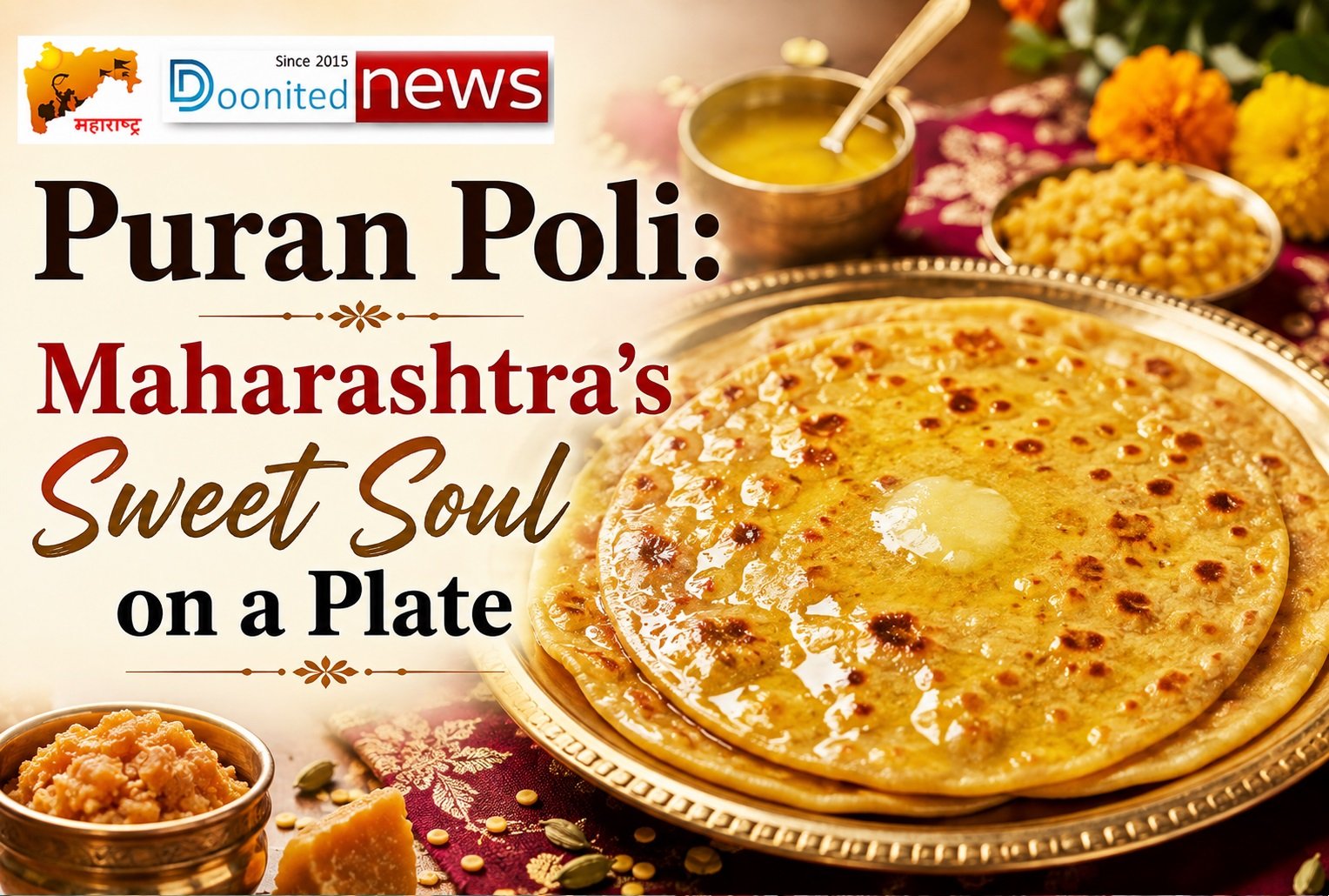
In Maharashtra, festivals are often remembered by their aromas. The fragrance of roasted wheat flour, melting ghee, and sweet jaggery filling the kitchen is enough to announce that Puran Poli is being prepared. More than a dessert, Puran Poli is an emotion deeply woven into Maharashtrian culture, family traditions, and festive celebrations.
From Gudi Padwa and Holi to Ganesh Chaturthi, Diwali, and weddings, this golden flatbread has remained one of the most beloved dishes of Maharashtra for centuries.

The History of Puran Poli
Food historians believe that Puran Poli has ancient roots dating back to the medieval Deccan region. References to sweet stuffed flatbreads similar to Puran Poli are found in old Sanskrit and Marathi culinary traditions. The word “Puran” refers to the sweet filling made from lentils and jaggery, while “Poli” means a flatbread.
During the rule of the Yadavas and later the Marathas, Puran Poli became a festive dish served in royal kitchens as well as village homes. Its ingredients—wheat, lentils, jaggery, and ghee—were considered nourishing and auspicious. Over time, every region of Maharashtra developed its own variation, but the classic chana dal and jaggery version remained the most popular.
Why Puran Poli Is So Important in Maharashtra
In many Maharashtrian households, no major festival meal is complete without Puran Poli. It is traditionally offered to deities before being served to family members.

Common occasions include:
-
Gudi Padwa
-
Holi
-
Ganesh Chaturthi
-
Diwali
-
Nag Panchami
-
Weddings and naming ceremonies
Elders often say that a home where Puran Poli is cooked on festivals is a home where prosperity and sweetness are welcomed.
Regional Variations Across Maharashtra
|
Region |
Special Feature |
|---|---|
|
Pune |
Soft, thin poli with generous ghee |
|
Vidarbha |
Slightly thicker and sweeter |
|
Konkan |
Sometimes flavored with coconut and nutmeg |
|
Marathwada |
Richer jaggery flavor and aromatic spices |
|
Western Maharashtra |
Very soft dough and smooth puran texture |
Despite these differences, the essence remains the same: a delicate balance of lentils, jaggery, and aromatic spices.
Authentic Maharashtrian Puran Poli Recipe
Ingredients
For the Puran (filling)
-
1 cup chana dal (split Bengal gram)
-
1 cup grated jaggery
-
1/2 teaspoon cardamom powder
-
1/4 teaspoon nutmeg powder (optional)
-
1 tablespoon ghee
For the Poli dough
-
1 cup whole wheat flour
-
1/2 cup all-purpose flour (optional, for softness)
-
2 tablespoons oil or ghee
-
A pinch of salt
-
Warm water as required
For serving
-
Ghee

Step 1: Prepare the Dough
-
Mix wheat flour, all-purpose flour, salt, and oil.
-
Add warm water gradually and knead into a soft dough.
-
Cover and rest for at least 30 minutes.
A well-rested dough is the secret to soft Puran Poli.
Step 2: Cook the Chana Dal
-
Wash the chana dal thoroughly.
-
Cook it in water until soft but not mushy.
-
Drain excess water completely.
Traditionally, the drained lentil water is used to make Katachi Amti, a famous Maharashtrian curry.

Step 3: Make the Puran
-
Heat ghee in a pan.
-
Add cooked dal and jaggery.
-
Cook on low heat, stirring continuously until the mixture thickens.
-
Add cardamom and nutmeg powder.
-
Cool completely and mash or grind into a smooth filling.
The filling should be soft enough to spread yet firm enough to hold its shape.
Step 4: Shape the Poli
-
Divide the dough and filling into equal portions.
-
Roll a dough ball slightly.
-
Place a portion of puran in the center.
-
Seal the edges carefully.
-
Dust with flour and roll gently into a thin circle.

Step 5: Roast
-
Heat a tawa or griddle.
-
Cook the poli on medium heat until golden spots appear.
-
Flip and cook the other side.
-
Apply ghee generously while roasting.
Serve hot with a spoonful of melted ghee.

Traditional Serving Style
In a festive Maharashtrian meal, Puran Poli is often served with:
-
Warm ghee
-
Milk
-
Katachi Amti
-
Batata Bhaji (potato preparation)
-
Papad
-
Pickle
The contrast of sweet poli and spicy amti is considered the hallmark of an authentic festive meal.
Nutritional Value
|
Nutrient |
Approx. per poli |
|---|---|
|
Calories |
250–300 kcal |
|
Protein |
6–8 g |
|
Carbohydrates |
40–45 g |
|
Fat |
6–10 g |
|
Fiber |
4–5 g |
Chana dal provides protein and fiber, while jaggery contributes iron and minerals, making Puran Poli more nourishing than many refined sweets.
Grandmother’s Secret Tips
-
Use organic jaggery for a richer flavor.
-
Cook the filling on low heat to avoid burning.
-
Add a teaspoon of ghee to the filling for softness.
-
Let the dough rest longer for easier rolling.
-
Roll gently; pressing too hard may tear the poli.
Puran Poli in Modern Maharashtra
Today Puran Poli is found not only in homes but also in traditional restaurants across Pune, Kolhapur, Nashik, Nagpur, and Mumbai. Many families continue to prepare it together, turning the process into a celebration of food and relationships.
Even Maharashtrians living abroad often make Puran Poli during festivals to recreate the taste of home.
More Than a Sweet Dish
Puran Poli represents the essence of Maharashtra—simplicity, warmth, devotion, and hospitality. Every bite carries the memory of family kitchens, festival mornings, and generations of tradition. In a world of fast food and instant desserts, this humble sweet flatbread continues to remind Maharashtra that the richest flavors are often the ones made slowly, with patience and love.