Top 10 Maharashtrian Poets and Their Life History: The Literary Legends Who Shaped Maharashtra
By Doonited News | Maharashtra Culture
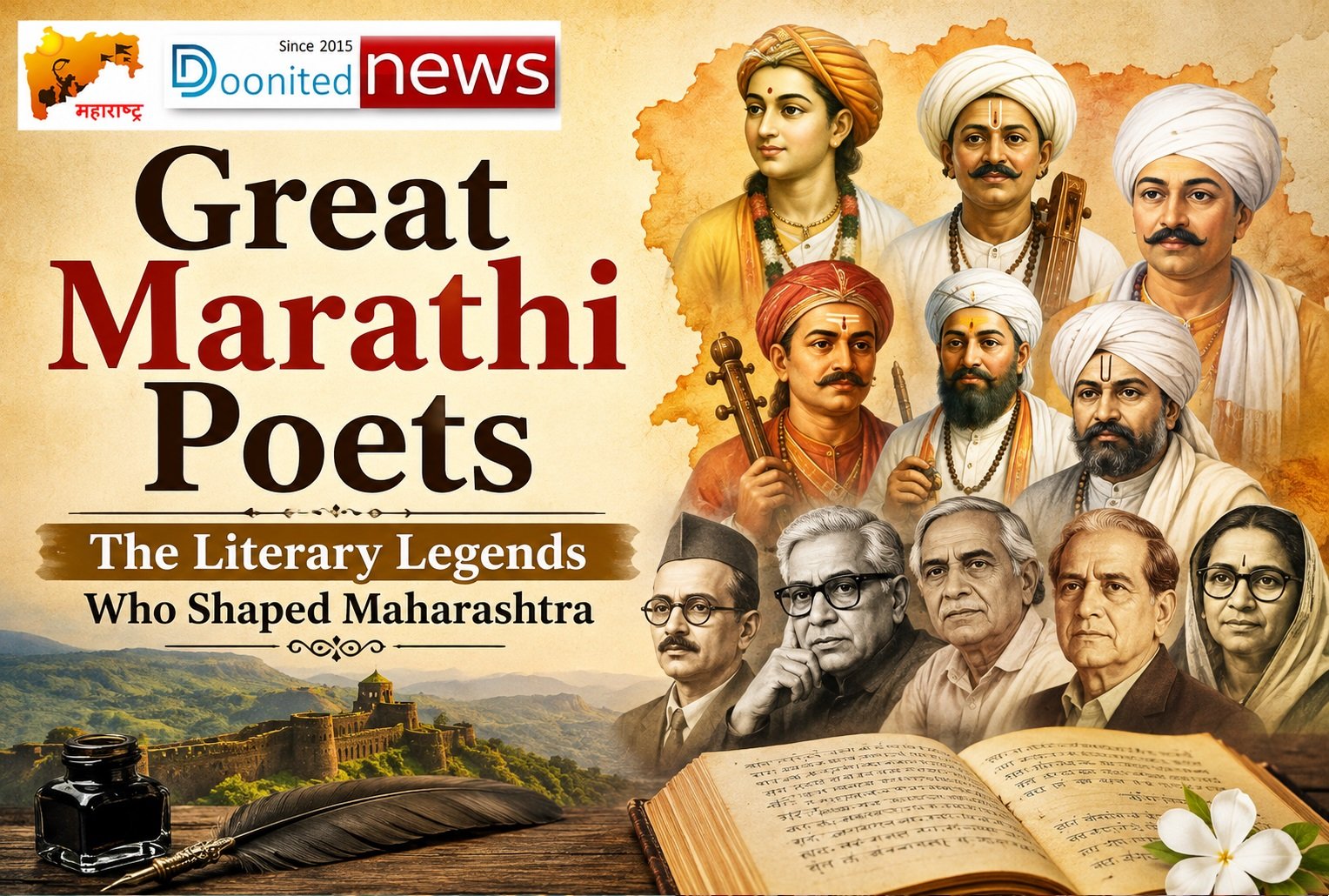
Maharashtra is not only the land of forts, saints, and social reformers; it is also the land of extraordinary poets whose words have inspired generations. From the spiritual abhangs sung in Pandharpur to modern revolutionary poetry that awakened society, Marathi literature has played a powerful role in shaping Maharashtra’s cultural identity.
Here is a special Doonited feature on ten of the greatest Maharashtrian poets and their life history, whose lives continue to inspire readers across India.

1. Sant Dnyaneshwar (1275–1296): The Young Saint of Alandi
Sant Dnyaneshwar was born in Apegaon near Paithan and spent much of his life in Alandi. Despite facing social exclusion, he displayed extraordinary spiritual brilliance from childhood.

His masterpiece Dnyaneshwari, a Marathi commentary on the Bhagavad Gita, brought complex philosophy to ordinary people in their own language. He also wrote Amrutanubhav, a profound spiritual text. Dnyaneshwar took sanjeevan samadhi at Alandi at the age of only twenty-one, yet his influence on Marathi spirituality remains eternal.
2. Sant Namdev (1270–1350): The Poet of Divine Devotion
Born in Narsi near Hingoli, Sant Namdev became one of the most important saints of the Varkari tradition.

He composed thousands of abhangs dedicated to Lord Vitthal of Pandharpur. His devotional songs spread beyond Maharashtra, and several of them were later included in the Guru Granth Sahib, making him a bridge between Marathi and Sikh devotional traditions.
3. Sant Eknath (1533–1599): Scholar, Saint, and Social Reformer
Sant Eknath was born in Paithan and became renowned for combining scholarship with compassion.

His major works include Eknathi Bhagwat and Bhavarth Ramayan. Eknath strongly opposed caste discrimination and emphasized equality, morality, and devotion. His poetry remains central to Marathi religious literature.
4. Sant Tukaram (1608–1649): The Voice of the Common People
Sant Tukaram was born in Dehu near Pune. Personal tragedies and famine led him toward deep spirituality.

His Tukaram Gatha contains thousands of abhangs expressing devotion, humility, social criticism, and spiritual wisdom in simple Marathi. Tukaram’s poetry speaks directly to ordinary people, which is why he remains one of Maharashtra’s most beloved poets.
5. Samarth Ramdas (1608–1681): Poet of Discipline and Courage
Born Narayan Suryaji Thosar in Jamb, Samarth Ramdas was a saint, poet, and spiritual guide associated with the era of Chhatrapati Shivaji Maharaj.

His famous works Dasbodh and Manache Shlok teach self-discipline, courage, devotion, and righteous action. Ramdas travelled across India spreading spiritual and moral awakening.
6. Keshavsut (1866–1905): Father of Modern Marathi Poetry
Born Krishnaji Keshav Damle in Ratnagiri district, Keshavsut is regarded as the father of modern Marathi poetry.

Influenced by English literature, he introduced themes of freedom, individuality, nationalism, and social reform into Marathi poetry. His poem Tutari became a symbol of awakening and change.
7. Balakavi (1890–1918): The Poet of Nature and Innocence
Balakavi, whose real name was Trimbak Bapuji Thombre, was born in Jalgaon district.

He earned the title “Balakavi” because of his extraordinary poetic talent from childhood. His poetry is celebrated for its musicality, tenderness, and vivid descriptions of nature. Though he died at only twenty-eight, poems like Phularani remain classics.
8. Kusumagraj (1912–1999): The Poet of Freedom and Humanity
Born Vishnu Vaman Shirwadkar in Nashik, Kusumagraj became one of the towering figures of modern Marathi literature.

His poetry reflected freedom, human dignity, social justice, and national consciousness. Works such as Vishakha inspired many during India’s freedom movement. He received the prestigious Jnanpith Award in 1987.
9. Vinda Karandikar (1918–2010): Experimental Modernist
Vinda Karandikar was born in Sindhudurg district and became a leading voice of modern Marathi poetry.

His poetry explored philosophy, language, childhood, science, and modern life with remarkable originality. He also wrote memorable children’s poetry and literary criticism. Vinda Karandikar received the Jnanpith Award in 2003.
10. Bahinabai Chaudhari (1880–1951): The Voice of Rural Maharashtra
Born in Asode village in Jalgaon district, Bahinabai Chaudhari had little formal education, yet she created poetry of extraordinary depth.

She composed poems orally in the Ahirani dialect, reflecting village life, farming, motherhood, hardship, and wisdom. Her son later preserved and published her poems, and she is now regarded as one of the greatest voices of rural Maharashtra.
A Quick Comparison of the Top 10 Poets
|
Poet |
Period |
Famous Work |
|---|---|---|
|
Dnyaneshwar |
1275–1296 |
Dnyaneshwari |
|
Namdev |
1270–1350 |
Abhangs |
|
Eknath |
1533–1599 |
Eknathi Bhagwat |
|
Tukaram |
1608–1649 |
Tukaram Gatha |
|
Samarth Ramdas |
1608–1681 |
Dasbodh |
|
Keshavsut |
1866–1905 |
Tutari |
|
Balakavi |
1890–1918 |
Phularani |
|
Kusumagraj |
1912–1999 |
Vishakha |
|
Vinda Karandikar |
1918–2010 |
Mrudgandha and other collections |
|
Bahinabai Chaudhari |
1880–1951 |
Bahinabai’s Poems |
Why These Poets Matter Today
These ten poets represent different centuries and different voices—saints, reformers, nationalists, modernists, and rural storytellers. Together they shaped the Marathi language, enriched Indian literature, and carried the values of devotion, equality, freedom, and humanity across generations.
When Maharashtra sings an abhang in Pandharpur, recites Manache Shlok, reads Vishakha, or remembers the earthy wisdom of Bahinabai, it is celebrating a literary heritage that is still alive.