
Bhramar Mukherjee Wins Yale’s 2026 Hecht Award: Can AI Help India’s Frontline Health Workers Screen for Anaemia?
A research collaboration between Yale University and an Indian nonprofit is exploring whether smartphone images and artificial intelligence can help community health workers identify maternal anaemia earlier. The ambition is considerable, but the real test will be accuracy, accessibility and clinical reliability in India’s villages.
A smartphone camera could one day become an additional tool in India’s fight against maternal anaemia. But before that possibility becomes part of routine healthcare, researchers must answer a difficult question: can artificial intelligence identify warning signs reliably when used by frontline health workers in real communities?
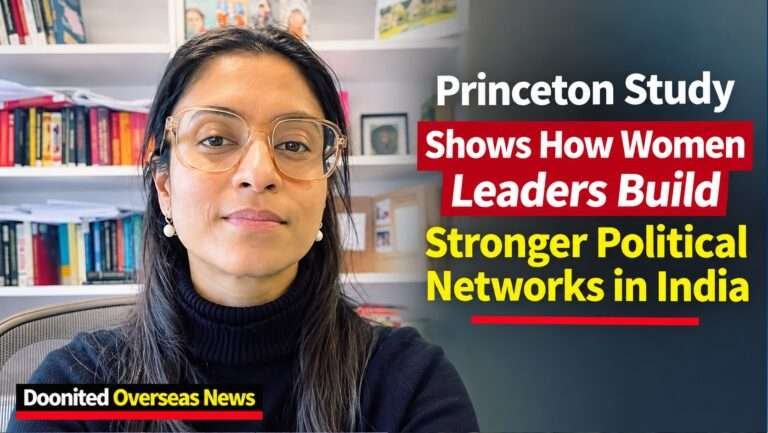
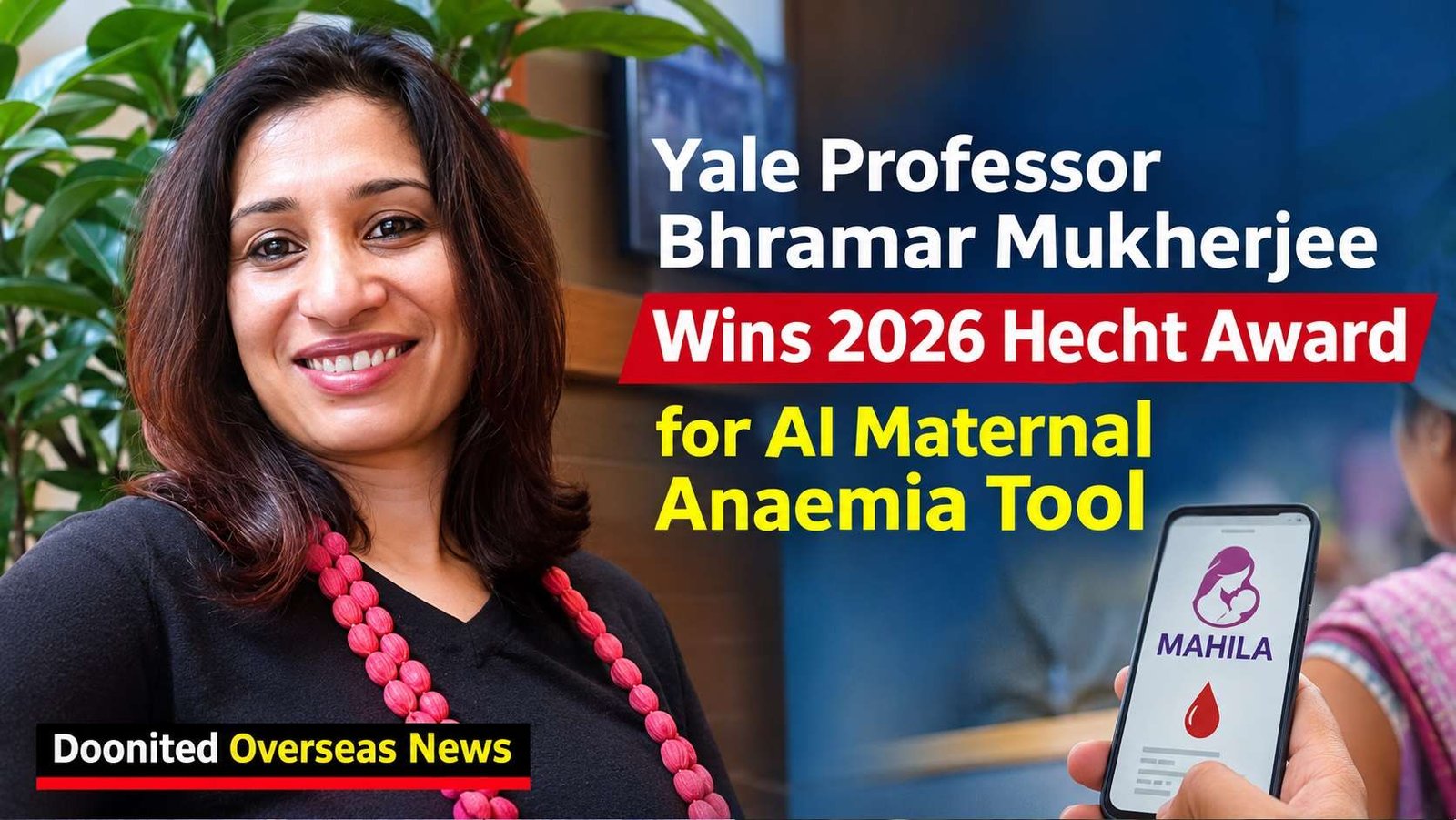
That is the challenge being investigated by Dr Bhramar Mukherjee, an Indian-American professor and senior academic leader at Yale University, who received the 2026 Hecht Global Health Policy Innovation and Systems Impact Faculty Network Award on September 22, 2026.
Her project brings together Yale School of Public Health and the Khushi Baby Association, an organisation working in India, to evaluate a smartphone-based clinical decision-support system called MAHILA — Maternal Anemia Hemoglobin Imaging for Last-mile Assessment.
The research is significant because it focuses not merely on developing an AI algorithm, but on testing whether the technology can be used consistently by India’s accredited social health activists (ASHAs), who serve as an important link between communities and the public healthcare system.
Why maternal anaemia needs attention
Anaemia occurs when the blood has insufficient healthy haemoglobin to carry oxygen effectively. Iron deficiency is a major cause, although deficiencies of other nutrients and several medical conditions can also contribute.
Its consequences can be serious, particularly during pregnancy. Maternal anaemia is associated with health risks for both mothers and newborns, making early identification and appropriate treatment important public-health priorities.
India’s National Family Health Survey-5, covering 2019–21, reported that 52.2 per cent of pregnant women aged 15–49 were anaemic. The same survey recorded anaemia among 57 per cent of all women aged 15–49 and 67.1 per cent of children aged 6–59 months.
These are historical survey estimates, not a measurement of prevalence in November 2026. Nevertheless, they demonstrate the scale of the challenge that health programmes continue to address.
India already operates Anemia Mukt Bharat, a national strategy combining iron and folic acid supplementation, deworming, screening, treatment, nutrition interventions and community awareness. The question is whether emerging technology can strengthen this existing system rather than create a parallel one.
What is MAHILA, and how will it work?
MAHILA is designed as a non-invasive smartphone-based screening and clinical decision-support tool. It uses image-based deep-learning models to estimate the possibility of anaemia and support decisions about further assessment.
The Yale project will examine three connected stages: adapting the technology for Indian field conditions, evaluating its performance and studying how it can be implemented in community healthcare.
ASHAs are central to this process. They will be involved in obtaining consent, capturing images and interpreting the system’s results. The algorithms may also be refined as the research progresses.
This is important because a technology that performs well in a laboratory or controlled study may behave differently in a village. Lighting conditions, smartphone cameras, image quality, variations between individuals and the training received by health workers can all influence performance.
The project will therefore examine not only whether the model can identify possible anaemia, but also whether frontline workers can use it consistently and what supervision and training they require.
Yale says the research will produce a policy briefing book to help translate the findings into decisions about implementation.
Why the ASHA network matters
India’s ASHA workers operate close to the communities that healthcare programmes are intended to serve. They help connect households with maternal and child health services, encourage health awareness and support access to public healthcare.
A smartphone-based screening tool could potentially make certain assessments more accessible, particularly where laboratory facilities are distant or difficult to reach.
But technology cannot compensate automatically for shortages of trained personnel, inadequate follow-up or limited access to treatment.
A positive screening result must lead to appropriate clinical assessment and care. A tool that identifies possible anaemia but cannot connect a woman to confirmatory testing, treatment or referral would have limited public-health value.
The project’s emphasis on field implementation is therefore as important as its AI component.
The scientist behind the project
Mukherjee is the Anna M.R. Lauder Professor of Biostatistics at Yale and serves as Senior Associate Dean of Public Health Data Science and Data Equity. She also holds professorial appointments in epidemiology and statistics and data science.
Her academic work focuses on statistical methods, epidemiological research, health data and the challenges of drawing reliable conclusions from complex datasets.
That expertise is particularly relevant to the MAHILA project. Evaluating an AI screening system requires more than measuring how many cases it identifies. Researchers must examine false positives, missed cases, consistency across populations and the consequences of errors in real healthcare settings.
The Hecht award is intended to support collaborative research that generates evidence for health policy and strengthens health systems. It is a platform for developing and evaluating the project, not a certification that the technology is ready for nationwide deployment.
Promise, but no shortcut around medical evidence
AI-assisted screening has attracted growing research interest internationally. Earlier studies have explored the use of smartphone photographs to estimate haemoglobin levels through features such as the colour of fingernail beds or the inner eyelid.
However, results from one application cannot automatically be transferred to another. Different algorithms, image-capture methods, populations and operating conditions can produce different levels of accuracy.
The World Health Organization’s guidance continues to emphasise appropriate haemoglobin measurement and population-specific thresholds for defining anaemia. Screening technology must therefore be assessed against accepted clinical standards.
For MAHILA, the decisive questions will be whether it performs accurately across different communities, whether it works with the smartphones available to frontline workers, and whether its results lead to timely clinical action.
Data privacy and informed consent will matter too. Health images are sensitive personal information, and their collection, storage and use must be governed by appropriate safeguards.
A research partnership with potential beyond India
The significance of Mukherjee’s work extends beyond an individual academic award. It brings together international research expertise, an Indian nonprofit and the frontline healthcare workforce to investigate a problem with substantial public-health consequences.
If MAHILA proves effective, it could offer lessons for other low- and middle-income countries facing similar challenges in maternal healthcare and community-level screening.
For now, the achievement lies in asking the right implementation question: can sophisticated AI become a practical, dependable tool for the people delivering healthcare closest to the community?
The answer will depend not on the promise of artificial intelligence, but on evidence gathered from the field. In maternal healthcare, that distinction could make all the difference.

World Beyond the News
Dolphins Use Individual Signature Whistles
Bottlenose dolphins develop distinctive whistles that function somewhat like individual acoustic identifiers.
The Pacific Is Earth’s Largest Ocean
The Pacific Ocean covers more area than any other ocean basin and stretches between Asia, Australia and the Americas.
Artificial Intelligence Learns Statistical Patterns
Modern machine-learning systems identify patterns in large datasets and use those patterns to generate predictions or outputs.
Why Some Stories Spread So Quickly
Emotion, novelty, visual appeal and easy sharing can make a story travel rapidly across social platforms.