
Beyond Butter Chicken: Indian Diaspora Chefs Take Regional Cuisine to Europe’s Dining Tables
For decades, many European diners encountered Indian food through a relatively narrow restaurant vocabulary: familiar curries, naan, tandoori dishes and adapted versions of North Indian cooking. These dishes remain popular, but they represent only a small part of India’s extraordinary culinary diversity.
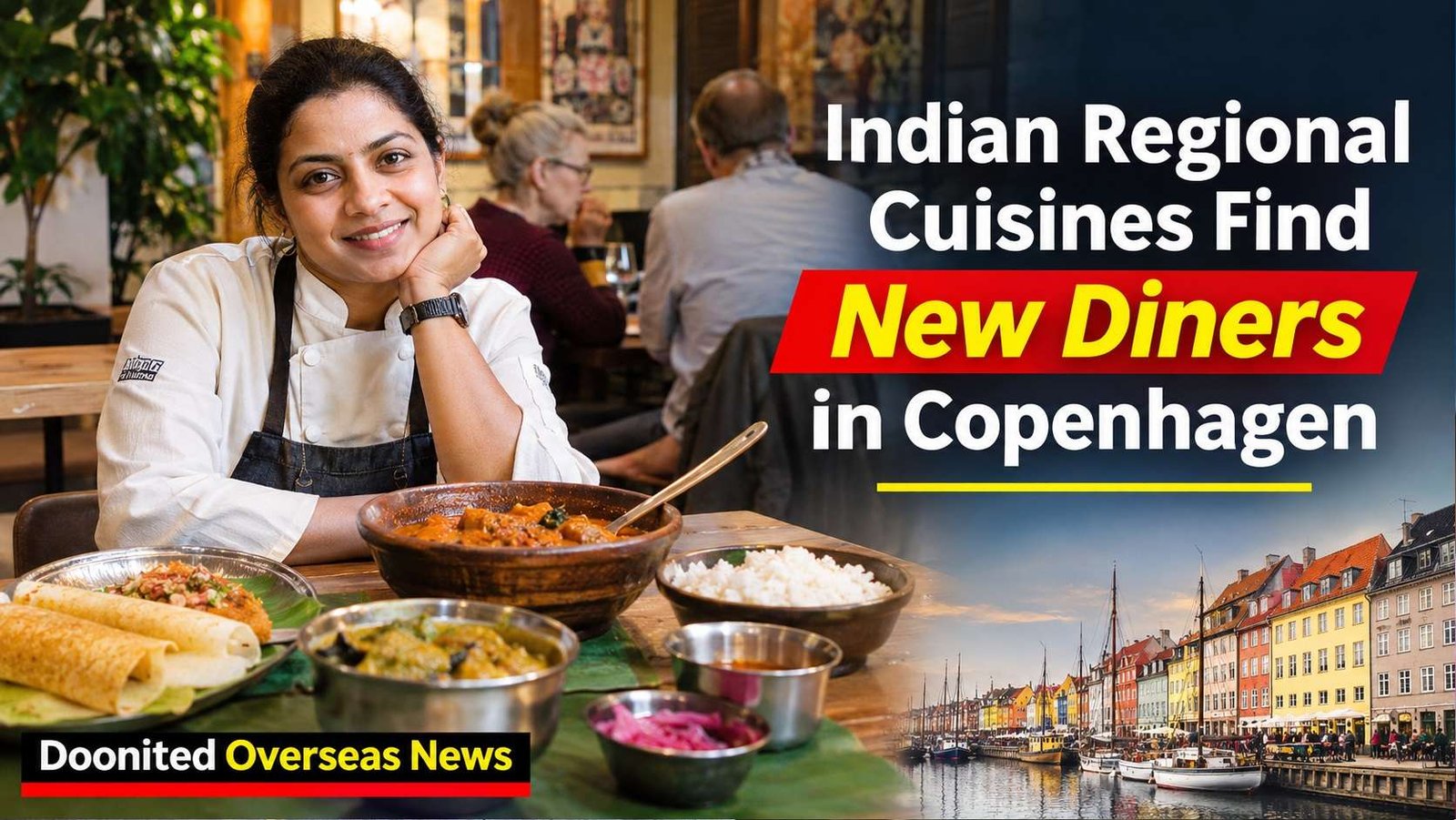
A different story is emerging through Indian chefs and restaurant entrepreneurs who are introducing diners to more specific regional traditions. From Chettinad cooking in Copenhagen to Kerala seafood and traditional preparations presented in London, their work is helping broaden the international understanding of Indian cuisine.
This is not yet proof of a continent-wide transformation in restaurant preferences. It is, however, a visible example of how diaspora entrepreneurship can introduce regional food cultures to new audiences—and turn culinary heritage into an international business proposition.
Copenhagen: bringing Chettinad to northern Europe
One example is Kannathasan Pandian, an Indian entrepreneur who established The South Indian in Copenhagen in January 2015. The restaurant describes itself as Denmark’s first South Indian restaurant and identifies Chettinad cuisine as its culinary inspiration.
Chettinad, a historic region in Tamil Nadu, has a distinctive food tradition shaped by its use of aromatic spice combinations, carefully prepared masalas and varied meat, fish and vegetarian dishes. Ingredients such as black pepper, fennel, tamarind, dried chillies and distinctive regional spices contribute to its characteristic flavours.
The restaurant’s official website describes its approach as a commitment to freshly prepared food, quality ingredients and traditional cooking. Its menu and culinary identity offer something different from the standardised Indian restaurant experience familiar to many European customers.
Pandian’s entrepreneurial journey is also significant. A profile published by Indians Around the World describes his arrival in Copenhagen in 2009, his background as a software engineer and his decision to establish a restaurant focused on the food traditions of his roots.
The business illustrates an important aspect of diaspora entrepreneurship: cultural familiarity can identify an unmet market opportunity. For Indian residents, a regional restaurant can provide a taste of home; for Danish customers, it can offer an introduction to a culinary tradition that may be unfamiliar.
The restaurant’s presence does not establish that all European diners are moving towards regional Indian food. It does demonstrate that a specialist regional identity can find a place in a European capital.
Kerala’s culinary ambassador: Suresh Pillai’s international journey
Another important example is Chef Suresh Pillai, whose professional journey took Kerala cuisine into some of London’s established restaurant kitchens.
Born in the Kollam district of Kerala, Pillai began his working life in the hospitality industry before developing his skills through restaurant kitchens in India. He subsequently worked in London, including at the historic Veeraswamy restaurant, where he had opportunities to introduce Kerala-inspired preparations to diners more familiar with North Indian restaurant food.
His appearance on BBC’s MasterChef: The Professionals further brought attention to his cooking. A mackerel preparation with green mango, drawing on Kerala’s seafood traditions, became one of the dishes associated with his television appearance.
Pillai’s career is particularly relevant because his international experience did not lead him to abandon his regional identity. Instead, he used professional exposure to international kitchens to develop a wider platform for Kerala’s culinary traditions.
After approximately 14 years in the United Kingdom, he returned to India in 2018 and joined the Raviz Group as corporate chef and culinary director. He later developed his own restaurant brand, Chef Pillai, celebrating Kerala cuisine.
His story therefore represents an important two-way movement: Indian culinary knowledge travelling abroad, gaining international exposure and returning to India in the form of new business and professional opportunities.
Why regional Indian food fits Europe’s changing culinary conversation
Copenhagen offers an interesting setting for this development. The city has become internationally associated with New Nordic cuisine, a movement that places emphasis on local ingredients, seasonal produce, sustainability and a strong regional identity.
The New Nordic movement has helped establish the idea that a cuisine does not need to imitate another country’s traditions to achieve international recognition. It can draw confidence from its own ingredients, geography and culinary history.
That philosophy creates an interesting point of comparison with regional Indian cooking. Chettinad, Kerala, Bengal, Kashmir, Goa and the North-East each have distinct ingredients, techniques and food histories. Presenting them individually can help European diners understand Indian cuisine as a collection of diverse culinary traditions rather than one uniform category.
The opportunity is not limited to fine dining. Regional restaurants can introduce local customers to dosa, idli, appam, fish curry, biryani, traditional vegetarian meals and regional street food. The challenge is to communicate the origins and significance of these dishes while making them accessible to customers unfamiliar with their ingredients and preparation.
The business challenge behind authenticity
Regional specialisation also brings practical difficulties. Restaurants must source suitable ingredients, maintain consistent quality, recruit trained kitchen staff and manage operating costs. Some ingredients may be difficult or expensive to obtain in Europe, while local food regulations and customer expectations can influence menu design.
Authenticity itself is not a fixed formula. Regional cuisines have always evolved through migration, trade, religious practices and local availability. A restaurant operating in Denmark or Britain may need to adapt ingredient sourcing or presentation without losing the essential character of its food tradition.
For diaspora entrepreneurs, the commercial challenge is to balance cultural integrity with financial sustainability. A restaurant cannot survive on nostalgia alone; it must attract repeat customers and operate as a viable business.
More than a restaurant: a form of cultural representation
Food is among the most accessible ways for overseas communities to share their heritage. A regional restaurant can introduce customers to unfamiliar ingredients, cooking methods, festivals and the history of a particular part of India.
For the Indian diaspora, this also has a personal dimension. Younger generations growing up abroad may encounter regional dishes through restaurants, family kitchens and community gatherings. These experiences can help maintain connections with ancestral food traditions even when family members live far from their original homes.
The achievements of entrepreneurs such as Kannathasan Pandian and chefs such as Suresh Pillai show that Indian cuisine’s international presence need not depend on a single restaurant identity.
The next stage of its global journey may be less about exporting a generic idea of Indian food and more about allowing the country’s regional kitchens to speak in their own voices. Whether through Chettinad spices in Copenhagen or Kerala’s seafood traditions on an international menu, the opportunity lies in showing European diners just how many different culinary worlds exist within India.

World Beyond the News
Birds Can Navigate Using Earth’s Magnetic Field
Several bird species can sense Earth’s magnetic field, helping them navigate during long-distance migration.
Fermentation Is a Global Food Tradition
People across continents have used fermentation for centuries to preserve food and create distinctive flavours.
Modern Batteries Store Energy Chemically
Rechargeable batteries repeatedly move ions between electrodes, allowing electrical energy to be stored and released.
Why Songs Become Global Hits
Streaming platforms, short-form video, playlists and international collaborations can rapidly carry music across borders.