
How India’s Missile Programme Is Becoming a Major Defence Export Story
For years, India’s defence industry was better known for what the country bought than what it sold.
That equation is changing.
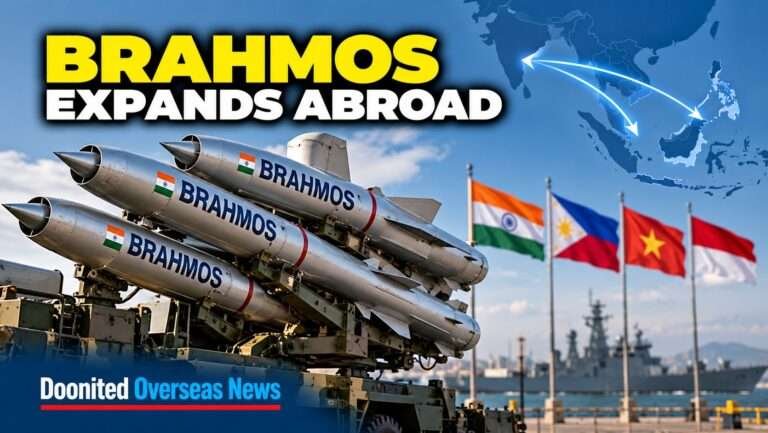
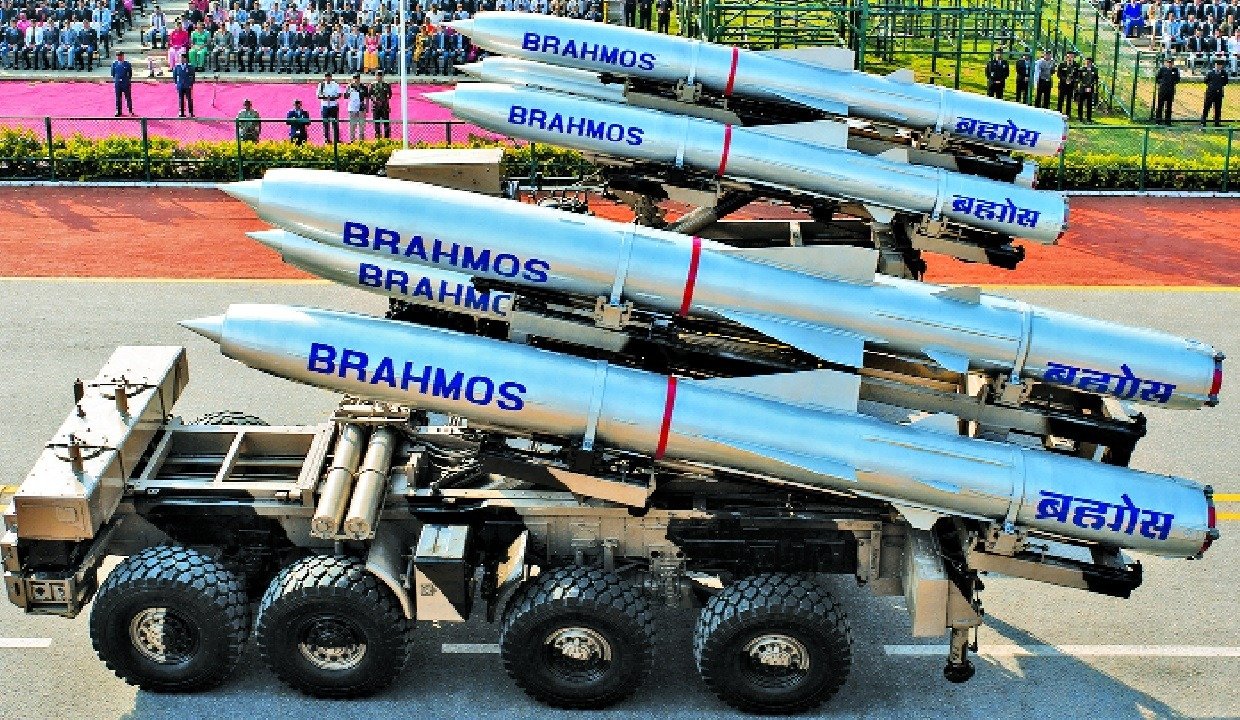
At the centre of that change is BrahMos — the supersonic cruise missile jointly developed by India and Russia. What began as a major defence technology partnership has increasingly become an export story, with the Philippines, Vietnam and Indonesia emerging as foreign customers and the United Arab Emirates among countries discussing a possible acquisition.
The development matters not simply because missiles are being exported.
It signals a broader change in India’s ambition: from being a major defence importer to becoming a credible supplier of sophisticated military systems.
From the Philippines to Southeast Asia
The first major breakthrough came in 2022.
On January 28 that year, BrahMos Aerospace signed a contract with the Philippines’ Department of National Defense for a Shore-Based Anti-Ship Missile System. BrahMos itself described the agreement as an important step for India’s policy of promoting responsible defence exports.
The Philippines subsequently became the first foreign operator of the system.
Vietnam followed.
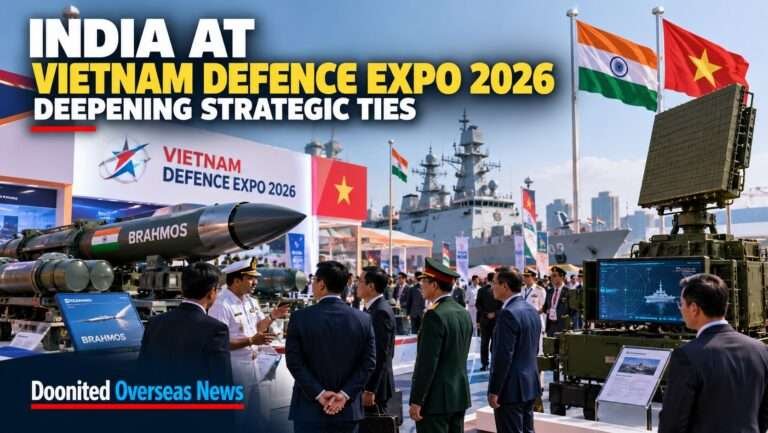
On May 30, 2026, Defence Secretary Rajesh Kumar Singh publicly confirmed that India had signed an agreement with Vietnam for BrahMos, although the detailed terms had not been publicly released. Reuters reported that the package could be worth around ₹60 billion ($629 million) including training and logistical support, but that figure should be treated as a reported estimate rather than an officially disclosed contract value.
Indonesia then became another significant customer.
In July, India and Indonesia signed defence agreements involving BrahMos and Astra air-to-air missiles. Reuters reported the BrahMos-related package at around $630 million, based on Indian sources. The agreement also deepened defence cooperation with Southeast Asia’s largest economy.
The geographical pattern is important.
The export market is developing first in the Indo-Pacific, a region where maritime security, coastal defence and strategic autonomy have become increasingly important.
Why BrahMos matters to India
BrahMos is not an entirely Indian-designed missile.
It is the product of an India-Russia joint venture, and that matters when discussing exports. Reuters notes that Russian approval is required before a BrahMos sale can proceed because of the missile’s joint development.
At the same time, India’s contribution to the programme and its growing manufacturing ecosystem have become increasingly important.
According to reporting on the proposed BrahMos restructuring, indigenous content has risen to around 70%, with a stated target of 85%. Production facilities operate in Lucknow, Hyderabad, Pilani and Thiruvananthapuram, while the Lucknow integration and testing facility has added to overall production capacity.
This is where the BrahMos story becomes bigger than one missile.
Export success can create demand for engineering, electronics, manufacturing, testing, maintenance, training and logistics. In other words, the economic value of defence exports extends beyond the price of the weapon itself.
The UAE is watching — but no deal yet
The next potential market could be the Gulf.
Reuters reported in June that India was in early-stage talks with the United Arab Emirates about possible sales of BrahMos and India’s Akashteer air-defence system. The UAE already operates sophisticated systems from other suppliers, including American THAAD and Patriot systems.
But this should not be presented as a signed UAE-BrahMos contract.
It is a negotiation.
That distinction matters because India’s defence-export ambitions have sometimes attracted headlines before a proposed sale actually becomes a completed order. Reuters also noted India’s previous record of reported arms-export discussions that did not always result in completed deals.
For India, converting interest into reliable contracts — and then delivering on schedule — will be just as important as generating interest in the first place.
A new challenge inside BrahMos
Ironically, BrahMos’ growing success is creating a management question of its own.
The Indo-Russian joint venture is reportedly considering changes to its board structure and a greater shift of engineering and R&D work inside the company. One proposal would remove the DRDO Director General for Missiles and Strategic Systems from the Indian side of the board and establish a dedicated engineering team within BrahMos Aerospace.
The logic is understandable.
A programme created when BrahMos was primarily a development project is now dealing with domestic production, military requirements and multiple export customers.
But there is a legitimate counterargument.
DRDO laboratories have contributed significantly to the programme’s design, testing infrastructure and indigenous development. Some officials are therefore concerned that reducing the formal DRDO connection could weaken access to capabilities built over decades.
That debate deserves careful attention.
Modernising management should not mean weakening the scientific ecosystem that helped create the capability.
India’s defence-export test has changed
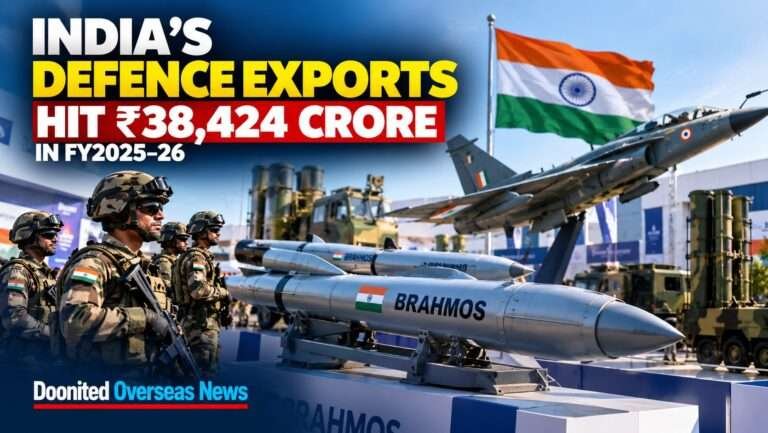
India’s defence exports crossed $4 billion in the financial year ending March 2026, according to figures cited by Reuters, a dramatic increase from the country’s much smaller export base more than a decade earlier.
BrahMos is one of the most visible examples of that transformation.
But export success should not be measured only by the number of countries signing agreements.
The harder test is whether India can consistently deliver sophisticated systems, provide long-term maintenance and training, upgrade them, protect intellectual property and build customer confidence.
A defence customer is not simply buying a missile.
It is buying a relationship that can last decades.
The DOONITED perspective
BrahMos represents an interesting stage in India’s defence journey.
The achievement is not that India has suddenly become independent of foreign technology. BrahMos itself demonstrates the value of international technological cooperation.
The bigger achievement is India’s growing ability to absorb technology, build manufacturing capability, increase indigenous content and turn a joint-development programme into an exportable defence product.
That is a more meaningful definition of strategic self-reliance.
India should therefore avoid both extremes: exaggerated claims that every reported negotiation is already a victory, and excessive modesty about the genuine progress being made.
The Philippines contract was real. Vietnam’s agreement has been confirmed. Indonesia has signed a defence agreement involving BrahMos. The UAE remains a potential market.
The next chapter will depend on execution.
BrahMos has crossed the first export hurdle. India’s real challenge now is to turn individual deals into a durable global defence industry.

World Beyond the News
Dolphins Use Individual Signature Whistles
Bottlenose dolphins develop distinctive whistles that function somewhat like individual acoustic identifiers.
The Pacific Is Earth’s Largest Ocean
The Pacific Ocean covers more area than any other ocean basin and stretches between Asia, Australia and the Americas.
Artificial Intelligence Learns Statistical Patterns
Modern machine-learning systems identify patterns in large datasets and use those patterns to generate predictions or outputs.
Why Some Stories Spread So Quickly
Emotion, novelty, visual appeal and easy sharing can make a story travel rapidly across social platforms.