
India’s Multi-Alignment: How New Delhi Tries to Have Friends Without Choosing a Camp
In international politics, friendship is complicated.
It becomes even more complicated when your friends do not particularly like one another.
India has spent much of the 21st century learning to operate precisely in that uncomfortable space.
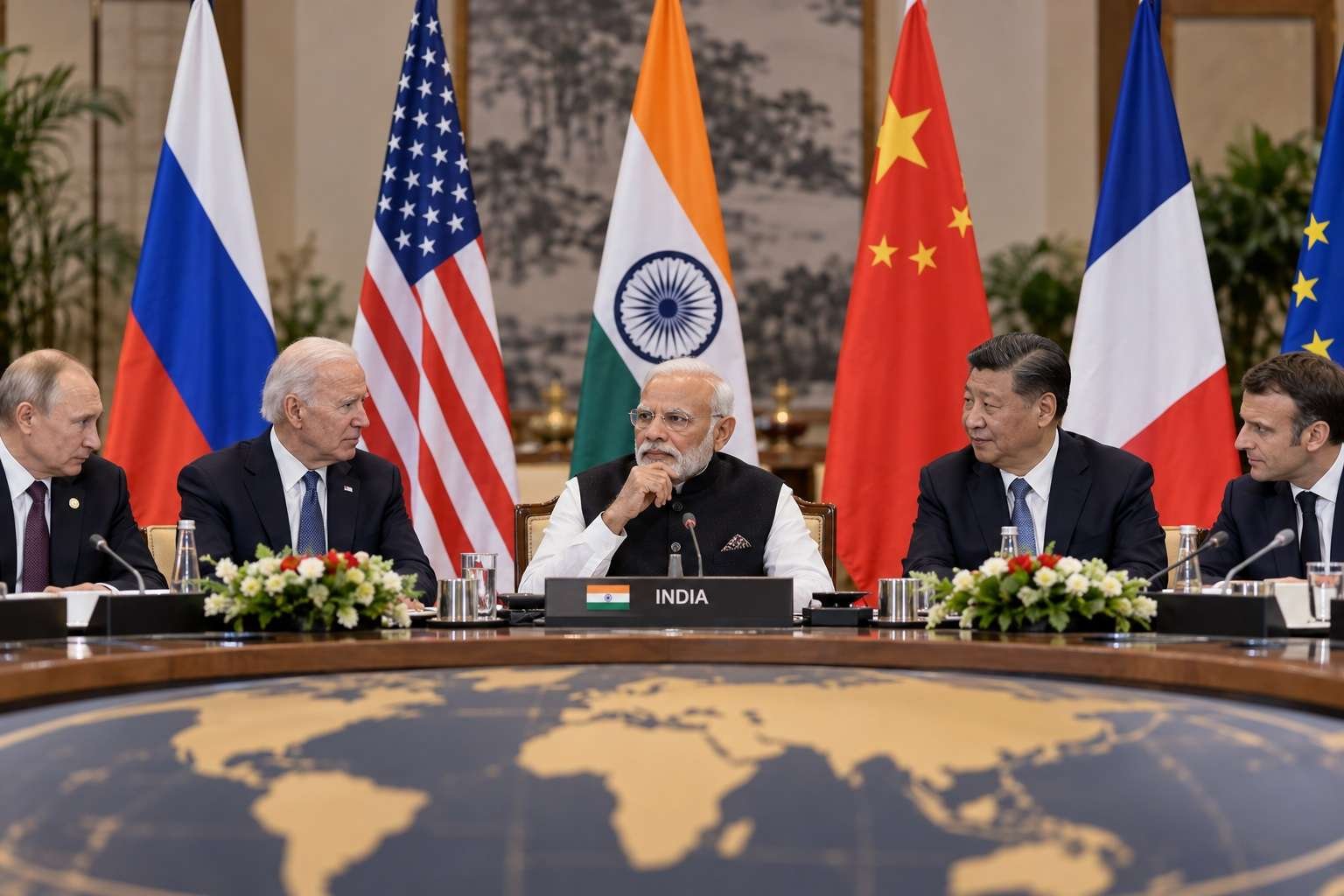
New Delhi buys defence equipment and energy from Russia, deepens technology and strategic cooperation with the United States, maintains an unusually close defence relationship with France, works extensively with Israel, negotiates with Europe, and participates in the Quad alongside the US, Japan and Australia.
There is an obvious question.
How does India manage all of this without becoming dependent on one major power?
The answer increasingly lies in what analysts call multi-alignment, underpinned by the older Indian foreign-policy concept of strategic autonomy.
It is not neutrality.
It is not isolation.
And it certainly isn’t having five best friends who all promise not to talk about each other at dinner.
It is the attempt to preserve freedom of choice.
Strategic autonomy is the principle
India’s strategic autonomy has historical roots in the Non-Aligned Movement, but today’s environment is very different.
During the Cold War, non-alignment was largely associated with refusing to formally join either the American or Soviet bloc.
Today’s international system is more complicated.
The United States remains the world’s leading military and technological power.
China is India’s principal strategic competitor in Asia.
Russia remains an important defence and energy partner.
Europe is an economic and technological power centre.
The Gulf has become increasingly important for India’s energy, trade and diaspora interests.
And countries such as Japan, Australia, France and Israel occupy important positions in India’s strategic network.
India therefore has little incentive to put all its geopolitical eggs into one basket.

Russia: The relationship India cannot simply switch off
India’s relationship with Russia is one of the clearest examples of strategic autonomy.
Defence cooperation remains a major component of the relationship, built over decades. Russia has historically supplied India with aircraft, submarines, missile systems and other military equipment.
Energy has become another major dimension.
Following Russia’s invasion of Ukraine in 2022, Indian purchases of Russian crude increased substantially as refiners responded to market conditions and available supplies.
This produced criticism in Western capitals.
India’s response has been consistent: its energy-security decisions must be guided by the interests of India’s population and economy.
But there is a second calculation.
India does not want its relationship with Moscow to disappear entirely while Russia becomes increasingly dependent on China.
That does not mean New Delhi agrees with Moscow on everything.
India has repeatedly called for dialogue and diplomacy over Ukraine rather than endorsing Russia’s invasion.
That distinction is important.
Strategic autonomy does not require India to approve of everything a partner does.
America: From cautious relationship to strategic partnership
The India-US relationship has undergone perhaps the most dramatic transformation of all.
Defence cooperation has expanded.
Technology cooperation has expanded.
Space cooperation has expanded.
The two countries increasingly collaborate in areas including semiconductors, artificial intelligence, critical technologies, telecommunications, space and advanced defence systems.
The US-India Initiative on Critical and Emerging Technology, or iCET, was launched to deepen cooperation in areas considered strategically important to both countries.
The relationship is also influenced by the changing Asian balance of power.
India and the US share concerns about maintaining a free and open Indo-Pacific and about China’s growing military and economic influence.
But reducing the relationship to “India and America versus China” would be inaccurate.
India has its own interests.
And those interests existed before the current US-China rivalry.
France: Perhaps India’s most underappreciated strategic partner
France deserves more attention in discussions about India’s multi-alignment.
The two countries established their Strategic Partnership in 1998, and cooperation has expanded across defence, space, nuclear energy, technology and the Indo-Pacific.
The Rafale fighter programme is the most visible symbol of the defence relationship.
But the partnership goes beyond aircraft.
France and India have also developed cooperation in space, maritime security, civilian nuclear energy and emerging technologies.
France is particularly important because it is itself an Indo-Pacific power, with French territories and citizens in the region.
That gives Paris and New Delhi overlapping interests without requiring India to become part of a formal alliance.
It is almost tailor-made for India’s strategic-autonomy model.
Israel: Technology with a practical purpose
India-Israel relations have developed rapidly since diplomatic relations were established in 1992.
Defence remains a major pillar.
India has acquired Israeli systems in areas including unmanned aerial vehicles, missiles, sensors and other military technologies.
But the relationship is not exclusively military.
Agriculture, water management, innovation and technology have also become important areas of cooperation.
India’s approach again reflects diversification.
Israel offers capabilities that complement partnerships India has with Russia, France, the United States and others.
The objective is not to replace one supplier with another.
It is to develop a wider strategic network.
Europe: The relationship is getting bigger
Europe is no longer simply a collection of individual bilateral relationships for India.
The European Union is a major trading and investment partner, while individual countries such as France and Germany bring their own technological and industrial strengths.
India-EU negotiations have increasingly focused on trade, investment, technology, climate and supply-chain resilience.
The broader logic is straightforward.
If India wants to become a major manufacturing and technology economy, it needs relationships with multiple advanced economic systems.
Strategic autonomy therefore requires economic connectivity, not economic isolation.

And then there is the Quad
The Quadrilateral Security Dialogue—India, Australia, Japan and the United States—is frequently misunderstood.
It is not NATO in the Indo-Pacific.
It is not formally directed at controlling China.
Its official agenda includes maritime security, critical and emerging technologies, health, climate, humanitarian assistance, cyber issues and resilient supply chains.
The leaders describe their objective as a free and open Indo-Pacific.
That distinction matters.
India participates because the arrangement serves Indian interests, particularly maritime security and regional stability.
But New Delhi has simultaneously avoided converting the Quad into a formal military alliance.
That is classic strategic autonomy.
The real weapon: diversification
India’s approach can be reduced to one simple principle:
Never allow one external relationship to become indispensable.
For decades, defence procurement was heavily concentrated in Russia.
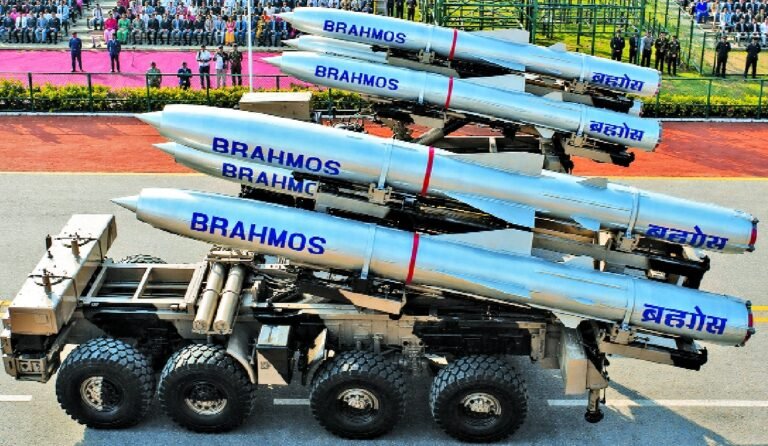
India is now diversifying towards France, Israel, the United States and domestic production.
Energy imports are similarly diversified across Russia, Iraq, Saudi Arabia, the UAE, the United States and other suppliers.
Technology partnerships are also spreading.
This is not just diplomacy.
It is risk management.
Businesses call it diversification.
Countries call it foreign policy.
Atmanirbhar Bharat changes the equation
There is another piece of the strategy that is often overlooked.
India cannot achieve genuine strategic autonomy if it remains dependent on foreign countries for every critical weapon, semiconductor, energy technology or industrial component.
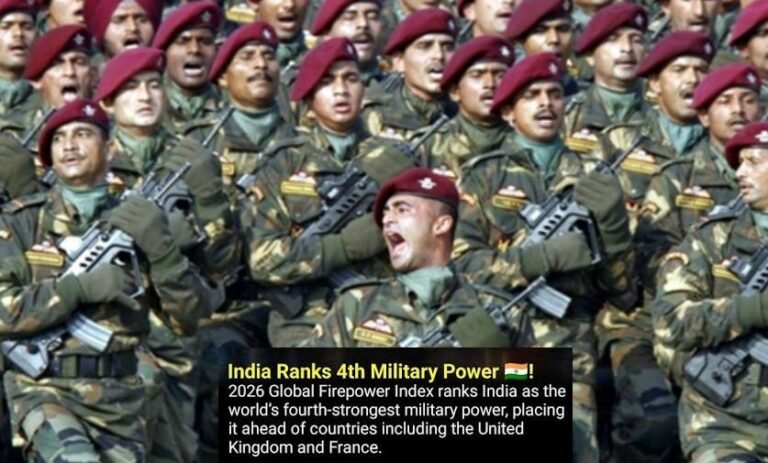
That is why Atmanirbhar Bharat and defence indigenisation have become important components of national strategy.
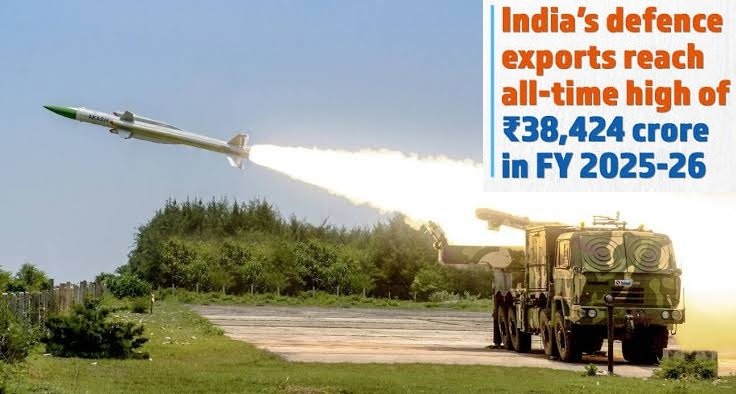
India’s defence exports reached ₹38,424 crore in FY2025–26, according to the Ministry of Defence, while domestic defence production reached approximately ₹1.78 lakh crore.
Those numbers do not mean India is self-sufficient.
It isn’t.
But they demonstrate the direction of travel.
Strategic autonomy becomes considerably stronger when India can say:
“We can buy from you—but we don’t have to.”
The China test
And here is where India’s balancing act becomes genuinely difficult.
China is simultaneously:
- India’s largest or among its largest trading relationships;
- a major economic partner;
- a strategic competitor;
- a nuclear-armed neighbour;
- and the country with which India has an unresolved border dispute.
The military confrontation along the Line of Actual Control has pushed India towards greater security cooperation with countries including the United States, Japan, Australia and France.
Yet India cannot simply eliminate its economic relationship with China overnight.
This is the contradiction at the centre of Indian strategy.
Security may demand diversification away from China while economics demands continued engagement.
There is no elegant one-line solution.

Strategic autonomy has limits
This is where India needs to be realistic.
Strategic autonomy does not mean strategic independence from everyone.
No major economy today is completely independent.
India depends on imported crude oil.
It imports sophisticated components and technologies.
Its armed forces still operate significant quantities of foreign-origin equipment.
Its exports depend heavily on overseas markets.
Its technology ambitions require international collaboration.
Therefore, the real objective cannot be autarky.
It is resilience.
A resilient India should have enough domestic capability and enough international partnerships that pressure from one country cannot easily dictate Indian policy.
DOONITED Editorial Perspective
India’s foreign policy is sometimes criticised for trying to “please everyone.”
That interpretation misses the strategic logic.
India is not trying to please everyone.
It is trying to remain useful to many and dependent on none.
That is considerably harder.
It requires maintaining dialogue with Russia while building deeper relations with the US.
It requires cooperating with the Quad while maintaining India’s independent voice.
It requires buying foreign technology while simultaneously trying to build domestic capability.
And it requires competing with China without pretending that economic geography can simply be switched off.
The danger is that multi-alignment can become an excuse for indecision.
Strategic autonomy is valuable only when India has the economic, technological and military capability to exercise it.
Diplomatic freedom without national capability is merely a nice sentence.
The bigger insight
India’s emerging foreign-policy model offers a lesson that extends beyond geopolitics.
The strongest partnerships are often those you can enter without surrendering your ability to walk away.
That is why diversification matters.
India does not need to choose between Russia and America in the simplistic way Cold War thinking would suggest.
It needs to build enough capability, markets and relationships that its national interests—not another country’s strategic preferences—remain the final reference point.
That is the real meaning of India’s multi-alignment.
Not standing in the middle.
Standing on India’s own interests while remaining willing to work with almost everyone.
And in today’s increasingly fragmented world, that may turn out to be one of India’s most valuable strategic assets.

World Beyond the News
Bees Communicate Where Food Is
Honeybees use movement patterns known as waggle dances to communicate information about food locations.
Street Food Reflects Local History
Many famous street foods developed from migration, trade, local ingredients and the everyday needs of working communities.
A Day on Venus Is Extremely Long
Venus rotates so slowly that one rotation relative to distant stars takes longer than its trip around the Sun.
Human Achievement Continues to Push Limits
Athletes, engineers, scientists and explorers regularly establish new benchmarks in speed, endurance, scale and precision.