
BrahMos Goes Regional: How India’s Missile Is Becoming a Defence-Export Brand in Southeast Asia
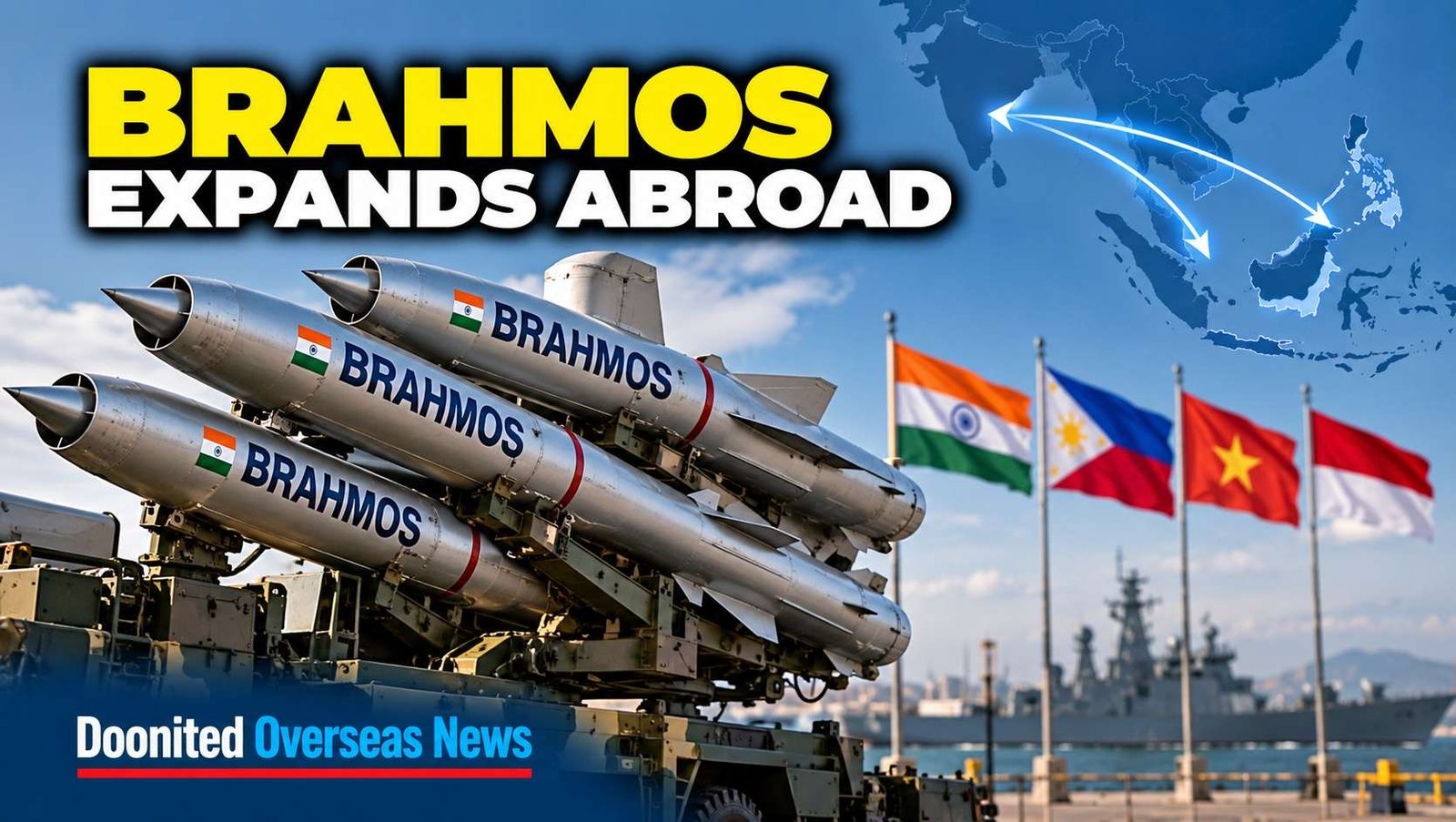
The Philippines already has BrahMos. Vietnam has signed a supply deal and Indonesia has agreed to acquire two batteries. The bigger story is India’s attempt to turn a joint Indo-Russian missile programme into a globally recognised Indian defence-export brand.
For most of India’s modern economic history, the country’s global export identity has been associated with software engineers, pharmaceuticals, automobiles, textiles and professional services.
Missiles were a different category.
That is beginning to change.
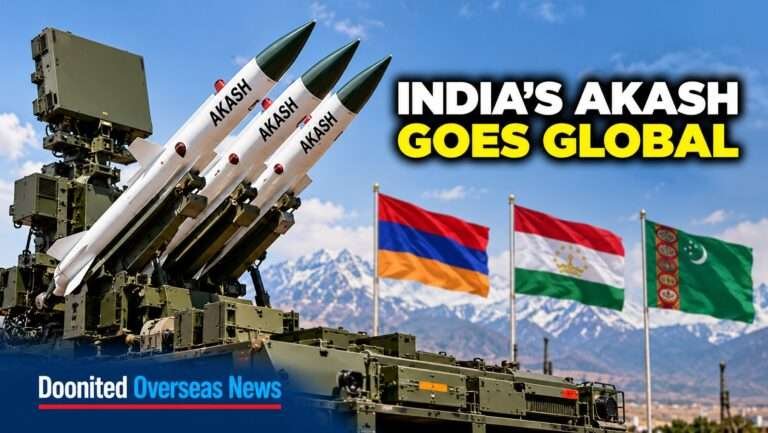
India’s BrahMos supersonic cruise missile is emerging as one of the clearest examples of the country’s attempt to export sophisticated military technology rather than simply manufacture defence equipment for its own armed forces.
The Philippines was the breakthrough customer.
Vietnam has now signed a deal.
Indonesia has agreed to acquire two BrahMos batteries.
And India’s Defence Secretary Rajesh Kumar Singh said in October that BrahMos exports are expected to cross $600 million, with the system becoming a benchmark for India’s emerging defence-export story. (rediff.com)
The significance goes well beyond the value of the contracts.
India is attempting to demonstrate that a weapon originally developed for Indian requirements can become an international product.
The Philippines was the turning point
In January 2022, BrahMos Aerospace signed a contract with the Philippine Department of National Defense for a shore-based anti-ship missile system.
The Indian government described the agreement as an important step in its policy of promoting responsible defence exports. (pib.gov.in)
The contract was worth about $375 million and covered three batteries.
The first batch arrived in the Philippines in April 2024. A second batch was subsequently dispatched, with the Philippine defence secretary confirming in April 2025 that it was on its way. (pna.gov.ph)
That matters because the first export contract established something defence companies desperately need:
a customer willing to operate the system.
The Philippines has subsequently described BrahMos as an important part of its deterrence capability. Defence Secretary Gilberto Teodoro said in August 2025 that the experience with the system had been valuable and that Manila wanted to develop the partnership on a sustainable basis. (pna.gov.ph)
The country’s President Ferdinand Marcos Jr. also said the Philippines was in the process of procuring additional BrahMos systems. (pna.gov.ph)
That is arguably more valuable to India than a single contract.
It is a customer reference.
Vietnam changes the strategic picture
In May 2026, India’s Defence Secretary confirmed that India had signed a BrahMos supply deal with Vietnam.
The announcement was significant because Vietnam has a particularly important strategic position in Southeast Asia and has maritime disputes with China in the South China Sea.
The reported financial details of the deal have not been fully disclosed officially. Reuters reported at the time that the potential package could be worth approximately $629 million, including training and logistical support. (reuters.com)
The important point is not simply the dollar value.
Vietnam has historically pursued a diversified defence relationship rather than relying on one external supplier.
A BrahMos acquisition therefore gives India an opportunity to become part of Vietnam’s long-term defence ecosystem.
It also deepens a broader India-Vietnam strategic relationship that extends beyond military hardware.
BrahMos becomes one component of a relationship involving maritime security, defence cooperation, trade, technology and regional stability.
Indonesia makes the story larger
Indonesia is potentially an even more important market because of its geography.
The world’s largest archipelagic state has an enormous coastline and major strategic sea lanes.
In July 2026, India and Indonesia signed a series of defence agreements, with reporting indicating that Indonesia would acquire two BrahMos batteries for approximately $200 million. The package was part of a wider set of defence arrangements involving areas including Astra air-to-air missiles, technology cooperation and maritime security. (indianexpress.com)
This is important because BrahMos is increasingly being positioned not as an isolated missile sale but as part of a broader defence relationship.
Weapons can open doors.
Training keeps them open.
Maintenance, upgrades, logistics and technology cooperation can keep them open for decades.
That is where the real economic opportunity lies.
BrahMos is not simply an Indian missile
There is an important piece of history behind the brand.
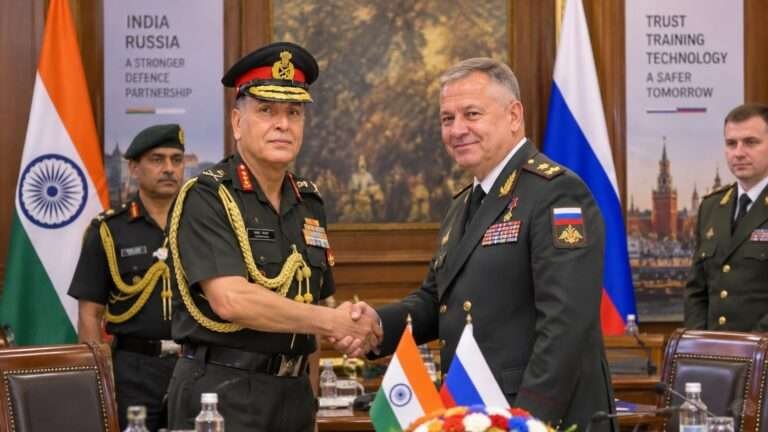
BrahMos Aerospace is a joint venture involving India’s DRDO and Russia’s NPO Mashinostroyenia.
The programme combined Indian expertise in areas including guidance, software and launch systems with Russian expertise in ramjet propulsion and cruise-missile technology. (brahmos.com)
That history makes BrahMos different from a purely indigenous system.
Yet it would also be wrong to describe the export as simply a Russian product being resold by India.
BrahMos has developed into an Indian-based industrial and production ecosystem, with facilities and suppliers across India.
BrahMos Aerospace says its industrial network includes more than 200 public and private enterprises and institutions. (brahmos.com)
This is where the export story becomes particularly interesting.
The missile’s international success can create work not only for the headline manufacturer but for Indian companies involved in electronics, machining, propulsion-related components, software, testing, logistics and maintenance.
Why speed is part of the sales pitch
BrahMos is a supersonic cruise missile.
The company’s published specifications describe a two-stage propulsion system, with the missile reaching approximately Mach 2.8 during its cruise phase. Its configuration can be adapted for different launch platforms. (brahmos.com)
For customers, however, performance specifications are only part of the decision.
A defence ministry is not buying a smartphone.
It is committing to an ecosystem.
That includes training, infrastructure, spare parts, technical support and future upgrades.
This explains why India’s ability to provide long-term support may eventually matter as much as the missile’s speed.
The export opportunity is larger than BrahMos
India’s defence-export numbers provide the broader context.
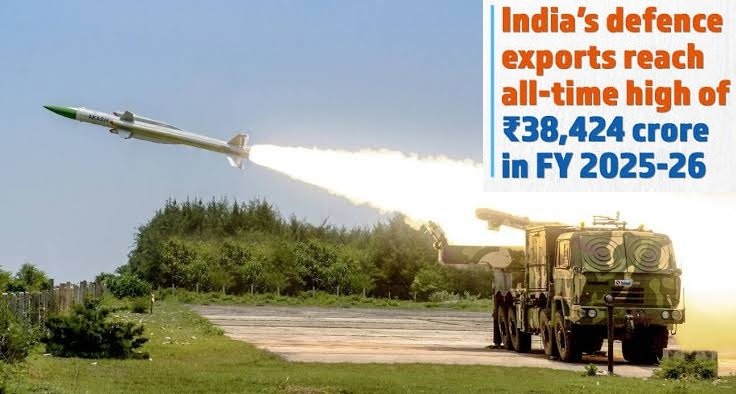
The Ministry of Defence reported defence exports of ₹38,424 crore in FY2025–26, up 62.66% from ₹23,622 crore in the previous year, with Indian defence products reaching more than 80 countries. Defence production reached a record ₹1.78 lakh crore during the same financial year. (pib.gov.in)
Those figures include a much broader range of products than BrahMos.
But the composition of exports matters.
There is a major difference between exporting ammunition or components and selling an integrated strategic weapon system.
BrahMos belongs to the latter category.
That makes its performance particularly important to India’s ambition to become a defence manufacturing power.
Southeast Asia is becoming a competitive defence market
The region is not waiting for India alone.
China is deeply embedded in Southeast Asian defence relationships.
The United States remains a major security partner.
South Korea, France, Israel, Russia and Turkey are also active suppliers.
Southeast Asian countries generally do not want to depend completely on a single external power.
That creates an opening for India.
But it also creates a demanding market.
India cannot expect customers to buy weapons simply because of diplomatic goodwill.
They will compare price, performance, delivery schedules, interoperability, training, financing, political reliability and long-term support.
The more India exports, the more it will be judged as a defence supplier.
That is both an opportunity and a risk.
The diaspora dimension
For Overseas Indians, this story has a less obvious but important economic angle.
The growth of India’s defence-export industry could create a new category of global Indian business.
Indian-origin engineers and entrepreneurs working in Singapore, Indonesia, Vietnam, the Philippines, Australia, the Gulf and elsewhere increasingly operate in economies that are becoming customers or partners for Indian defence companies.
That can create opportunities in:
- engineering and advanced manufacturing;
- aerospace and electronics;
- software and cybersecurity;
- logistics and maintenance;
- industrial procurement;
- defence-related research;
- education and technical training.
But the diaspora should also understand the limits.
Defence trade is heavily regulated.
Technology transfer can involve strict controls.
Export contracts are subject to government approvals and strategic considerations.
This is not an ordinary commercial supply chain.
The growing defence relationship therefore creates opportunities for globally connected Indian businesses, but it also demands much higher standards of compliance and technical capability.
A $600 million milestone is not yet a global empire
The enthusiasm surrounding BrahMos needs some perspective.
India’s expected BrahMos export value of more than $600 million is significant for an emerging defence-export industry.
But it is still small compared with the global arms trade dominated by the United States, France, Russia, China and other major suppliers.
The real achievement would be if today’s contracts become the foundation for repeat orders, upgrades and new customers.
The Philippines could become a long-term customer.
Vietnam could develop a deeper defence-industrial relationship.
Indonesia could expand its procurement.
Other Southeast Asian and Middle Eastern countries could follow.
That is how a defence product becomes a global brand.
Not through one spectacular contract.
Through repeat confidence.
The DOONITED view
The BrahMos story is sometimes presented as a straightforward triumph of “Make in India”.
The reality is more interesting.
It is the story of an India-Russia technological partnership that has evolved into an Indian defence-export capability, supported by a growing domestic industrial ecosystem and increasingly ambitious export diplomacy.
That distinction should not be hidden.
Nor should India’s remaining challenges.
A missile can be impressive.
A defence company becomes globally credible only when it can deliver on schedule, maintain equipment, train foreign personnel, provide spare parts and improve the product over decades.
The Philippines was the first test.
Vietnam and Indonesia make the test much larger.
And if India succeeds, the most important export may not be the BrahMos missile itself.
It will be the reputation that Indian defence technology can be bought, deployed, maintained and trusted outside India.
For a country trying to move from defence importer to defence exporter, that reputation could prove far more valuable than any single contract.


World Beyond the News
Octopuses Can Change Their Appearance
Octopuses can rapidly alter their skin colour and texture to communicate, camouflage themselves and respond to danger.
Some Cities Exist Across Two Continents
A small number of cities are geographically associated with two continents, creating unusual cultural and geographic identities.
Earth’s Climate Is Measured in Many Ways
Scientists track temperature, atmospheric gases, sea level, ice cover and other indicators rather than relying on a single climate number.
Streaming Changed How Audiences Discover Shows
Recommendation systems and global streaming releases allow audiences to discover programmes far beyond their original markets.