
India’s Defence Export Moment: Can “Made in India” Become a Global Security Brand?
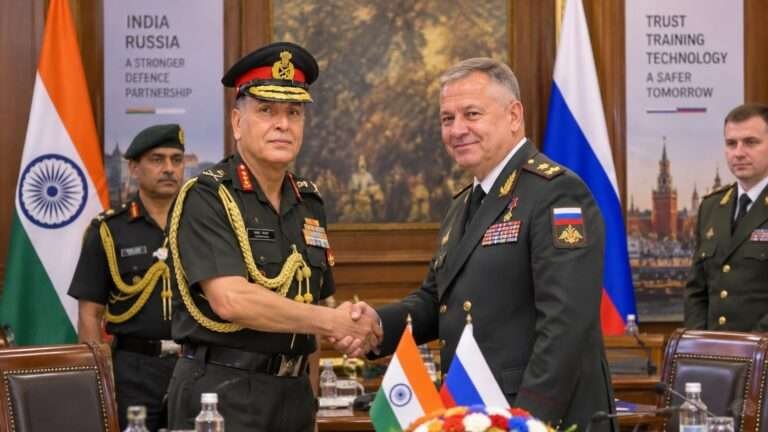
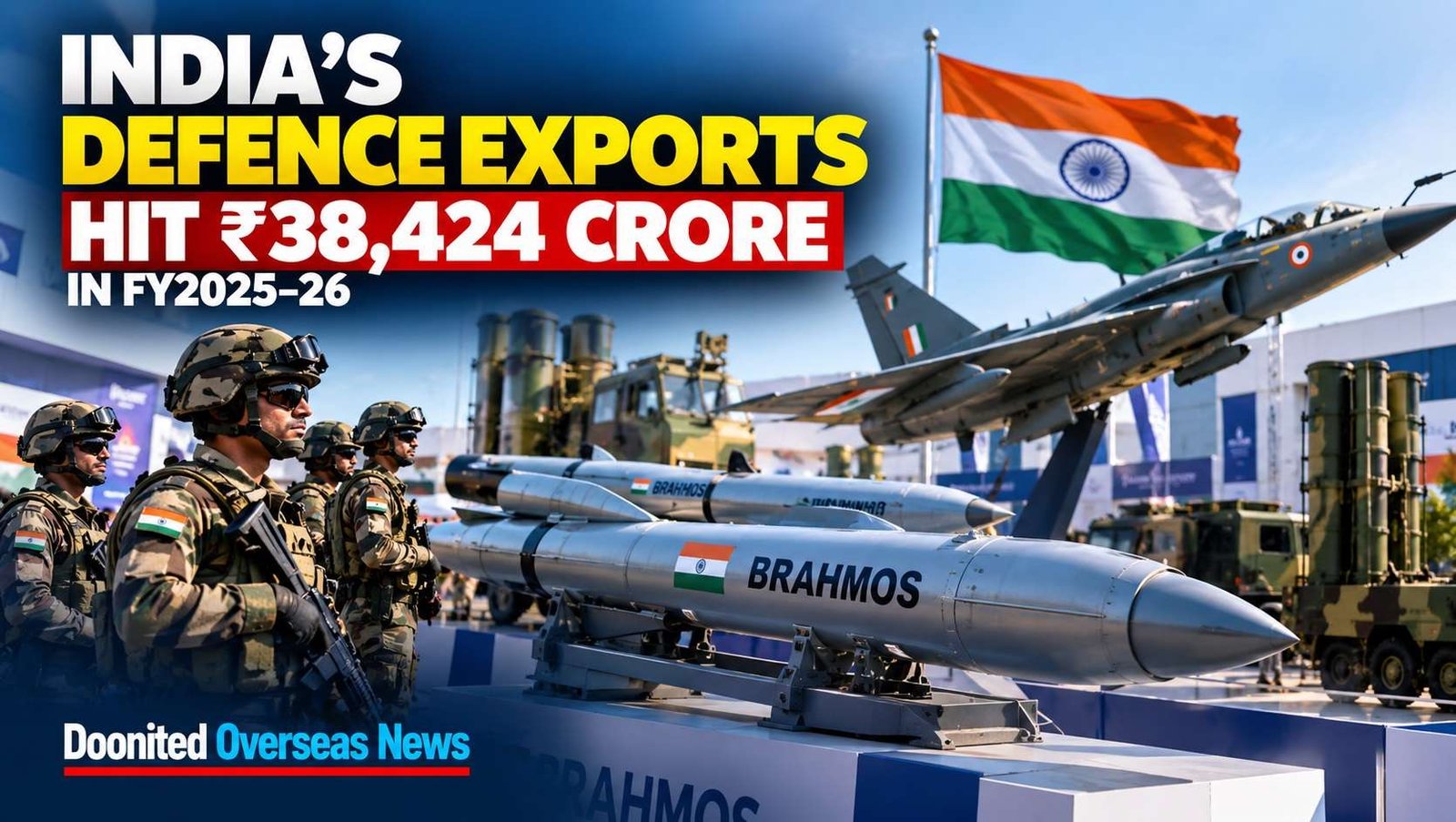
India’s defence exports reached a record ₹38,424 crore in FY2025–26 and now span more than 80 countries. The next challenge is considerably harder: turning rapid export growth into durable global credibility, indigenous technology ownership and long-term international business.
India’s defence industry is entering unfamiliar territory.
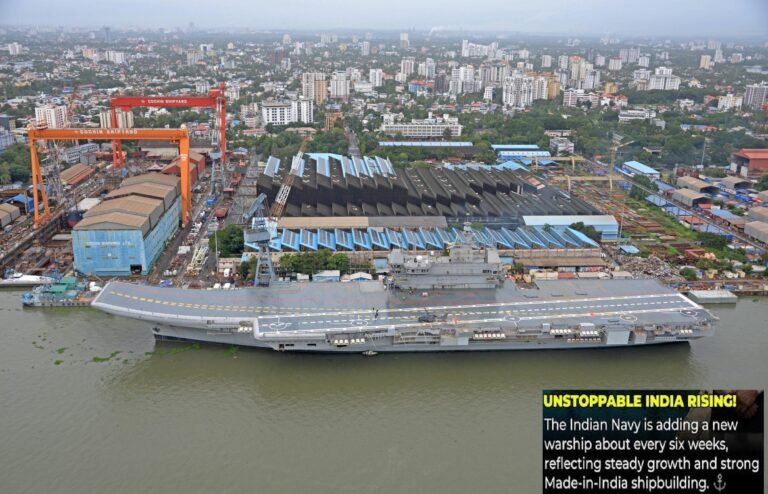
For decades, India was principally known as one of the world’s major defence importers. Today, Indian-made defence equipment is being exported to more than 80 countries, while the country’s defence-export value has risen from just ₹686 crore in FY2013–14 to ₹38,424 crore in FY2025–26.
That is a remarkable transformation.
But the more interesting question for the international market is no longer whether India can export defence equipment.
It is:
Can India become a trusted global defence technology supplier rather than simply a lower-cost source of military hardware?
That distinction could determine whether the current export boom becomes a permanent feature of India’s industrial economy.
From ₹686 crore to ₹38,424 crore
The numbers explain why India’s defence sector has suddenly become an international business story.
Defence exports grew 62.66% in FY2025–26, rising from ₹23,622 crore the previous year to ₹38,424 crore. The private sector contributed ₹17,353 crore, or 45.16%, while defence public-sector undertakings contributed ₹21,071 crore.
The transformation becomes even more striking over a longer period.
Exports increased more than 56-fold from ₹686 crore in FY2013–14. India’s defence production also reached a record ₹1.78 lakh crore in FY2025–26, up 15.6% from the previous year.
The government has now set an ambitious target of ₹50,000 crore in annual defence exports by 2029, alongside a ₹3 lakh crore annual defence-production target.
The target is not merely about selling more weapons.
It represents an attempt to establish a domestic industrial ecosystem capable of designing, manufacturing and supporting increasingly sophisticated defence products.
The private sector is changing the story
One of the most important changes is the growing participation of private Indian companies.
In FY2025–26, the private sector accounted for nearly half of defence-export value, even though public-sector companies still represented the larger share.
That matters because a global defence industry cannot depend entirely on government-owned manufacturers.
Export markets demand:
- competitive pricing;
- rapid product development;
- specialised components;
- after-sales support;
- software updates;
- international certifications;
- financing;
- logistics;
- and long-term customer relationships.
These requirements create opportunities for thousands of smaller businesses.
India’s defence ecosystem now includes around 500 licensed defence companies and nearly 17,000 MSMEs, according to government data. The defence exporter base has expanded to 145 firms. Press Information Bureau
This is where the export story becomes relevant to India’s wider business economy.
The eventual winners may not only be companies whose names appear on missiles or aircraft.
They may be the manufacturers making the sensors, electronics, cables, composites, software, communications systems, optics, ammunition components and other subsystems that form the invisible architecture of modern defence equipment.
India is selling more than weapons
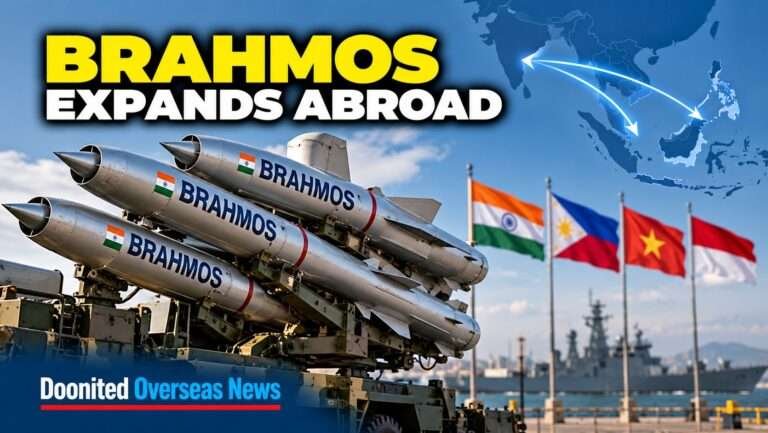
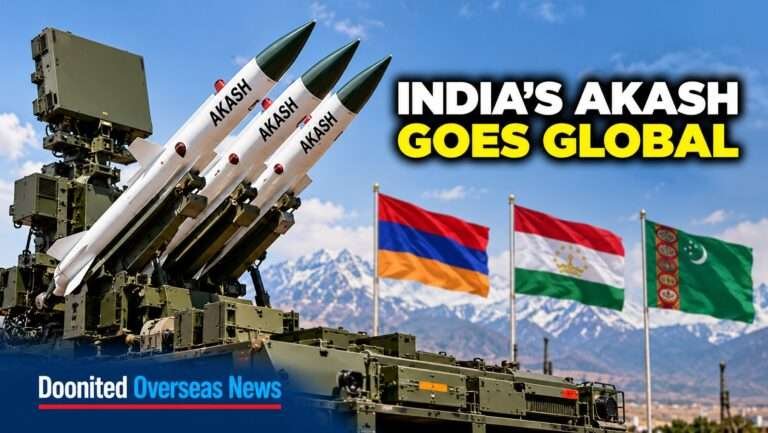
The international image of India’s defence exports is often dominated by high-profile systems such as BrahMos and Akash.
But India’s export basket is broader.
Government data describes exports ranging across aircraft and helicopters, naval vessels, artillery systems, ammunition, electronic systems, protective equipment, surveillance systems and various components and subsystems.
That diversity is strategically important.
A country does not become a major defence supplier simply by securing one spectacular missile contract.
It becomes one by developing an ecosystem.
A foreign customer purchasing a major platform may eventually require:
training → spare parts → maintenance → software → upgrades → ammunition → technical support → replacement systems.
That creates a relationship potentially lasting decades.
The real economic prize is therefore not the first contract.
It is the lifecycle business that follows it.
The export map is becoming global
India’s defence products are now reaching more than 80 countries, according to government data.
This is strategically important because India’s potential customers are not concentrated in one region.
Southeast Asia has emerged as an important market for Indian defence diplomacy and exports. Countries such as the Philippines have already become significant reference points for India’s missile-export ambitions.
The broader opportunity extends into the Middle East, Africa, Central Asia and other emerging defence markets.
India’s attraction in these markets is not necessarily that it can replace the United States, Russia, France, Israel or China across the entire defence spectrum.
That would be unrealistic.
The opportunity is different.
India can potentially position itself as a supplier offering a combination of competitive cost, increasingly indigenous technology, political flexibility and long-term industrial partnerships.
That could become particularly valuable for countries seeking to diversify their sources of military equipment.
The real transition: from assembly to technology ownership
This is where India’s defence-export ambitions encounter their most important challenge.
Producing equipment domestically is not the same as owning all the technology inside it.
A genuinely advanced defence-industrial base requires domestic capability in areas such as:
- propulsion;
- advanced electronics;
- sensors;
- radar;
- electronic warfare;
- artificial intelligence;
- secure communications;
- materials science;
- precision manufacturing;
- and software.
India has made progress in many of these fields, but important technology gaps remain.
That is why the country’s next phase cannot simply be about increasing factory output.
It must be about increasing technological depth.
The government’s own policy framework increasingly emphasises indigenisation, innovation and participation by startups, MSMEs and academia. Since 2022–23, 25% of the defence R&D budget has been opened to industry, startups and academia, according to government data.
That could prove more important over the long term than any single export contract.
The startup opportunity
India’s defence transformation is also creating an unusual opportunity for technology entrepreneurs.
Traditional defence companies required enormous manufacturing infrastructure.
Modern warfare increasingly depends on technologies that can be developed by smaller teams:
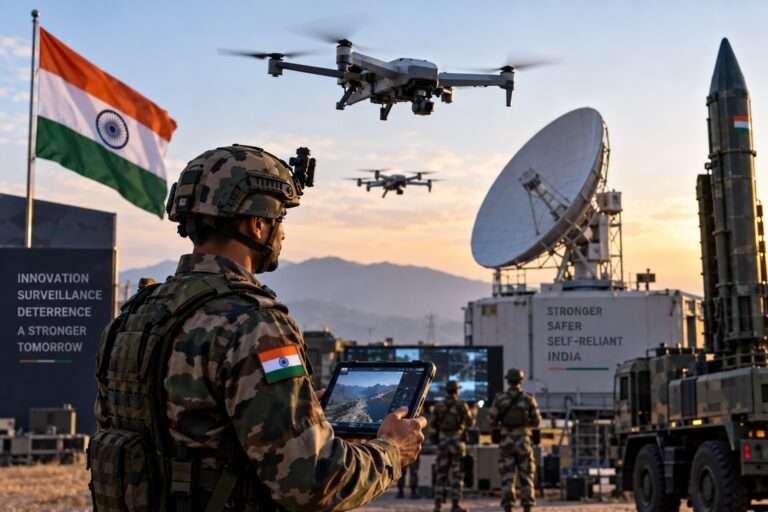
drones, counter-drone systems, artificial intelligence, autonomous platforms, cyber technologies, sensors, satellite systems and advanced communications.
The government’s iDEX programme is designed to bring startups and innovators into defence development. As of 2026, the government reported hundreds of startups and innovators participating, with contracts signed for indigenous technologies.
This creates a potential new category of Indian global technology company.
Instead of an Indian startup selling consumer software abroad, the next generation could be selling dual-use or defence technology to governments and major international contractors.
That is a much harder market to enter—but potentially a much more strategically valuable one.
Export policy is being redesigned around the global market
India also understands that technology alone will not create exports.
Defence procurement is notoriously bureaucratic.
In August 2026, the government announced reforms to the Defence Export Standard Operating Procedure and Open General Export Licence framework, with the stated objective of reducing procedural burdens and making it easier for Indian companies to access international markets while maintaining national-security safeguards. Press Information Bureau
This is an important change in philosophy.
A defence company can develop a competitive product and still lose an international opportunity if approvals take too long.
Global competitors are competing not only on engineering.
They compete on:
price + delivery + certification + financing + diplomacy + after-sales support + speed.
India therefore needs an export system capable of moving at something closer to the pace of the international defence market.
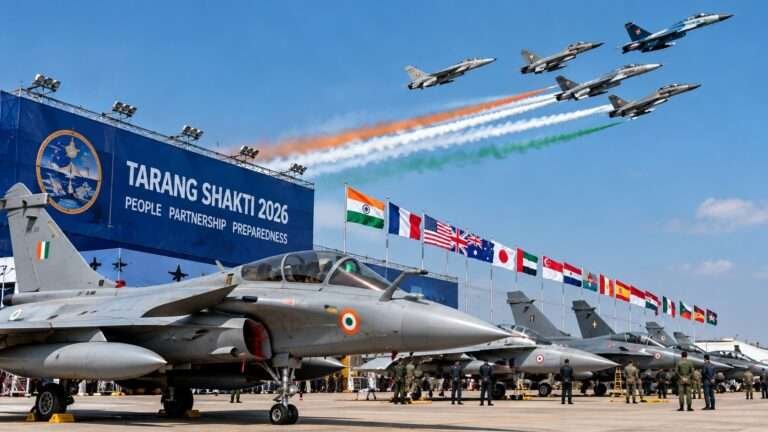
Exhibitions are becoming business-development platforms
This explains why international defence and security exhibitions matter.
For Indian manufacturers, exhibitions are no longer simply opportunities to display equipment.
They are places to meet foreign procurement officials, prime contractors, distributors, technology partners and potential customers.
That is particularly important for smaller Indian companies.
A major multinational defence contractor already has an international sales network.
An Indian MSME may have an excellent radar component, drone system or electronic device but no established route to a foreign defence ministry.
International exhibitions can provide that bridge.
India’s growing presence at global defence events should therefore be viewed as part of a broader market-access strategy, not merely public relations.
Why the diaspora should care
The global Indian professional community is deeply embedded in aerospace, engineering, electronics, cybersecurity, artificial intelligence, manufacturing and finance.
As Indian defence companies expand internationally, they will increasingly need people who understand both India and overseas markets.
That creates opportunities for Indian-origin professionals abroad in:
- defence technology;
- engineering;
- consulting;
- supply-chain management;
- venture capital;
- aerospace;
- cybersecurity;
- regulatory affairs;
- international business development;
- and research.
There is also a potential second-order effect.
Indian-origin executives working for international defence and technology companies can become bridges between Indian manufacturers and global supply chains—provided that all applicable national-security, export-control and conflict-of-interest rules are respected.
The diaspora could therefore become part of India’s defence-industrial internationalisation without becoming directly involved in military procurement.
The ₹50,000-crore question
India’s ₹50,000-crore export target is achievable only if the current growth becomes structurally repeatable.
That requires several things to happen simultaneously.
First, India must continue developing products that foreign militaries actually want.
Second, those products need to be competitive on reliability, price and lifecycle support—not simply on the “Made in India” label.
Third, Indian companies must develop deeper proprietary technology.
Fourth, the country must build international service and maintenance networks.
And fifth, export growth must increasingly come from a broad ecosystem rather than a handful of large contracts.
The last point may be the most important.
If 145 exporters can become 300 or 500 companies serving international customers, India’s defence-export base becomes much more resilient.
From defence importer to global supplier
India should nevertheless avoid overstating the transformation.
The country is not yet a peer of the world’s largest defence exporters across all categories.
Its export numbers remain far smaller than those of the established major suppliers, and important technological dependencies continue to exist.
But the direction of travel is unmistakable.
India has moved from ₹686 crore of defence exports in FY2013–14 to ₹38,424 crore in FY2025–26. Domestic defence production has reached ₹1.78 lakh crore, and Indian products are reaching more than 80 countries. Press Information Bureau
The next stage will be harder.
The world does not buy defence equipment merely because a country wants to export it.
It buys when the equipment is credible, competitive, supportable and strategically useful.
That is the test now facing India.
The country’s defence story is no longer simply about becoming self-reliant.
It is about becoming globally relevant.
And if India can combine its expanding manufacturing base with genuine technology ownership, innovative startups, competitive private companies and reliable international support, “Made in India” could eventually mean something much bigger in global security than it does today.

World Beyond the News
Bees Communicate Where Food Is
Honeybees use movement patterns known as waggle dances to communicate information about food locations.
Street Food Reflects Local History
Many famous street foods developed from migration, trade, local ingredients and the everyday needs of working communities.
A Day on Venus Is Extremely Long
Venus rotates so slowly that one rotation relative to distant stars takes longer than its trip around the Sun.
Human Achievement Continues to Push Limits
Athletes, engineers, scientists and explorers regularly establish new benchmarks in speed, endurance, scale and precision.