
India’s Technology Moment: From Digital Scale to Global Innovation Power
For years, the country’s global technology reputation was closely associated with software services, IT professionals and outsourcing. Today, the picture is considerably broader.
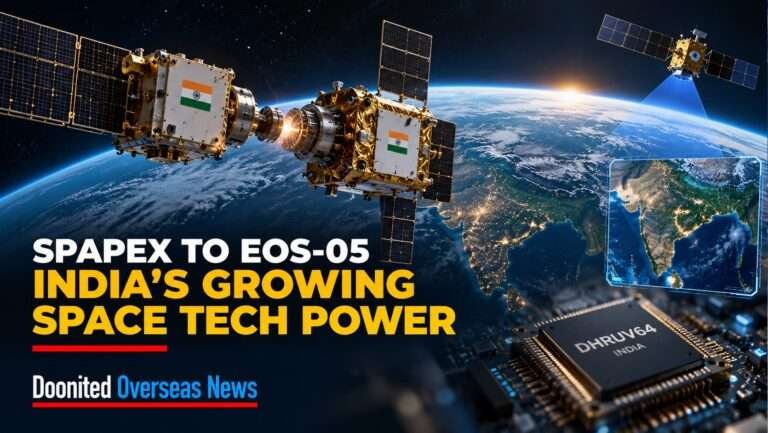
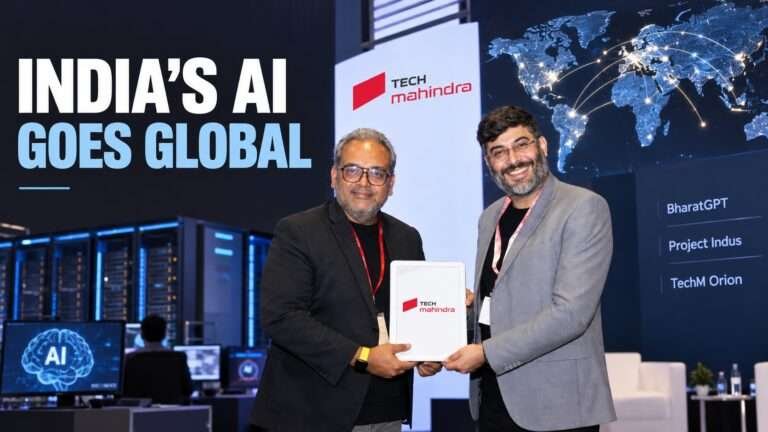
India has built enormous digital infrastructure, created one of the world’s largest startup ecosystems and is increasingly positioning itself in artificial intelligence, advanced computing, semiconductors and other strategic technologies.
But the more interesting question is not whether India has become a technology powerhouse.
It is whether India can convert extraordinary scale into globally important innovation.
From Aadhaar to UPI: India’s digital advantage
One of India’s most significant technology achievements is not a single company or gadget. It is the creation of digital infrastructure capable of operating at national scale.
Aadhaar provides a digital identity layer for more than a billion people, while the Unified Payments Interface (UPI) has transformed everyday digital payments.
This model of digital public infrastructure has attracted international attention because it demonstrates how technology can be built as shared infrastructure rather than remaining exclusively within individual commercial platforms.
India’s strength is particularly visible in digital services.
According to the World Intellectual Property Organization’s Global Innovation Index 2025, India ranked first globally in ICT services exports as a percentage of total trade. But the distinction is important: India ranked 38th overall in the Global Innovation Index, not first.
That tells a more interesting story.
India is already exceptionally strong in certain technology-related capabilities, even while it still has considerable room to improve its broader innovation system.
The startup engine is spreading beyond Bengaluru
India’s technology ecosystem is also becoming less concentrated in a handful of metropolitan cities.
Startup India’s 2026 figures show more than 200,000 DPIIT-recognised startups, while a June 2026 government update put the number above 230,000. Around half of recognised startups are now coming from Tier-II and Tier-III cities.
That geographical shift could become one of India’s most important advantages.
Innovation does not necessarily require a corporate office in Bengaluru, Mumbai, Delhi or Hyderabad.
A technology company solving an agricultural problem in a smaller city, a manufacturing challenge in an industrial cluster or a healthcare problem in a semi-urban region can potentially build products for much larger markets.
The spread of entrepreneurship therefore matters not only because it creates more startups. It expands the country’s pool of people attempting to solve problems.
AI changes the competition
Artificial intelligence is now raising the stakes.
India possesses several advantages: a large technical workforce, a huge domestic market, extensive IT experience and a growing base of startups and research institutions.
But AI also exposes weaknesses.
WIPO’s assessment shows that India continues to lag in areas including infrastructure, research intensity and the broader innovation environment. Its 2025 report noted that India’s gross domestic expenditure on research and development was only 0.65% of GDP in 2020, highlighting the need for greater investment.
This is the central challenge.
Having millions of software professionals is not the same as leading the world in foundational AI research.
Having a large startup population is not the same as producing globally dominant technology companies.
And having access to advanced technology is not the same as inventing it.
India’s next technology phase will therefore depend increasingly on research, intellectual property, computing capacity, semiconductor capability, advanced engineering and the ability to commercialise scientific discoveries.
India enters a bigger global technology conversation
The international environment is also changing.
At the G20 Innovation Ministerial held in Chapel Hill, North Carolina, on September 2, 2026, ministers reached consensus on principles covering pro-innovation policy, technology and prosperity, technical workforce development, AI-related intellectual property, AI standards and industrial innovation and supply chains.
India’s participation matters because technology is no longer simply an economic issue.
AI, semiconductors, quantum computing, advanced manufacturing and digital infrastructure are increasingly connected to national competitiveness and strategic resilience.
India is therefore entering a global technology competition in which the important question is not merely who can use technology fastest.
It is who can build the technology, control critical capabilities and create globally competitive products around it.
The semiconductor test
Semiconductors provide a useful example of this transition.
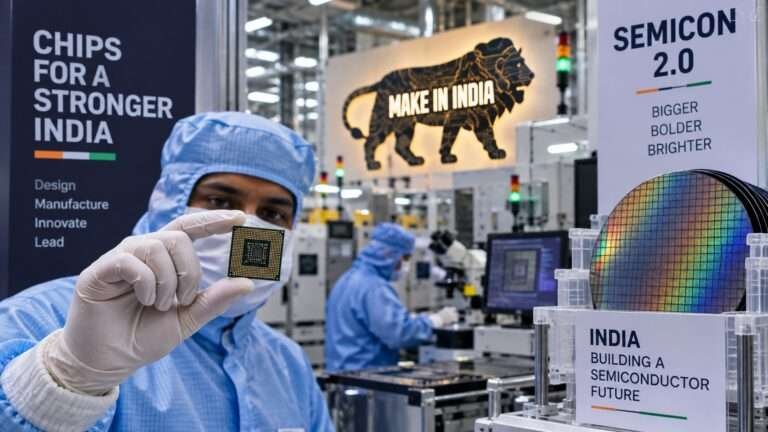
India has historically been a major consumer and designer of technology without being a comparable global manufacturing centre for advanced chips.
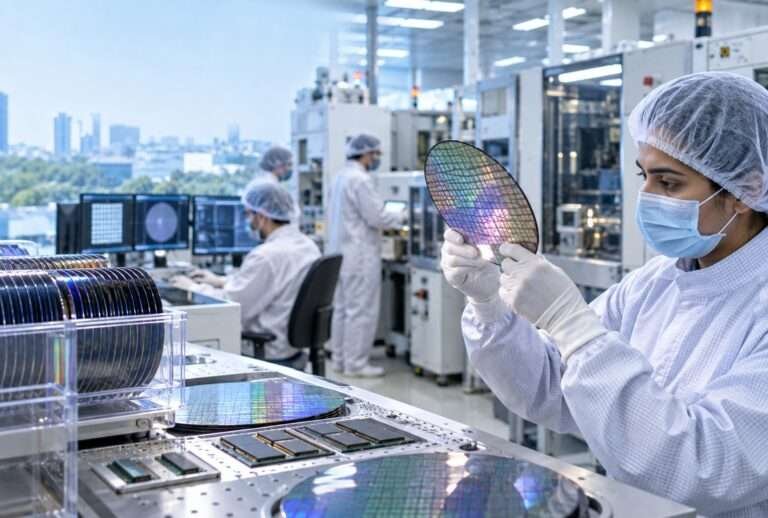
Building semiconductor fabrication and packaging capabilities is consequently more difficult than establishing another software company. It requires enormous capital, specialised equipment, reliable infrastructure, skilled workers and integration into complex international supply chains.
Success will take years, not headlines.
That is why India’s technology transformation should be judged by actual production, patents, research output, successful companies, exports and global market share—not simply by announcements of new initiatives.
The opportunity beyond the metros
Perhaps the most encouraging part of India’s technology story is its potential breadth.
If startups from smaller cities continue to increase, India’s innovation economy could become more geographically diverse.
That matters for Maharashtra, for example, where established industrial centres such as Nagpur and other Vidarbha cities have the potential to participate in technology-driven growth alongside the state’s major metropolitan hubs.
The opportunity is not necessarily to replicate Bengaluru.
It is to develop local strengths in areas such as manufacturing technology, logistics, agriculture technology, clean technology, healthcare, education and digital services.
The DOONITED perspective
India has reached an important technology moment—but declaring victory now would be premature.
The country’s greatest advantage is scale: a huge market, a large technical workforce, widespread digital adoption and an expanding entrepreneurial base.
Its greatest challenge is converting that scale into original, high-value innovation.
The distinction is crucial.
India has demonstrated that it can deploy technology to hundreds of millions of people.
The next test is whether it can consistently create technologies that the rest of the world wants to buy, license, adopt and build upon.
That journey will require more research funding, stronger universities, deeper industry-research collaboration, patient capital and a much greater emphasis on intellectual property.
India’s digital revolution proved that technology can reach extraordinary scale.
The next decade must prove something harder:
that India can move from being one of the world’s biggest technology users and service providers to one of its most important technology creators.
That would be the real measure of a global technology powerhouse.

World Beyond the News
Bees Communicate Where Food Is
Honeybees use movement patterns known as waggle dances to communicate information about food locations.
Street Food Reflects Local History
Many famous street foods developed from migration, trade, local ingredients and the everyday needs of working communities.
A Day on Venus Is Extremely Long
Venus rotates so slowly that one rotation relative to distant stars takes longer than its trip around the Sun.
Human Achievement Continues to Push Limits
Athletes, engineers, scientists and explorers regularly establish new benchmarks in speed, endurance, scale and precision.