
India’s Military Strength in 2026: Beyond the Numbers
How powerful is India’s military?
It sounds like a question with a simple answer: count the soldiers, tanks, aircraft, ships and submarines.
But modern military power is rather less cooperative than a spreadsheet.
A country can have thousands of tanks and still face problems with maintenance. It can possess hundreds of aircraft but have fewer available for immediate operations. It can have a large navy but still need greater numbers of tankers, submarines and long-range surveillance systems.
So when we look at India’s military strength in 2026, the interesting story is not simply how many weapons India possesses.
It is how those numbers combine with geography, technology, manpower, industrial capacity and strategic deterrence.
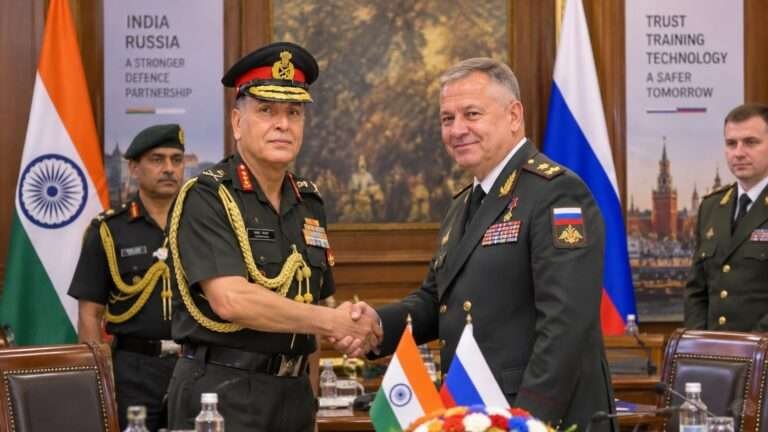
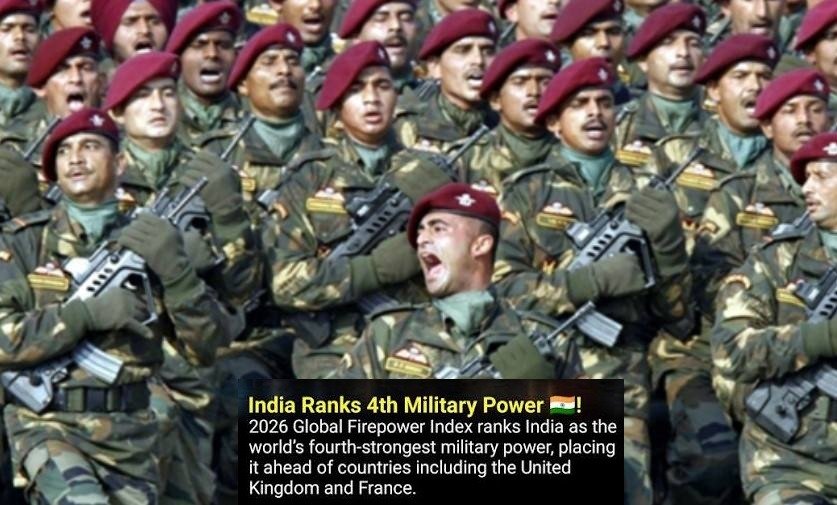
Open-source assessments currently place India among the world’s major military powers. GlobalMilitary’s 2026 assessment ranks India fourth globally and lists about 1.48 million active troops, approximately 1.16 million reserves, 2,256 military aircraft and 353 naval vessels.
MilitaryCompare also places India fourth in its 2026 ranking, although its underlying figures differ somewhat.
The differences are a useful reminder: military statistics are estimates, not cricket scores.
A massive manpower base
India’s greatest conventional military asset remains manpower.
The latest open-source estimates put active military personnel at roughly 1.4–1.5 million, making India’s armed forces one of the largest active military establishments in the world.
The Indian Army remains by far the largest service.
That size reflects India’s geography and security environment.
India has a long Himalayan frontier, a heavily militarised western border, a huge coastline and growing responsibilities across the Indian Ocean.
The country therefore needs forces capable of operating in deserts, mountains, jungles, plains, islands and maritime environments.
That is an unusually demanding military geography.
But manpower alone is no longer enough.
Modern warfare increasingly rewards precision, surveillance, communications, drones, electronic warfare, cyber capability, logistics and integrated command systems.
The soldier remains central.
The equipment around that soldier is changing rapidly.
Thousands of armoured vehicles — but modernization matters
Open-source inventories put India’s main battle tank fleet at roughly 4,200 vehicles, with more than 15,000 ground vehicles in the broader inventory.
The numbers include established platforms as well as equipment at different stages of service life.
And that distinction matters.
A tank sitting in a storage facility is not equivalent to a tank ready for deployment.
India is consequently pursuing modernisation programmes, including the proposed Future Ready Combat Vehicle, intended to eventually replace older generations of main battle tanks with a more networked and survivable platform. The Defence Acquisition Council approved the proposal in 2024 as part of a larger package of capital-acquisition proposals.
The lesson is straightforward:
Military strength is not simply the size of the garage. It is how many vehicles can actually leave the garage when required.
India’s air power: impressive scale, demanding requirements
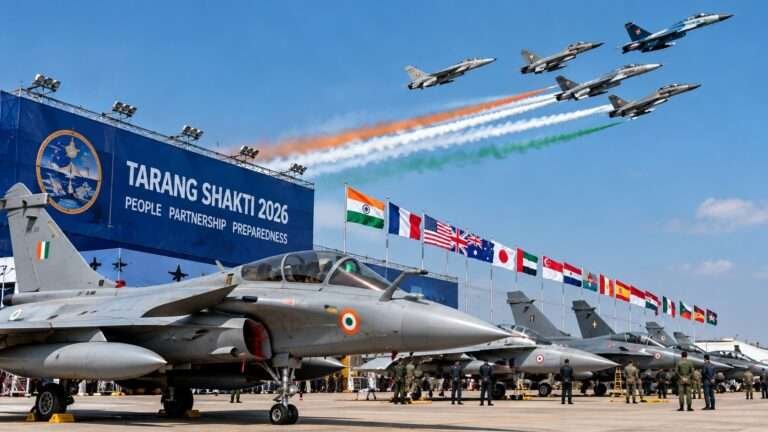
The Indian Air Force has one of the world’s larger military aircraft fleets.
GlobalMilitary’s latest open-source inventory lists 2,256 aircraft, including 588 combat aircraft and 993 helicopters.
MilitaryCompare estimates the overall fleet at more than 2,200 aircraft but gives different category totals.
The fleet includes aircraft such as the Su-30MKI, Rafale and Tejas, along with transport aircraft, helicopters, trainers and specialised platforms.
But India’s air-power challenge is particularly demanding.
It must simultaneously think about two major land frontiers and a vast maritime area.
That makes numbers important — but so are fighter availability, airborne early-warning systems, aerial refuelling, air defence, weapons stocks, pilot training and maintenance.
In aviation, having 500 aircraft on paper does not mean having 500 aircraft ready to fly tomorrow morning.
Aircraft, unfortunately, also require maintenance.
They have not yet learned the Indian administrative trick of running forever without servicing.
Two aircraft carriers change the maritime equation
India’s naval inventory is another important part of its strategic profile.
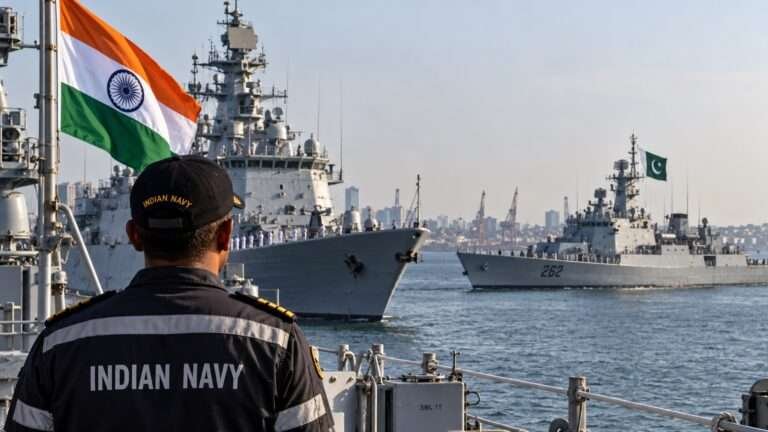
GlobalMilitary lists 353 naval vessels, including two aircraft carriers and 19 submarines.
The two carriers are INS Vikramaditya and INS Vikrant, with Vikrant representing India’s indigenous aircraft-carrier construction capability.
Aircraft carriers are expensive and technically demanding assets.
Their significance is not merely the number of aircraft they carry.
They provide mobile air power at sea, extend India’s ability to operate far from its coastline and contribute to maritime security across the Indian Ocean.
At the same time, India’s maritime challenge extends beyond carriers.
Submarines, destroyers, frigates, corvettes, maritime patrol aircraft, helicopters, surveillance networks and replenishment vessels all form part of the naval system.
A carrier without escorts and logistics would be rather like buying a luxury car and forgetting to build roads.
The nuclear dimension
India’s military strength cannot be assessed solely through conventional forces.
India is a nuclear-armed state with land-, air- and sea-based elements in its strategic deterrent.
Open-source estimates of India’s nuclear arsenal vary. GlobalMilitary currently estimates around 190 warheads, but such numbers are inherently estimates because governments do not publish complete operational inventories.
The important strategic point is not the precise number.
It is the existence of a credible nuclear deterrent and the ability to maintain survivable delivery options.
That changes the strategic calculation for any potential adversary.
Nuclear weapons are not battlefield trophies.
Their principal purpose is deterrence — making the consequences of major escalation unacceptable.
India’s geography is itself a military asset
Perhaps one of India’s most underrated advantages is geography.
India sits at the centre of the Indian Ocean’s northern rim, close to some of the world’s most important maritime trade routes.
Its enormous coastline, island territories and location between the Middle East, Africa and East Asia give the Indian Navy strategic relevance well beyond India’s immediate territorial waters.
On land, the Himalayas create a very different military environment.
The result is a country that cannot build its armed forces around one battlefield.
India has to prepare for mountain warfare, conventional land conflict, maritime competition, air operations and increasingly, cyber and space-related threats.
That creates enormous logistical demands.
The next battlefield may not look like a battlefield
The definition of military power is changing.
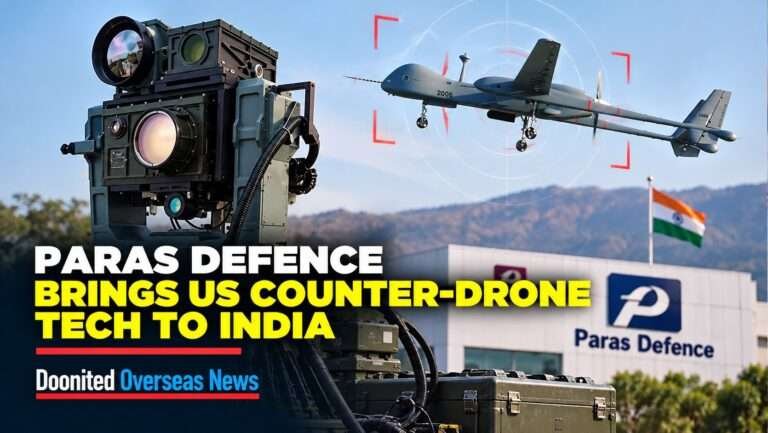
Drones and counter-drone systems, artificial intelligence, satellite surveillance, electronic warfare, cyber operations and precision weapons are becoming increasingly important.
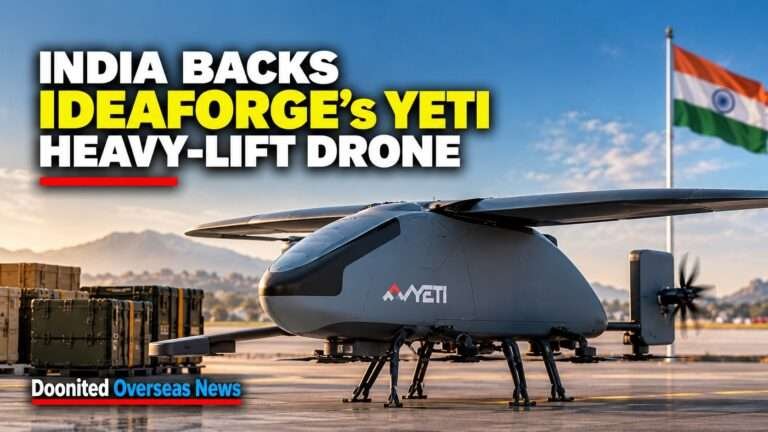
India is therefore trying to expand its indigenous defence-industrial ecosystem.
That effort is visible in programmes involving fighters, missiles, artillery, helicopters, warships, drones and advanced electronics.
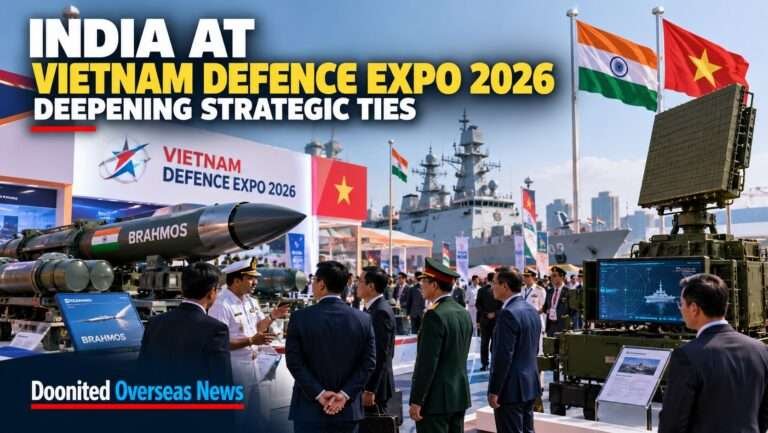
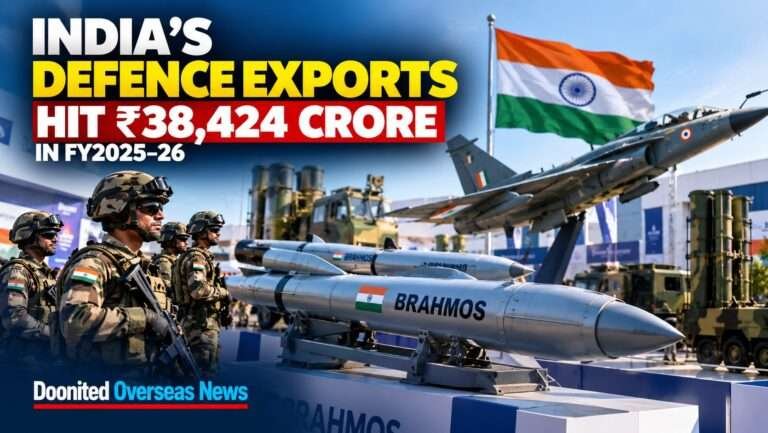
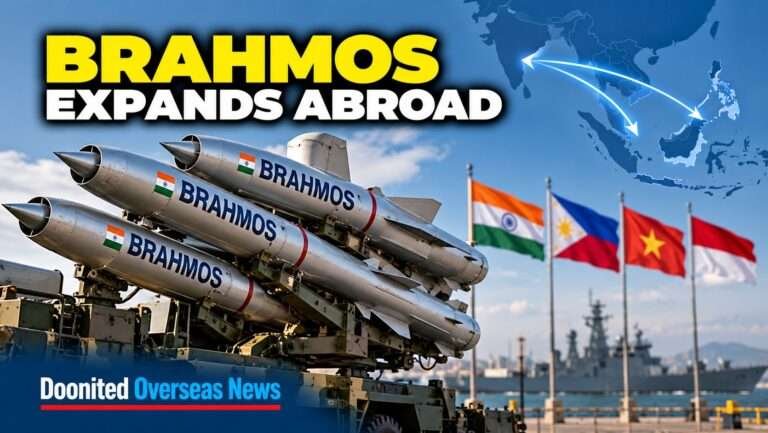
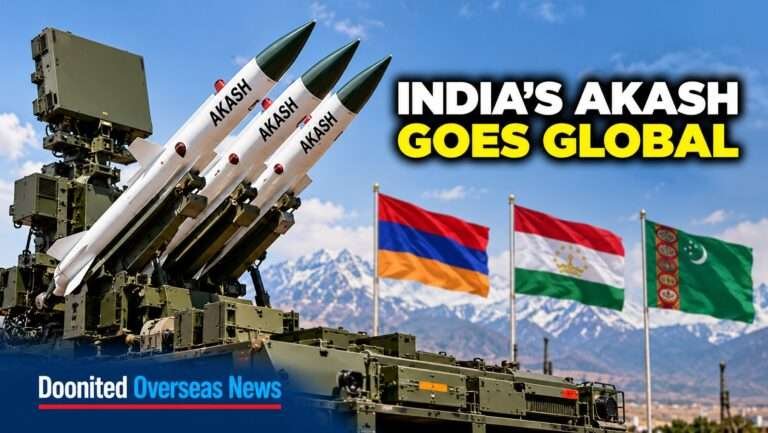
It is also reflected in growing defence production and exports.
The objective is not simply to have more weapons.
It is to have the ability to design, manufacture, repair and upgrade them domestically.
That is a much harder achievement.
The biggest weakness: numbers can create an illusion
This is where the conversation needs some honesty.
India’s military is large.
Its strategic position is significant.
Its defence-industrial base is growing.
But India still faces important capability gaps.
Open-source inventory figures do not tell us how much equipment is operational, how quickly it can be deployed, how much is approaching retirement or how much maintenance and ammunition stocks are available.
The Air Force has long faced the challenge of maintaining sufficient fighter strength while transitioning between generations.
The Navy requires sustained investment in submarines, support vessels and maritime aviation.
The Army must modernise large portions of its equipment while preparing for demanding high-altitude deployment.
And advanced technologies — particularly engines, sensors, semiconductors, electronic warfare and certain aerospace materials — remain difficult areas where indigenous capability is still being developed.
The encouraging part is that India increasingly recognises these problems.
DOONITED Editorial Perspective: The real number is capability
India does not need to prove its military strength by winning an internet argument over whether it has 4,200 tanks or 4,201.
That is not how modern defence works.
The more meaningful question is:
Can India detect a threat early, move forces quickly, maintain them, communicate securely, protect them and sustain operations for as long as necessary?
That is capability.
And capability comes from the combination of people + platforms + technology + industry + logistics + intelligence + training + leadership.
India already possesses considerable strength across these areas.
Its challenge now is to make those components work together more efficiently.
That is why indigenous defence production is strategically important. A country that can build its own aircraft, ships, missiles, drones, electronics and critical components has greater freedom of action than a country dependent on foreign suppliers for every major system.
India’s recent rise in defence production and exports suggests that this transformation is underway.
But the job is nowhere near finished.
The lesson behind the numbers
India’s military strength in 2026 is unquestionably substantial, but raw numbers tell only half the story.
The real measure of power is readiness, technological sophistication, industrial depth and the ability to sustain military operations.
India has the manpower.
It has major land, air and naval assets.
It has nuclear deterrence.
It has a strategically important geographical position.
And increasingly, it is trying to build the industrial base behind all of them.
The next stage will determine whether India merely remains a country with a very large military — or becomes a country with a truly integrated, technologically advanced and increasingly self-reliant military power.
That distinction is far more important than any ranking.

World Beyond the News
Birds Can Navigate Using Earth’s Magnetic Field
Several bird species can sense Earth’s magnetic field, helping them navigate during long-distance migration.
Fermentation Is a Global Food Tradition
People across continents have used fermentation for centuries to preserve food and create distinctive flavours.
Modern Batteries Store Energy Chemically
Rechargeable batteries repeatedly move ions between electrodes, allowing electrical energy to be stored and released.
Why Songs Become Global Hits
Streaming platforms, short-form video, playlists and international collaborations can rapidly carry music across borders.