
How the New System Changes the Odds for Indian Applicants
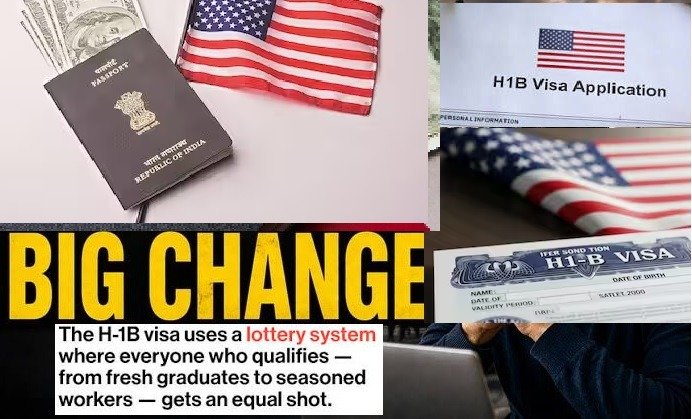
For years, the H-1B visa lottery had one particularly frustrating feature: the computer did not care how much a candidate was being paid.
A highly paid technology specialist and a lower-paid entry-level worker could effectively enter the selection process on equal footing.
That changed for the FY2027 H-1B cap season.
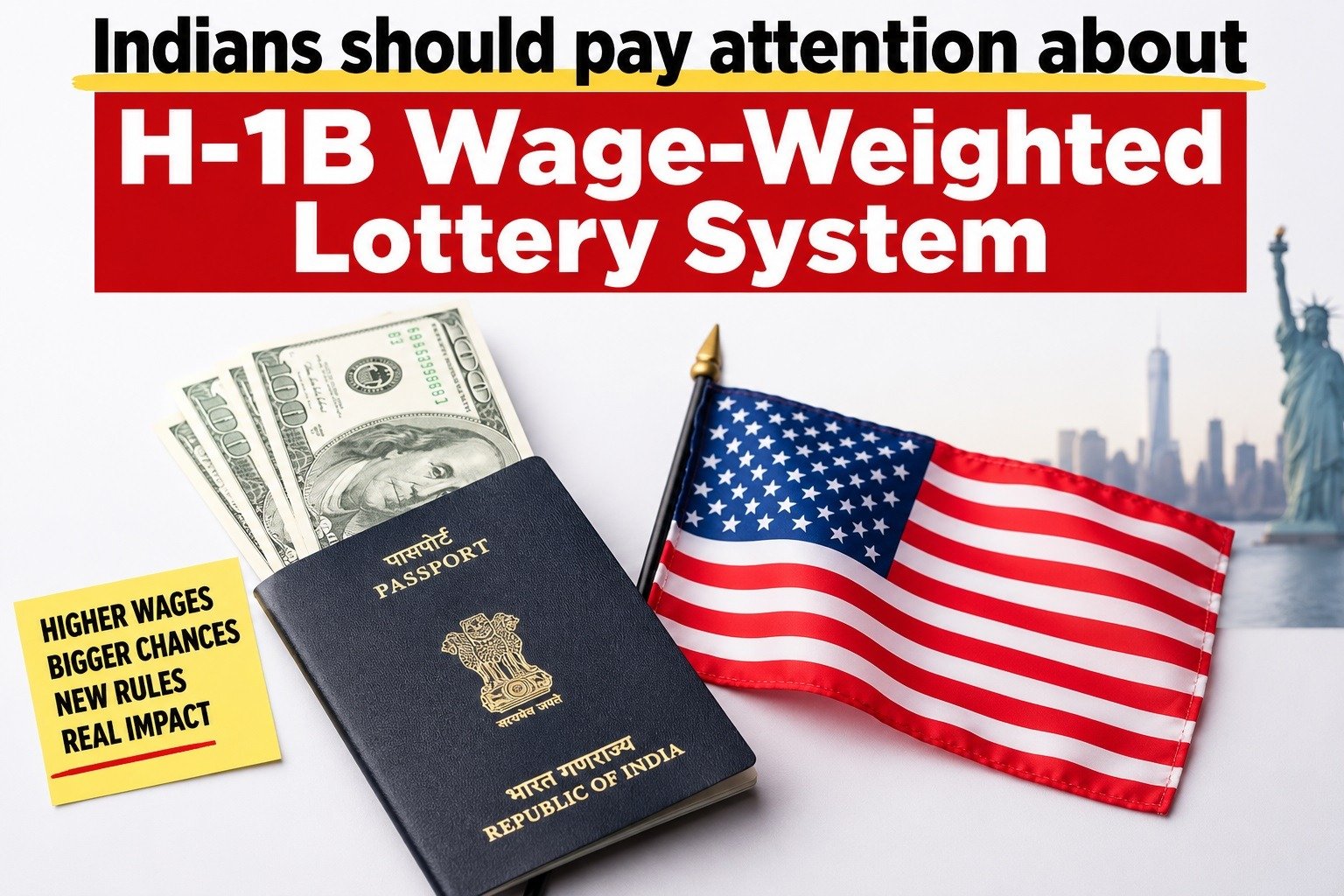
The U.S. Department of Homeland Security has introduced a wage-weighted selection system, under which higher-paid positions receive more entries in the selection pool. The rule became effective on February 27, 2026, and USCIS implemented it for the FY2027 registration season.
For Indian professionals—who make up a very large share of H-1B beneficiaries—the change is particularly important.
But there is a catch: a higher salary improves the mathematical odds; it does not buy a visa.
From one ticket to four
Under the previous beneficiary-centric random selection model, eligible beneficiaries essentially had the same chance of being selected.
The new system keeps the selection process random but introduces different weights according to the Department of Labor’s Occupational Employment and Wage Statistics (OEWS) wage levels for the occupation and intended employment area.
The four levels work like this:
| OEWS wage level | Lottery entries |
|---|---|
| Level I | 1 |
| Level II | 2 |
| Level III | 3 |
| Level IV | 4 |
So a Level IV registration receives four entries in the selection pool, while a Level I registration receives one.
Importantly, this does not mean a Level IV applicant is guaranteed four times the probability of receiving an H-1B visa. The actual process selects unique beneficiaries without simply treating four entries as four separate people.
DHS’s modelling estimated selection probabilities of approximately 15.29% for Level I, 30.58% for Level II, 45.87% for Level III and 61.16% for Level IV under the assumptions used in its analysis. These are estimates—not permanent odds for every year’s lottery.
That distinction is crucial.
What does “wage level” actually mean?
This is where the system becomes considerably less simple than a headline saying “higher salary, higher chance.”
The relevant wage level is determined in relation to the occupation and location of employment using the OEWS framework.
In other words, a salary cannot be judged in isolation.
A particular salary may correspond to one wage level in one location and another level elsewhere because prevailing wages differ geographically and by occupation.
The new registration process requires employers to provide information including the relevant occupation/SOC code, area of intended employment and wage-level information. If the registration is selected, the employer must be able to support the information used in the petition.
This makes accurate paperwork considerably more important.
The days of treating the registration form as a five-minute administrative exercise are looking increasingly distant.
Why DHS made the change
The stated objective of the rule is straightforward.
DHS says the previous system could allow employers to compete for H-1B workers at relatively low wages and that the new weighted approach is intended to favour higher-skilled and higher-paid workers, while still allowing employers to obtain H-1B workers across all four wage levels.
Supporters argue that the change better aligns the limited H-1B allocation with highly skilled positions.
Critics, however, have raised concerns about what happens to entry-level workers, recent graduates and employers that genuinely need specialised workers but cannot immediately offer top-tier compensation.
That tension is important.
A software engineer with ten years of experience and a newly graduated international student are not competing from the same professional starting point.
But the H-1B programme is also not supposed to become a system in which every entry-level international graduate is automatically excluded.
The final rule explicitly maintains access across all wage levels.
Why Indians should pay attention
The Indian connection is unusually strong.
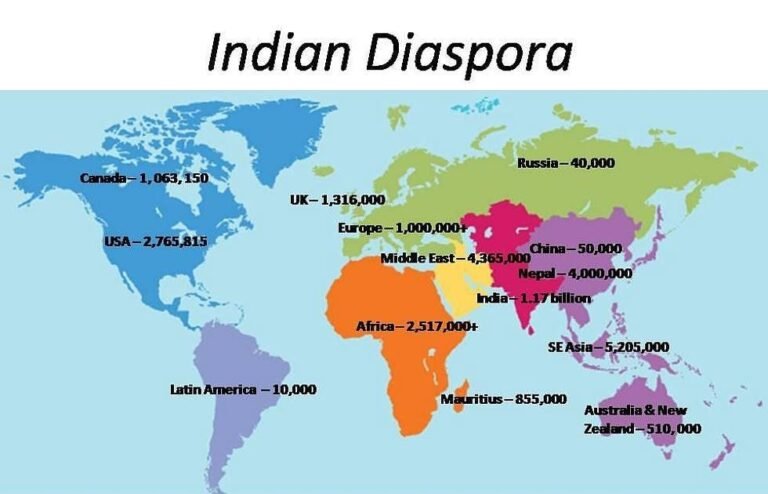
According to USCIS’s FY2024 H-1B characteristics report, beneficiaries born in India accounted for about 71% of approved H-1B petitions in that year.
That means a major change to H-1B selection mechanics is not a niche American immigration story for India.
It is also a story about India’s technology workforce, universities, students, IT companies and the increasingly complicated relationship between Indian talent and the American labour market.
For Indian applicants, the new system effectively increases the importance of where they fit on the professional wage ladder.
A strong salary offer is no longer merely an attractive employment benefit.
For cap-subject H-1B selection, it can also affect the weighting attached to the registration.
Does this mean companies will simply raise salaries?
That is one of the obvious questions.
DHS itself recognised that employers might respond to the new system by increasing offered wages in order to improve selection prospects.
But businesses cannot simply write an enormous salary number on paper and expect the system to applaud.
The wage has to correspond to the position, occupation and location, and the employer must be able to support the registration information when filing the petition.
That introduces a new strategic calculation for employers:
How much does the company value the candidate, and how much additional compensation is justified to compete for an H-1B selection?
For companies hiring hundreds of technology professionals, that can become a significant workforce-planning question.
The new system also rewards preparation
The FY2027 registration period opened March 4 and closed March 19, 2026. USCIS charged $215 per beneficiary registration and said selection notifications would be sent by March 31.
The important lesson is that employers need to have the employment details reasonably settled before registration.
Occupation.
Location.
Offered wage.
Corresponding OEWS level.
Supporting documentation.
The wage-weighted system therefore does something beyond changing the lottery mathematics.
It makes the quality of the underlying registration data more consequential.
And that is good news for legitimate employers and candidates—but potentially bad news for anyone hoping to play games with the numbers.
What about Indian students and entry-level professionals?
This is probably the most sensitive part of the change.
DHS’s own modelling showed the biggest relative disadvantage for Level I positions. Under its estimates, the selection probability fell from an equal random-selection estimate of 29.59% to 15.29% for Level I, while the estimated probability for Level IV rose to 61.16%.
That does not mean every entry-level Indian graduate now has only a 15% chance.
It means DHS’s model projected that outcome under a specific assumed registration distribution.
Real-world results can differ.
For an Indian student graduating from a U.S. university, therefore, the new system makes the transition from education to employment even more sensitive to the employer’s role, location and wage offer.
That could encourage employers to concentrate H-1B sponsorship on more experienced positions.
It could also encourage international students to focus more aggressively on specialised, high-demand skills.
Is the H-1B lottery still a lottery?
Yes—but it is no longer an equal-weight lottery.
That distinction is probably the simplest way to understand the reform.
Think of a raffle in which everyone still enters the same draw, but some participants receive one ticket while others receive two, three or four.
The draw remains random.
The starting position does not.
And the new system is still subject to the statutory H-1B numerical limits: 65,000 regular-cap visas plus 20,000 additional places for qualifying U.S. advanced-degree holders.
The bigger India–America question
There is a larger economic issue underneath this immigration reform.
America wants access to highly skilled global talent while also protecting domestic workers and encouraging higher wages.
India wants its professionals to have international opportunities while simultaneously building an economy capable of creating more high-value jobs at home.
Those objectives do not necessarily have to conflict.
Indian professionals have contributed substantially to American technology, healthcare, research and business.
At the same time, India benefits when the skills, capital, networks and entrepreneurial experience acquired abroad eventually flow back into the Indian economy.
The long-term Indian response therefore cannot simply be:
“How do we get more people through the H-1B lottery?”
A more strategic question is:
“How do we create an India where global talent can build equally ambitious careers?”
That is a much bigger challenge—and potentially a much bigger opportunity.
DOONITED Editorial Perspective
The new H-1B system sends a very clear signal: America is putting greater weight on the economic value of the position being sponsored.
For Indian professionals, that makes specialised skills, experience and compensation increasingly important.
But there is also a lesson for India.
If America’s immigration system increasingly filters global talent according to wage and skill, India should not spend its energy merely arguing about who gets through the American gate.
It should build more doors of its own.
The ideal outcome is not an India where talented young people have no reason to leave.
Nor is it an India that loses every ambitious professional overseas.
It is an India where a programmer, engineer, researcher, doctor or entrepreneur can choose between building a global career from India and building one abroad.
The H-1B lottery may have changed from one ticket to four.
India’s opportunity is to make sure its own economy offers something more valuable than a lottery ticket:
a genuinely competitive career.
Reader takeaway: The FY2027 H-1B system is still a random selection process, but registrations are now weighted according to four OEWS wage levels. Higher wage levels receive more entries, while lower levels remain eligible. The published percentages are DHS estimates, not guaranteed individual odds. For Indian professionals, the change increases the importance of specialised skills, accurate job classification, location and competitive compensation.

World Beyond the News
Birds Can Navigate Using Earth’s Magnetic Field
Several bird species can sense Earth’s magnetic field, helping them navigate during long-distance migration.
Fermentation Is a Global Food Tradition
People across continents have used fermentation for centuries to preserve food and create distinctive flavours.
Modern Batteries Store Energy Chemically
Rechargeable batteries repeatedly move ions between electrodes, allowing electrical energy to be stored and released.
Why Songs Become Global Hits
Streaming platforms, short-form video, playlists and international collaborations can rapidly carry music across borders.