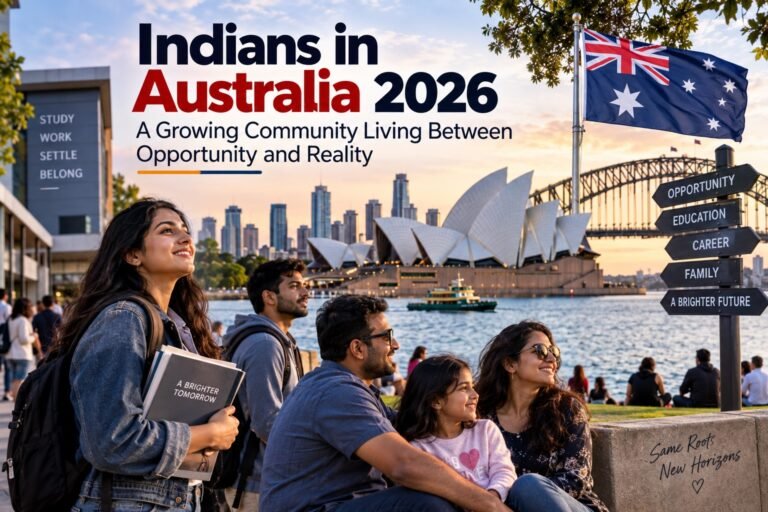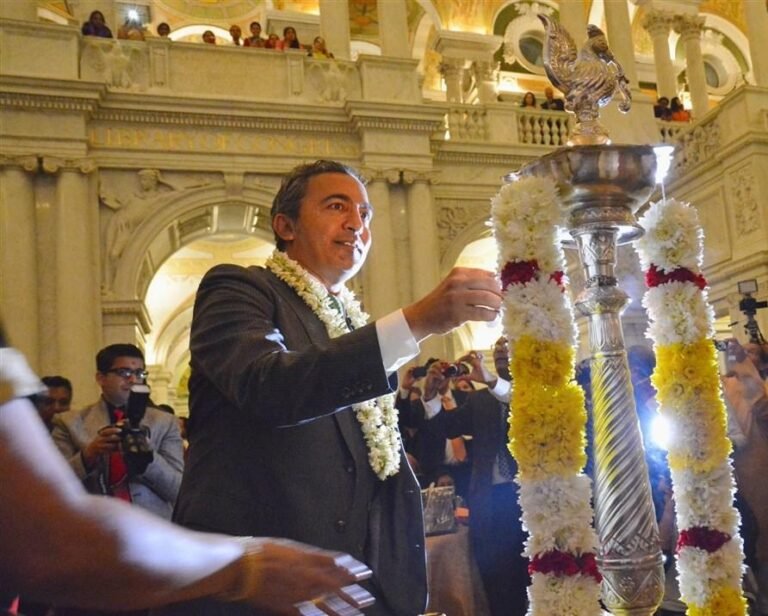

Indian Diaspora Global Influence: How Indians Abroad Are Becoming a Strategic Asset for India
For most of modern history, the Indian diaspora was discussed in fairly simple terms.
People left India.
They built careers abroad.
They sent money home.
Families prospered.
India benefited from remittances.
That story is still true—but it is no longer the whole story.
In 2026, India’s global diaspora has become something much more complicated and potentially much more valuable.
Indian-origin people are now present in governments, parliaments, universities, technology companies, hospitals, financial institutions and global businesses.
They are not merely living abroad.
They are participating in the institutions that shape the countries in which they live.
And that gives India an unusual form of global influence.
From diaspora to global network
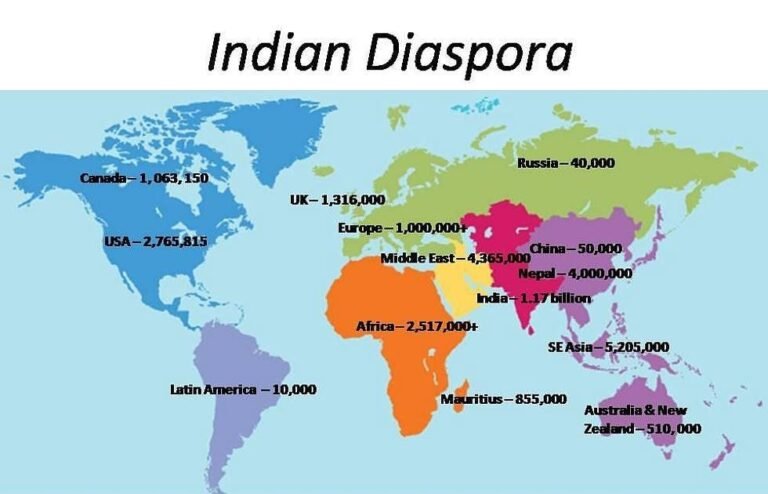
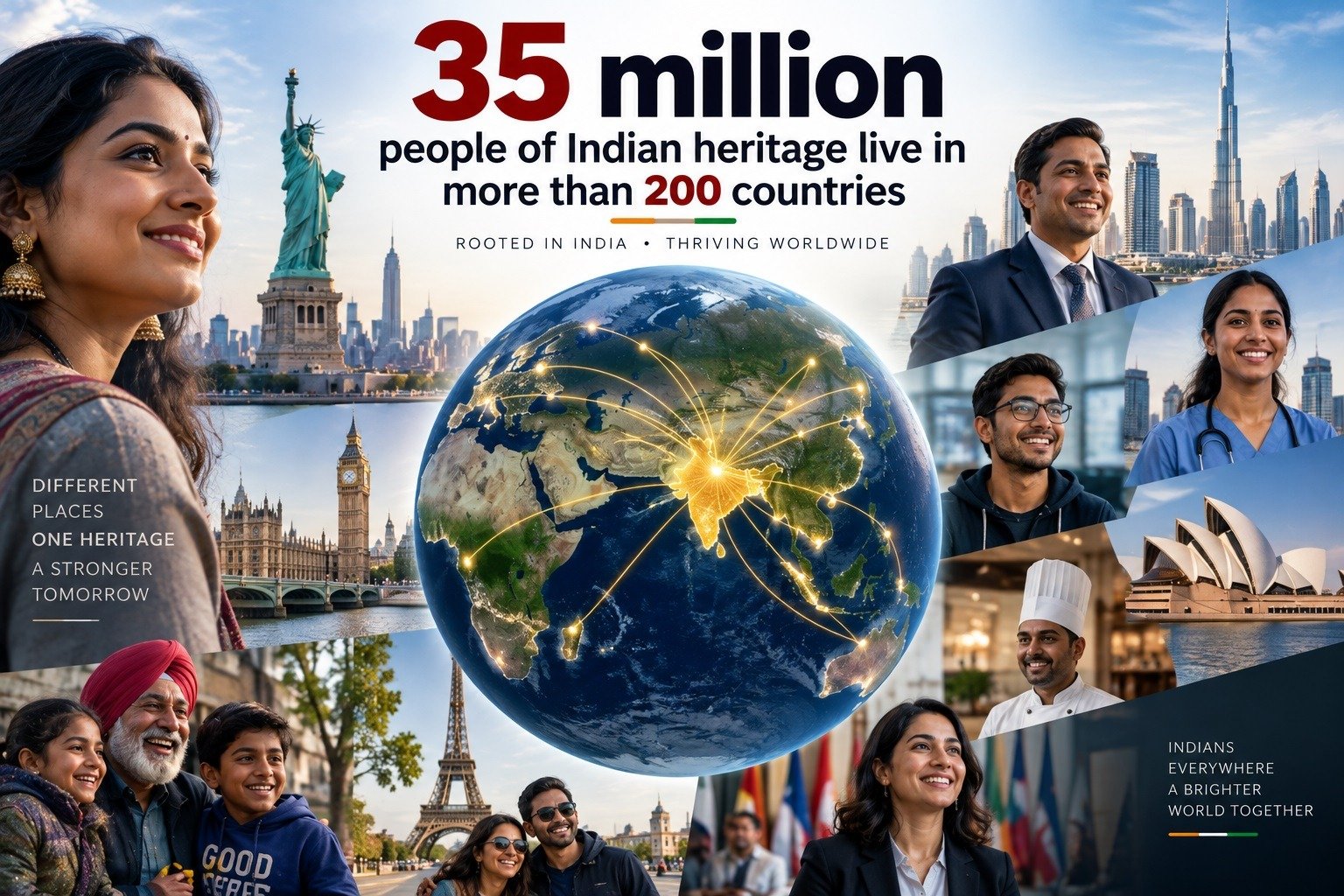
Indiaspora’s 2026 report estimates that more than 35 million people of Indian heritage live in more than 200 countries, with estimated annual income of around $730 billion. It argues that the diaspora’s contribution is moving beyond traditional remittances toward capital, capability and credibility.
That last word—credibility—is particularly interesting.
Money can be transferred.
Skills can be hired.
But relationships and trust take years to develop.
An Indian-origin scientist working in a major research institution, an entrepreneur running a multinational company or a parliamentarian representing constituents in another country can create connections that no embassy can manufacture overnight.
This is the softer side of international influence.
The political footprint is growing
Vision IAS reports that more than 260 people of Indian origin are elected representatives in governments around the world, including people who have reached the highest political offices in some countries.
Indiaspora’s broader Government Leaders List counted more than 300 Indian-diaspora leaders across 20 countries, but its definition includes elected officials as well as appointed officials, civil servants and other senior public leaders.
The difference between these figures is important.
It demonstrates why journalists should not simply put every diaspora leadership statistic into one giant number and call it “political influence.”
But the underlying trend is unmistakable.
Indian-origin people are increasingly participating in public life outside India.
The Gulf is a different kind of strategic asset
The Gulf offers perhaps the clearest example of the diaspora’s strategic importance.
Around 10 million Indians live and work across the Gulf region, according to current reporting.
The UAE, Saudi Arabia, Qatar, Kuwait, Oman and Bahrain are critical to India’s energy security, trade, investment and connectivity.
The Indian community therefore creates a remarkable human connection between India and the Gulf.
But it would be a mistake to describe these workers simply as India’s “influence” in the Gulf.
They are also residents, employees, entrepreneurs and members of the societies in which they live.
Their welfare depends on the laws and policies of their host countries.
That makes India’s diplomacy toward the Gulf partly a matter of protecting citizens and partly a matter of maintaining mutually beneficial relationships.
The distinction is important.
Diaspora is a bridge—not a remote-control device.
Why the Gulf relationship matters so much
India imports a substantial share of its energy needs.
The Gulf is also an important destination for Indian exports and a source of investment.
Remittances from the region support millions of Indian families.
And Indian businesses increasingly use Gulf markets as platforms for international expansion.
This creates a dense web of economic interdependence.
If a diplomatic relationship between India and a Gulf country becomes stronger, the benefits can extend across energy, trade, investment and the diaspora.
The people-to-people relationship is therefore not an emotional footnote.
It is part of the economic architecture.
Indian Americans show how diaspora influence can become political influence
The United States offers another model.
There are more than 5.2 million people of Indian origin in America, according to Carnegie’s 2026 Indian American Attitudes Survey.
Indian Americans are highly visible in technology, medicine, academia and business.
They are also increasingly relevant politically.
The Carnegie survey shows that Indian Americans remain politically diverse and that their political preferences are changing. In 2026, 46% identified as Democrats, 19% as Republicans and 29% as independents, according to the survey.
That is an important reminder.
The Indian American community is not one political bloc.
There is no single “Indian vote.”
There are Democrats, Republicans, independents, conservatives, liberals and people whose biggest concern is simply the price of groceries.
Diaspora influence becomes more credible when we recognise that diversity rather than pretending everyone speaks with one voice.
Soft power is not political control
This distinction deserves special attention.
When an Indian-origin politician becomes influential in another country, India does not acquire a new member of Parliament.
That politician’s primary responsibility is to the electorate who elected them.
Likewise, an Indian-origin business leader is not automatically an unofficial representative of New Delhi.
This is why diaspora influence should be understood as soft power and network power, rather than state power.
The advantage for India is subtler.
People with familiarity with India may understand its society, markets and institutions better.
They may create commercial relationships.
They may promote academic collaboration.
They may introduce investors.
They may help explain India to audiences who know the country only through headlines.
That can be enormously useful.
Technology has created another layer of influence
The Indian diaspora’s influence is especially visible in technology.
Indian-origin professionals have occupied senior positions across Silicon Valley and other global technology ecosystems.
The result is not simply prestige.
Technology networks create practical connections.
A founder in Bengaluru may know an investor in California.
A researcher in Hyderabad may collaborate with a university in Boston.
A startup in Pune may find a customer through a professional network in London.
A pharmaceutical company in India may connect with researchers abroad.
This is network capital.
And unlike a conventional foreign-policy agreement, it does not require every relationship to pass through a government office.
The danger of exaggerating diaspora power
There is, however, a temptation to turn every successful Indian abroad into evidence that India is becoming a superpower.
That is bad analysis.
Diaspora communities have their own interests.
They can disagree with India’s government.
They can disagree among themselves.
They can face discrimination or political backlash in their host countries.
And their priorities may be entirely domestic.
The Carnegie 2026 survey, for example, found concerns among Indian Americans about discrimination and changing U.S. immigration policy.
A mature diaspora strategy therefore has to respect the autonomy of Indian-origin communities.
India can build relationships with them.
It cannot—and should not—assume ownership of them.
What India should actually do
If India wants to turn diaspora strength into a strategic advantage, the most effective approach may be surprisingly practical.
Make it easier for overseas Indians to:
- invest in India;
- establish businesses;
- collaborate with Indian universities;
- mentor startups;
- transfer technology;
- support research;
- participate in philanthropy;
- connect Indian companies to global markets.
In other words:
build bridges, not slogans.
The diaspora already has the networks.
India’s job is to make those networks easier to connect with the country’s development needs.
The 2047 dimension
This becomes particularly important for India’s Viksit Bharat @2047 ambition.
A developed India will require more than domestic investment.
It will require global capital, international research, technology partnerships, export markets and diplomatic relationships.
A diaspora of more than 35 million people already lives inside many of those ecosystems.
That is an extraordinary strategic resource.
But it only becomes valuable when relationships are mutually beneficial.
India should not ask:
“How can Indians abroad serve India?”
A better question is:
“How can India and Indians abroad create value for each other and for the countries where they live?”
That produces a much more sustainable relationship.
DOONITED Editorial Perspective
India’s diaspora may ultimately prove to be one of the country’s most unusual global assets.
It is not an army.
It is not a trade agreement.
It is not a diplomatic alliance.
It is a human network.
Its members sit in boardrooms, laboratories, hospitals, universities, parliaments and startups across the world.
That gives India something many countries would struggle to build deliberately: millions of people with Indian connections embedded in global institutions.
But the smartest Indian policy is not to treat these people as extensions of the Indian state.
It is to respect their independence while making the India connection easier, more useful and more rewarding.
The diaspora’s greatest power may therefore not be that it can speak for India.
It is that it can connect India with the world without requiring the world to become Indian first.
That is genuine soft power.
And in an increasingly connected world, a network of 35 million people may sometimes accomplish what thousands of diplomatic cables cannot.
India’s global influence may not travel only through embassies. Increasingly, it travels through people.

World Beyond the News
Birds Can Navigate Using Earth’s Magnetic Field
Several bird species can sense Earth’s magnetic field, helping them navigate during long-distance migration.
Fermentation Is a Global Food Tradition
People across continents have used fermentation for centuries to preserve food and create distinctive flavours.
Modern Batteries Store Energy Chemically
Rechargeable batteries repeatedly move ions between electrodes, allowing electrical energy to be stored and released.
Why Songs Become Global Hits
Streaming platforms, short-form video, playlists and international collaborations can rapidly carry music across borders.