

India’s ₹2.12 Lakh Crore Defence Push: Can Domestic Industry Deliver?
India’s Defence Acquisition Council has granted in-principle approval for capital acquisition proposals worth approximately ₹2.12 lakh crore, covering military mobility, artillery, helicopters, air defence, drones and naval systems. With around 82% of the estimated value earmarked for domestic industry, the next challenge is turning approvals into equipment, manufacturing capacity and export opportunities.
A Major Approval, Not Yet a Contract
India has taken another step towards modernising its armed forces, with the Defence Acquisition Council (DAC), chaired by Defence Minister Rajnath Singh, granting Acceptance of Necessity (AoN) on 26 October 2026 for acquisition proposals estimated at ₹2.12 lakh crore.
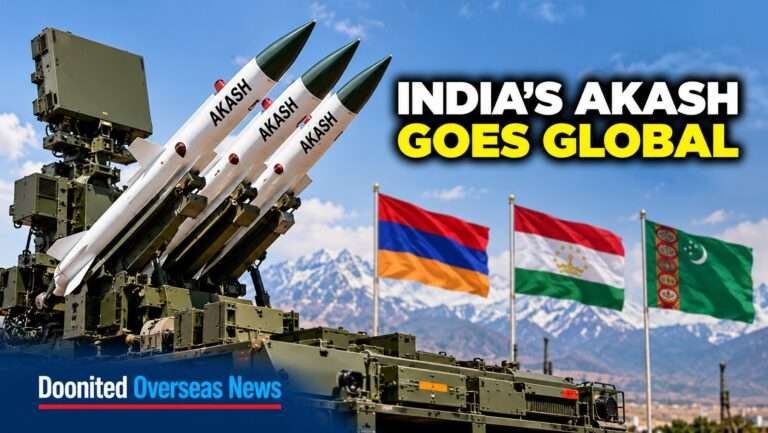
The Ministry of Defence announcement covers equipment for the Army, Navy and Air Force. It includes high-mobility military vehicles, self-propelled artillery, helicopters, short-range air-defence systems, surveillance drones, counter-drone capabilities, naval combat platforms and weather-surveillance radars.
The scale is significant, but the distinction between approval and delivery is essential. AoN is an in-principle administrative approval, not a signed procurement contract or a guarantee that equipment will arrive immediately. The proposals must progress through the applicable procurement, evaluation, financial approval and contracting stages.
For manufacturers, the announcement signals potential demand. For the armed forces, it begins another stage in the process of translating operational requirements into acquired capability.
What the Approved Systems Mean
The proposed acquisitions address several operational priorities.
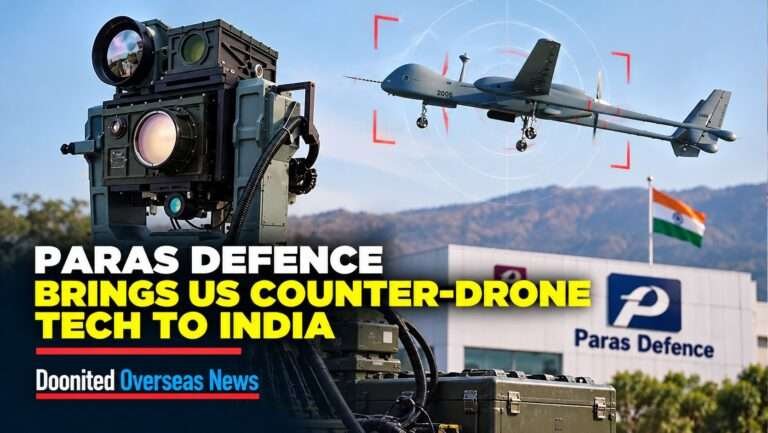
For the Army, high-mobility vehicles are intended to strengthen logistics and movement in difficult terrain, while self-propelled tracked gun systems would combine artillery firepower with the mobility required by mechanised formations. Surveillance unmanned aerial vehicles (UAVs), counter-drone systems and long-range drones reflect the growing importance of unmanned platforms in reconnaissance and modern warfare.
The Navy’s proposals include active offboard decoy systems designed to help protect ships against incoming missile threats, alongside indigenously designed and constructed naval combat platforms.
For the Air Force, the package includes light multi-role or special-utility helicopters, air-defence systems, weapons and mobile X-band Doppler weather radars. The latter are intended to improve localised weather monitoring in forward areas, where conditions can affect aviation and military operations.
Together, these requirements demonstrate that modernisation is not limited to acquiring headline-grabbing platforms. It also depends on mobility, surveillance, electronic protection, reliable logistics and the supporting systems needed to operate effectively.
The Procurement Journey Still Ahead
The next stages will determine whether the proposed acquisitions translate into operational capability.
Service requirements and technical specifications are established through the procurement process, with the Acceptance of Necessity generally preceding the formal Request for Proposal (RFP). The services and acquisition authorities must then proceed under the applicable provisions of India’s Defence Acquisition Procedure.
Eligible vendors may submit bids, which are assessed for technical compliance. Depending on the procurement, this can include equipment evaluation and field trials. Commercial offers, contract conditions, support arrangements and pricing are then examined, with the Contract Negotiation Committee (CNC) playing a role in negotiations.
The competent financial authority must approve the procurement before the contract is awarded. Cabinet Committee on Security clearance may also be required for cases falling within its approval remit; it should not be assumed that every AoN automatically proceeds through an identical approval sequence.
Only after the necessary approvals and contract signing can the agreed production and delivery schedule be implemented.
This is where execution risk enters the picture. Technical requirements can evolve, suppliers may face production constraints, and specialised components may depend on complex supply chains. An approval measured in lakh crores therefore does not translate directly into immediate industrial output or equipment in service.
The Domestic Manufacturing Test
The government has indicated that approximately 82% of the package’s estimated value is earmarked for Indian industry. That makes the announcement relevant not only to established defence public-sector enterprises but also to private manufacturers, engineering firms, component suppliers and technology companies.
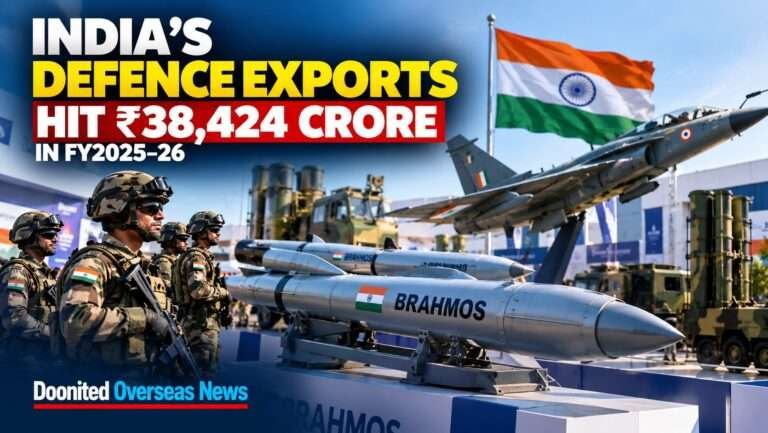
India’s existing industrial base offers a foundation for this expansion. According to the Ministry of Defence, domestic defence production reached a record ₹1.78 lakh crore in financial year 2025–26, while defence exports rose to ₹38,424 crore in the same period.
These figures demonstrate the sector’s expanding scale, but they do not establish that every newly approved system can be produced domestically at the required quality, volume and cost. The challenge is to deepen capability in specialised electronics, sensors, propulsion, software, materials and other critical components.
Domestic assembly and indigenous technology development are not necessarily the same thing. A system manufactured in India may still rely on imported subsystems or intellectual property. Measuring genuine self-reliance therefore requires attention to indigenous design, local value addition, technology ownership and the availability of replacement components over a platform’s operational life.
Why the International Dimension Matters
The procurement package also has implications for India’s position in global defence manufacturing.
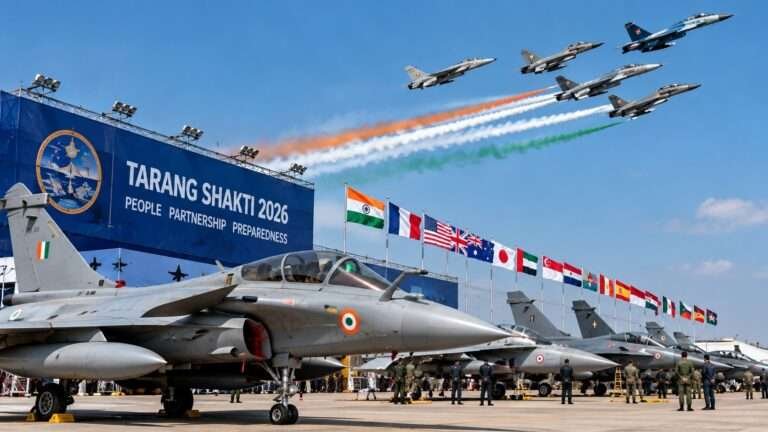
A stronger domestic supplier base could help Indian companies develop the scale, quality assurance and production discipline needed to compete in overseas markets. India’s defence exports already reach multiple countries, but expanding exports sustainably requires more than competitive prices: buyers also consider reliability, maintenance, spare-parts availability, training and long-term support.
For overseas Indians working in aerospace, engineering, advanced manufacturing, software and supply-chain management, the sector’s growth may create professional and commercial connections between India and international technology markets. Indian-origin specialists and entrepreneurs abroad may be positioned to contribute through research collaboration, supplier partnerships, investment or knowledge exchange, subject to applicable security and export-control requirements.
However, the AoN announcement does not itself establish particular export contracts, job numbers or opportunities for overseas investors. Those outcomes will depend on procurement decisions, industrial execution and the rules governing participation in sensitive defence technologies.
The Measure of Success Is Delivery
India’s defence modernisation increasingly combines two goals: strengthening military readiness and reducing dependence on external suppliers. The two are connected, but neither can be achieved by approval announcements alone.
The ₹2.12 lakh crore package will be judged by whether procurement moves forward on time, equipment meets operational requirements, suppliers deliver reliably and domestic industry develops deeper technological capabilities.
For India’s global industrial ambitions, the opportunity is substantial. The test now is execution: converting administrative approval into dependable military equipment, sustainable manufacturing capacity and, where systems prove competitive, stronger participation in international defence supply chains.

World Beyond the News
Bees Communicate Where Food Is
Honeybees use movement patterns known as waggle dances to communicate information about food locations.
Street Food Reflects Local History
Many famous street foods developed from migration, trade, local ingredients and the everyday needs of working communities.
A Day on Venus Is Extremely Long
Venus rotates so slowly that one rotation relative to distant stars takes longer than its trip around the Sun.
Human Achievement Continues to Push Limits
Athletes, engineers, scientists and explorers regularly establish new benchmarks in speed, endurance, scale and precision.