
Ashoka Rajendra: Indian-Origin Founder Takes Orchestra Bio Into OpenAI’s Drug Development Push
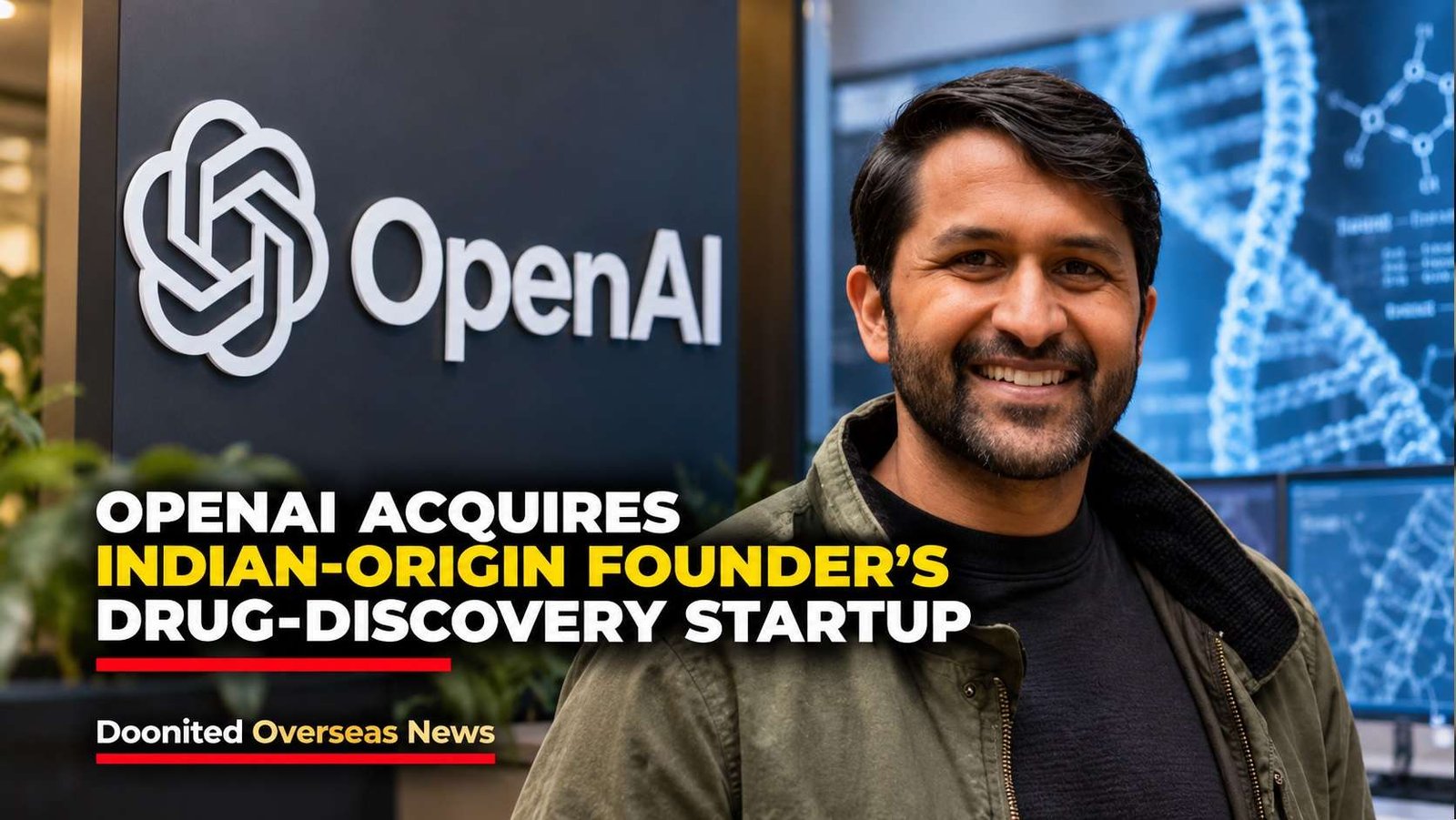
OpenAI’s acquisition of Orchestra Bio brings Indian-origin entrepreneur Ashoka Rajendra and his team into the company’s life-sciences business. The deal highlights a growing AI industry ambition: not just helping scientists make discoveries, but coordinating the complex process of turning research into potential medicines.
An acquisition at the intersection of AI and medicine
Artificial intelligence is increasingly being used to analyse biological data, investigate disease mechanisms and support drug discovery. But identifying a promising scientific idea is only one stage in developing a medicine. Researchers must also coordinate experiments, manufacturing, regulatory requirements, clinical studies and decisions that can affect an entire development programme.
OpenAI’s acquisition of Orchestra Bio targets this less visible but consequential part of pharmaceutical research.
Announced on 20 October 2026, the deal brings the San Francisco-based startup’s team and technology into OpenAI’s life-sciences initiative, where they will work alongside Rosalind, the company’s suite of AI models and tools for scientific research.
Orchestra Bio was founded in 2022 by Ashoka Rajendra, an Indian-origin entrepreneur who led the company as its chief executive. The startup developed software that helps biotechnology and pharmaceutical teams coordinate drug-development programmes using AI agents.
The acquisition’s financial terms have not been disclosed. OpenAI has also not publicly detailed the full integration timetable or confirmed whether Orchestra Bio’s previous product will continue to be available independently.
For the Indian diaspora, Rajendra’s journey is a story of entrepreneurship in a rapidly evolving global industry. For the biotechnology sector, the transaction signals an effort to connect AI-assisted scientific reasoning with the operational systems needed to advance a potential medicine.
What Orchestra Bio actually does
Drug development involves a network of interdependent activities. A manufacturing delay can postpone a clinical trial; a change in experimental results may require additional research; and a missed milestone can affect budgets, staffing and subsequent decisions.
Orchestra Bio built its platform to help teams manage these dependencies.
According to OpenAI, the software enables scientists and programme leaders to delegate monitoring and tracking tasks to AI agents. Those agents can identify issues, gather relevant information, assess which activities may be affected and compare possible responses.
Consider a hypothetical manufacturing problem: a batch fails to meet the required specifications before a clinical trial is due to begin. The delay may affect trial scheduling, the availability of materials, budgets and other planned activities. A coordination platform can help identify these knock-on effects and present options for human decision-makers.
The software’s purpose is not to replace the scientific judgement of researchers or the responsibilities of pharmaceutical companies. Instead, it aims to reduce the administrative burden involved in managing complex programmes.
This distinction matters because the pharmaceutical industry’s challenges are not exclusively scientific. Even when a potential treatment appears promising, development can be delayed by operational bottlenecks, inconclusive results, manufacturing difficulties or unsuccessful clinical trials.
AI systems that help teams manage these processes could be valuable if they provide accurate information, identify problems early and integrate reliably with existing systems.
However, their practical impact must be measured through real-world performance. The acquisition announcement does not establish how much time or money Orchestra Bio’s technology has saved across its customers’ programmes.
Why OpenAI wants the technology
OpenAI introduced GPT-Rosalind in April 2026 as a specialised model for life-sciences research. The system is designed to help researchers work across biology, chemistry, genomics, protein science and drug discovery.
Its research tools support activities such as reviewing scientific literature, developing hypotheses, analysing evidence and planning experiments. Rosalind Workbench connects model capabilities with scientific tools and data to support more complex workflows.
Orchestra Bio adds a complementary capability: coordinating the work that follows or accompanies scientific research.
The distinction is between helping a scientist reason about a biological question and helping a development team organise the many tasks required to move a potential treatment forward.
By bringing the two together, OpenAI aims to build AI agents that connect scientific findings with studies, decisions, timelines and subsequent actions. Its ambition is to support more of the development process rather than focus solely on individual research tasks.
OpenAI has cited an average period of roughly 10 to 15 years from target discovery to regulatory approval for a new medicine in the United States. The length and cost of development vary considerably, depending on the disease, the type of treatment, the clinical evidence required and whether a candidate succeeds.
The commercial opportunity is therefore substantial, but so are the technical and regulatory challenges. Drug-development systems handle complex information, and errors in schedules, assumptions or records can have consequences for expensive research programmes.
The founder behind the deal
Rajendra founded Orchestra Bio in 2022 and developed the business around a practical problem in biotechnology: how to coordinate drug programmes involving numerous teams, systems and decisions.
Before founding the company, he worked at Benchling, a life-sciences software company, in product-management roles associated with development and manufacturing software.
That experience is relevant to Orchestra Bio’s approach. Scientific organisations do not operate through research findings alone. They also depend on systems that organise information, manage processes and help specialists collaborate.
Rajendra’s move into OpenAI’s Life Sciences team places him within a larger effort to apply AI to scientific research and its supporting operations.
For Indian-origin professionals, his career illustrates one route into the global technology economy: building specialised software for an industry with demanding technical requirements rather than competing solely in general-purpose consumer applications.
It also shows how biotechnology is becoming an important arena for AI entrepreneurship. The opportunities extend beyond drug design to laboratory workflows, research data, manufacturing, clinical operations and the management of scientific programmes.
The wider race to bring AI into biotechnology
OpenAI is not alone in pursuing this market. Technology companies and AI developers are competing to provide systems that can assist researchers with complex scientific work.
The appeal is clear: pharmaceutical development involves enormous quantities of information, specialised expertise and decisions made across long periods. AI could help researchers navigate evidence more efficiently, identify relationships in data and coordinate work that would otherwise require substantial manual effort.
But scientific usefulness is different from commercial enthusiasm. A system may perform well on selected research tasks without demonstrating that it can reliably improve the probability that a candidate medicine will succeed.
There are also important questions about data quality, confidentiality, system reliability and accountability. Pharmaceutical research can involve commercially sensitive information, unpublished findings and patient-related data. Organisations adopting AI must understand how their information is handled and how decisions made with AI assistance are reviewed.
Human oversight remains essential, particularly when decisions affect clinical studies, manufacturing quality or patient safety.
What the acquisition means—and what remains unproven
The Orchestra Bio deal is best understood as a strategic expansion

World Beyond the News
Dolphins Use Individual Signature Whistles
Bottlenose dolphins develop distinctive whistles that function somewhat like individual acoustic identifiers.
The Pacific Is Earth’s Largest Ocean
The Pacific Ocean covers more area than any other ocean basin and stretches between Asia, Australia and the Americas.
Artificial Intelligence Learns Statistical Patterns
Modern machine-learning systems identify patterns in large datasets and use those patterns to generate predictions or outputs.
Why Some Stories Spread So Quickly
Emotion, novelty, visual appeal and easy sharing can make a story travel rapidly across social platforms.