
Ganesh Chaturthi 2026: How Canada’s Indian Community Is Celebrating Bappa Across Generations
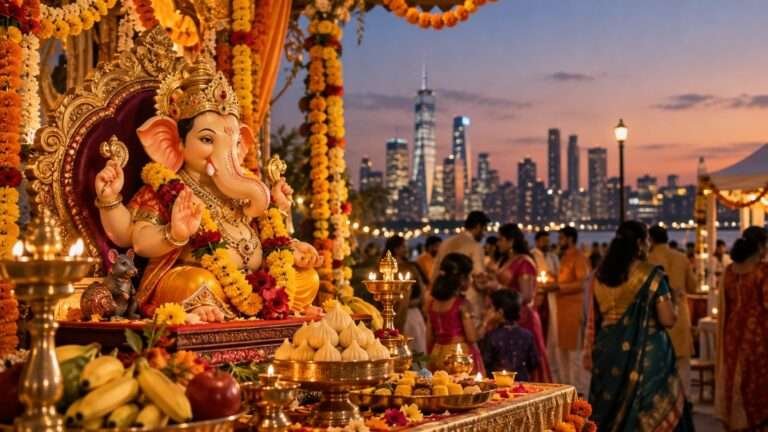
Ganesh Chaturthi 2026 begins today, September 14, bringing one of India’s most beloved festivals into homes, temples and community spaces across Canada. For the Indian diaspora, the celebration is more than a religious observance—it is also a remarkably effective way of keeping language, food, music, family traditions and community connections alive thousands of kilometres from India.
The festival is traditionally associated with the installation and worship of Lord Ganesha, followed by immersion of the idol. While September 25, Anant Chaturdashi, is the principal 10-day culmination in 2026, there is no single compulsory immersion date for every family or temple. Some devotees perform Visarjan after 1.5, 3, 5 or 7 days, depending on family tradition and local arrangements. Toronto’s Sri Maha Ganapathy Temple, for example, lists several possible immersion dates through September 25.
A festival that travelled well
Ganesh Chaturthi has travelled remarkably well across borders.
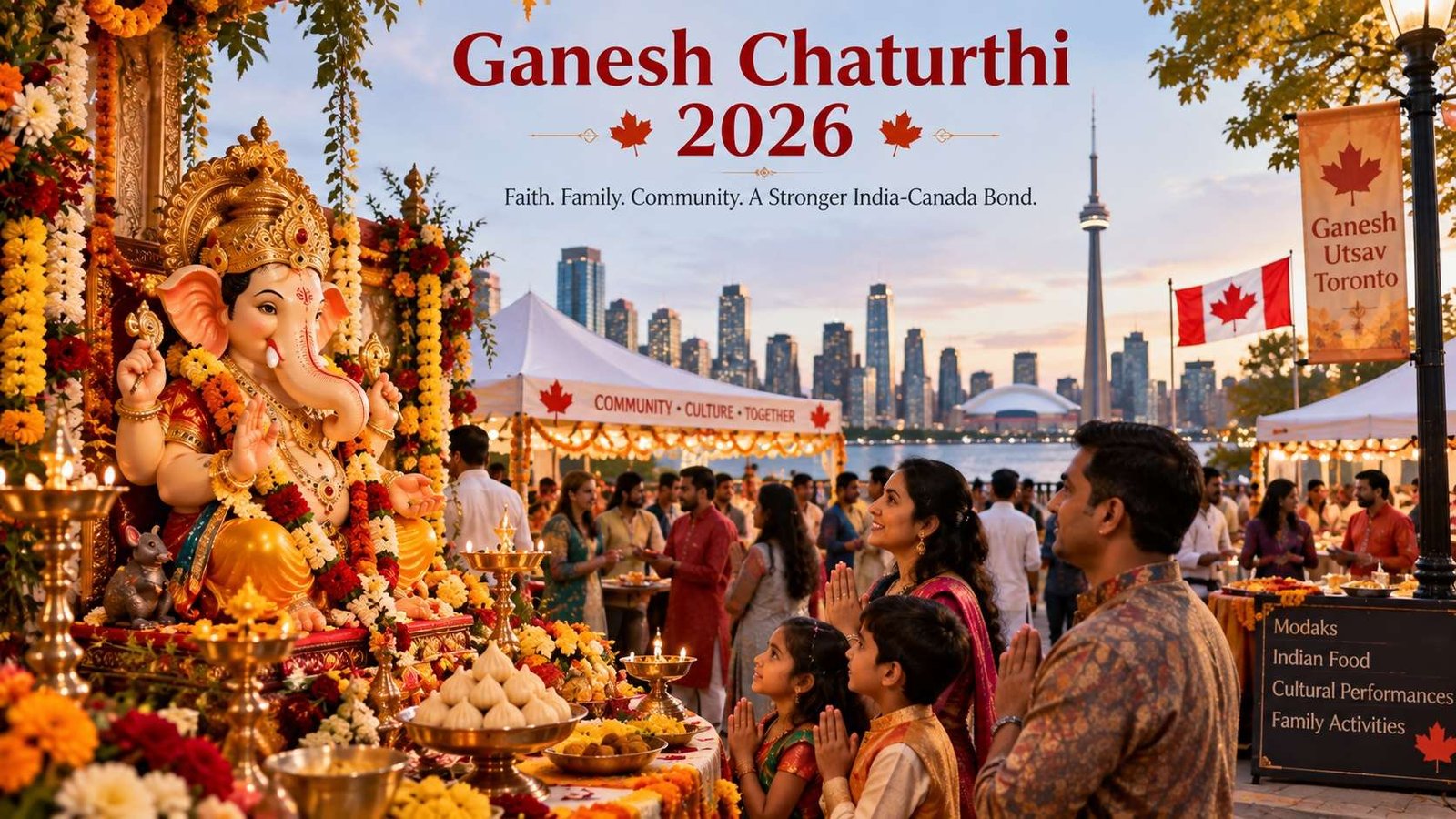
In India, the festival can transform neighbourhoods into enormous public celebrations. In Canada, the scale naturally varies according to the city, venue and local community. Yet the basic ingredients remain familiar: an idol, puja, aarti, devotional music, food, family gatherings and, increasingly, cultural programmes designed to involve younger generations.
That last part may be the most important.
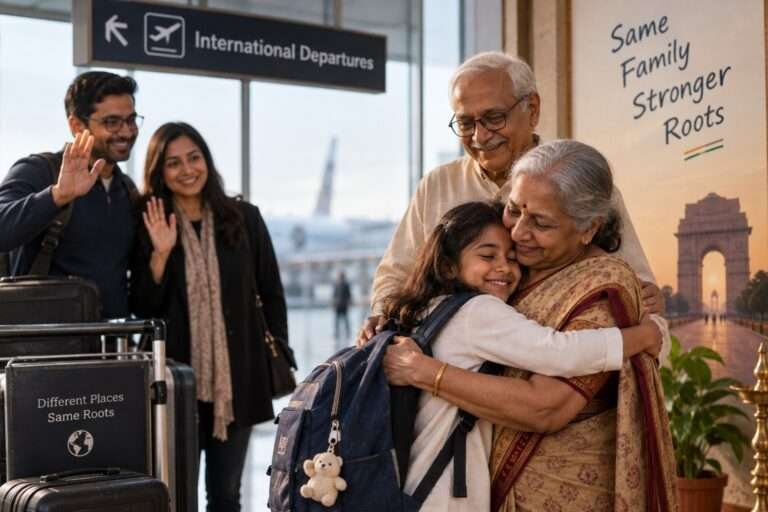
For families who grew up in India, celebrating Ganesh Chaturthi abroad can provide a familiar cultural anchor. For children growing up in Canada, it can become a practical lesson in heritage—one that does not require a textbook.
And perhaps that is one reason community Ganesh celebrations continue to attract people well beyond the strictly religious ceremony.
Toronto and the GTA: temples meet community celebrations
The Greater Toronto Area remains one of the major centres of Indian cultural activity in Canada.
At the Toronto Sri Maha Ganapathy Temple, the 2026 annual festival runs from September 5 to 17, with Ganesh Chaturthi itself on September 14. The temple’s programme includes a morning Havan and Aarthi, a Ratha Utsavam or chariot procession, special puja and Maha Prasadam, followed by an evening aarti.
The temple is also explicit about something that is sometimes lost in simplified descriptions of the festival: Visarjan does not have to mean one fixed date for everyone. Its 2026 guidance lists September 15, 16, 18, 20 and September 25 as possible dates, according to family tradition and the appropriate arrangements.
Meanwhile, Mississauga is hosting Canada Cha Raja – Ganesh Mahotsav 2026 from September 14 to 20 at 855 Winchester Drive. The programme combines darshan and devotional activities with music, dance and community entertainment, illustrating how the Canadian version of Ganeshotsav can combine worship with a broader cultural gathering.
Ottawa brings the Maharashtrian spirit to Canada’s capital
Ottawa will host its 8th Annual Ganesh Mahotsav from September 18 to 20 at the BLU Legacy Convention Centre.
Organizers say the event will feature a 15-foot Ganesha idol and three days of celebration. The official event website describes the festival as an effort to recreate the enthusiasm of Ganesh Utsav in India while providing a community gathering for devotees in the Ottawa region. The event is listed as free entry.
There is an interesting lesson here.
When a community recreates a festival abroad, it cannot reproduce India exactly—and it does not necessarily need to.
Instead, it adapts.
The venue becomes a community centre rather than a traditional neighbourhood lane. Cultural programmes sit alongside puja. Families who may otherwise have little opportunity to meet gather under one roof.
That adaptation is not a dilution of the tradition. In many cases, it may be the very mechanism that allows the tradition to survive.
Calgary shows another side of Ganesh Utsav
Calgary provides an especially interesting example because the Indian Society of Calgary describes its Ganesh Utsav as a community event connecting Indian culture with the wider Canadian community.
Its 2026 Ganesh Utsav took place on September 5 at the Genesis Centre and featured music, arts, a Ganesh procession, cultural performances, an artisan market and Indian food. The organization said the event supported and promoted more than 35 local small and medium-sized businesses.
That economic dimension deserves attention.
Cultural festivals are often discussed only in terms of religion and heritage. But community festivals can also create platforms for local entrepreneurs, food vendors, artists and small businesses.
In that sense, the festival does two jobs at once: it preserves culture and creates community commerce.
And there is perhaps a little Canadian practicality in that combination. Bappa arrives, families celebrate—and somebody still has to run the food stall.
What about Vancouver and other Canadian cities?
Ganesh Chaturthi is not confined to Ontario and Alberta.
Indian and Hindu communities across Canada continue to organise temple and community celebrations, although the size and format differ considerably from one location to another. Western Union’s Canada guide identifies Toronto, Mississauga, Brampton, Calgary and Vancouver among the Canadian centres where Ganesh Chaturthi celebrations have become established parts of community life.
It is important, however, not to assume that every city follows the same schedule.
Some communities organise large public events. Some temples follow their own multi-day festival calendars. Many families simply celebrate at home.
That variety is part of the story.
The environmental question cannot be ignored
There is also a serious issue behind the colour and celebration: what happens after the festival?
Idol immersion has environmental implications, particularly when materials that do not readily dissolve are used. Canadian celebrations therefore provide an opportunity to combine traditional devotion with environmentally responsible practices.
Western Union’s Canada guide notes that some families use clay idols and perform home immersion in water-filled containers. The Toronto Sri Maha Ganapathy Temple similarly provides guidance for home immersion, including dissolving an eco-friendly clay idol in a clean container and returning the dissolved material to soil.
This is more than a logistical adjustment.
It reflects a broader question facing modern festivals everywhere: how can an old tradition survive in a new environmental reality?
The answer does not have to be abandoning tradition. It can be adapting the way the tradition is practised.
More than a festival
Ganesh Chaturthi in Canada tells a larger story about the Indian diaspora.
A child who participates in an aarti learns more than a prayer. A family making modaks passes on a food tradition. A community organising a cultural programme creates a meeting place. A young volunteer managing an event learns organisation, responsibility and leadership.
And when these activities take place in Canada, they also become part of Canada’s multicultural social fabric.
That may ultimately be the most meaningful lesson of the festival abroad.
Traditions survive not because they remain frozen in their original form, but because people continue to find reasons to practise, share and adapt them.
In India, Ganesh Chaturthi can fill entire neighbourhoods.
In Canada, it may fill a temple, convention centre, community hall or family living room.
But the underlying idea remains familiar: welcome Ganesha, come together, share food and prayer—and send Bappa onward with gratitude when the time comes.
For an Indian family thousands of kilometres from home, that can be a powerful reminder that distance changes the setting of a tradition, but does not necessarily erase its meaning.

World Beyond the News
Why Elephants Stay Close to Their Herd
Elephants live in highly social family groups and use calls, touch and body movements to maintain strong bonds.
Most of the Deep Ocean Remains Difficult to Explore
Extreme pressure, darkness and distance make deep-ocean exploration one of Earth’s greatest scientific challenges.
Spacecraft Can Travel Without Traditional Roads
Spacecraft use carefully calculated trajectories and gravity assists to travel enormous distances through space.
Why Movie Trailers Are Released in Stages
Major films often use teaser trailers, full trailers and final promotional spots to build awareness over time.